Stunning summit views, easy Ropeway/Cable car access, but a very Sweaty Experience.
TL;DR – Yes, Mount Tsukuba is worth it with great views, be prepared for a sweaty experience.
- Two peaks: Nyotai (877 m) and Nantai (871 m), stunning views 2 hours from Tokyo.
- Take the Ropeway or Cable Car up — no full hike required.
- Clear days offer views of Tokyo and Mount Fuji from the peaks.
- Trails are rocky and steep in places; fine for beginners with basic fitness.

In February 2026 I visited Mount Tsukuba and it’s a little bit like the B-side of an album from a legendary band. Because it’s often underplayed but the real fans would have heard about it and listen to it often. While most tourists would know about Mount Fuji, Mount Tsukuba is just as popular with the locals and is visited just as often.
Mount Tsukuba (Tsukubasan 筑波山) is a twin-peaked mountain in Tsukuba City, Ibaraki. It has two peaks: Nyotai-san (女体山) the “female” peak at 877m and Nantai-san (男体山) the “male” peak at 871m. Making it the third highest peak in Ibaraki Prefecture.
Anyway I will let you know what my experience was like climbing Mount Tsukuba, what are the things to see, where to find the best views and why you should consider visiting Mount Tsukuba instead of Mount Fuji… again…
- TL;DR – Yes, Mount Tsukuba is worth it with great views, be prepared for a sweaty experience.
- How to get to Mount Tsukuba
- Mount Tsukuba Ropeway
- Mount Tsukuba Ropeway — Ticket Prices
- Mount Tsukuba Ropeway — Timetable
- Mount Tsukuba Cable Car / Miyawaki Station
- Mount Tsukuba Cable Car — Ticket Prices
- Can I Hike up Mount Tsukuba?
- Nyotaisan Peak
- Hiking from Nyotaisan to Nantaisan Peak
- Miyukigahara Summit Village
- Nantaisan Peak
- Some Tips
- Do I recommend Mount Tsukuba?
- FAQ – Mount Tsukuba
All photos on this page are mine, shot on an iPhone 11 pro.
How to get to Mount Tsukuba
The best way to get to Mount Tsukuba is by the Kōsoku Bus “Tsukuba-go” (高速バス「つくば号」
) from Tokyo Station. Take the highway bus from Tokyo Station and alight at Tsukuba Center (about 1hr 5mins). From Tsukuba Center, take the Tsukubasan Shuttle to Tsukubasan Shrine (2 stops 38mins). The total journey would take about 2 hours (including waiting time) and cost you ¥2,030.
The Tsukubasan Shuttle is the local bus that runs between Tsukuba Center, the shrine, the ropeway and the cable car.
You can also take the Tsukuba Express train from one of the stations to Tsukuba Center. And then take the Tsukubasan Shuttle from Tsukuba Center to the Tsukubasan Shrine. The train might be slightly faster because it won’t have traffic and bus schedules. But you would have to travel to a station along the Tsukuba Express.
The Tsukubasan Shuttle will also take you to the Mount Tsukuba Ropeway and Mount Tsukuba Cable Car. Depending on how you want to climb the mountain.
Driving to Mount Tsukuba
If you are driving to Mount Tsukuba, please take the main route (Ibaraki Prefectural Route 42) or the Tsukuba Road (つくば道) up the mountain as these are two-lane roads main roads to go up the mountain.
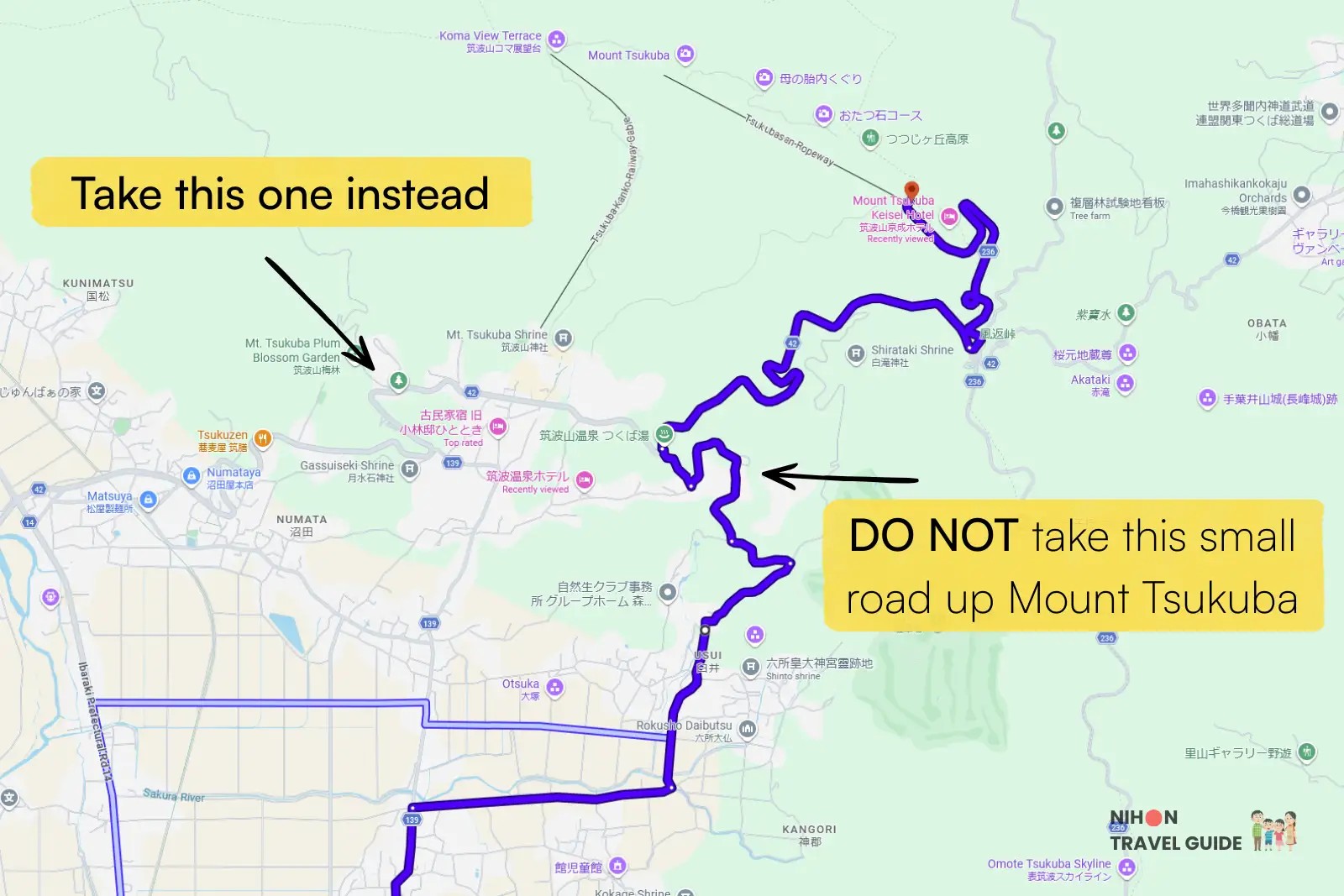
There was once that Google maps brought me to a smaller road towards the east (in the image above), and that road is a very narrow single-lane mountain road. Try to avoid using this (or any other small roads) road when driving up Mount Tsukuba.
If you are driving you might want to consider taking the Mount Tsukuba Ropeway instead as there is more parking at the station itself. The Mount Tsukuba Cable Station does have some parking but not as much as the Ropeway Station. You can park at the shops nearby but you may have to walk quite a bit more.
Mount Tsukuba Ropeway
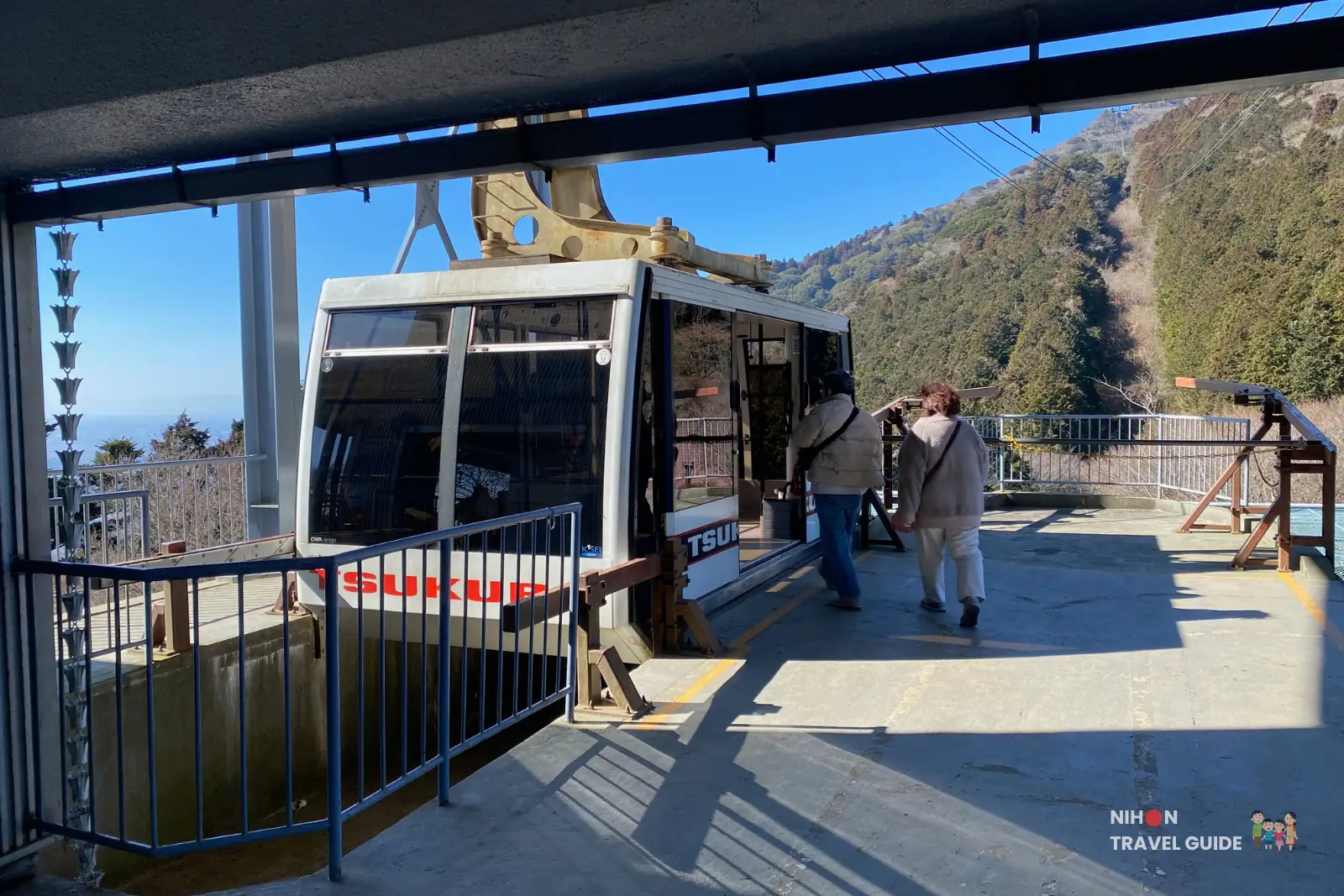
Once you have reached, there are two main ways to climb Mount Tsukuba. You can either take the Mount Tsukuba Ropeway or the Mount Tsukuba Cable Car. The Ropeway would take you closer to Nyotai-san (女体山) peak whereas the Cable Car would take you closer to Nantai-san (男体山) peak.
Some people decide to take one up and take the other down. For me I took the Mount Tsukuba Ropeway up and down the mountain because I drove and parked at the Ropeway.
The Ropeway itself gives you great views and there is Japanese and English audio that will give you some facts about the Ropeway and Mount Tsukuba. It is a great opportunity for taking photos, however the windows are slightly tinted like sunglasses so you get better photos once you alight.
Mount Tsukuba Ropeway: Tickets Pricing
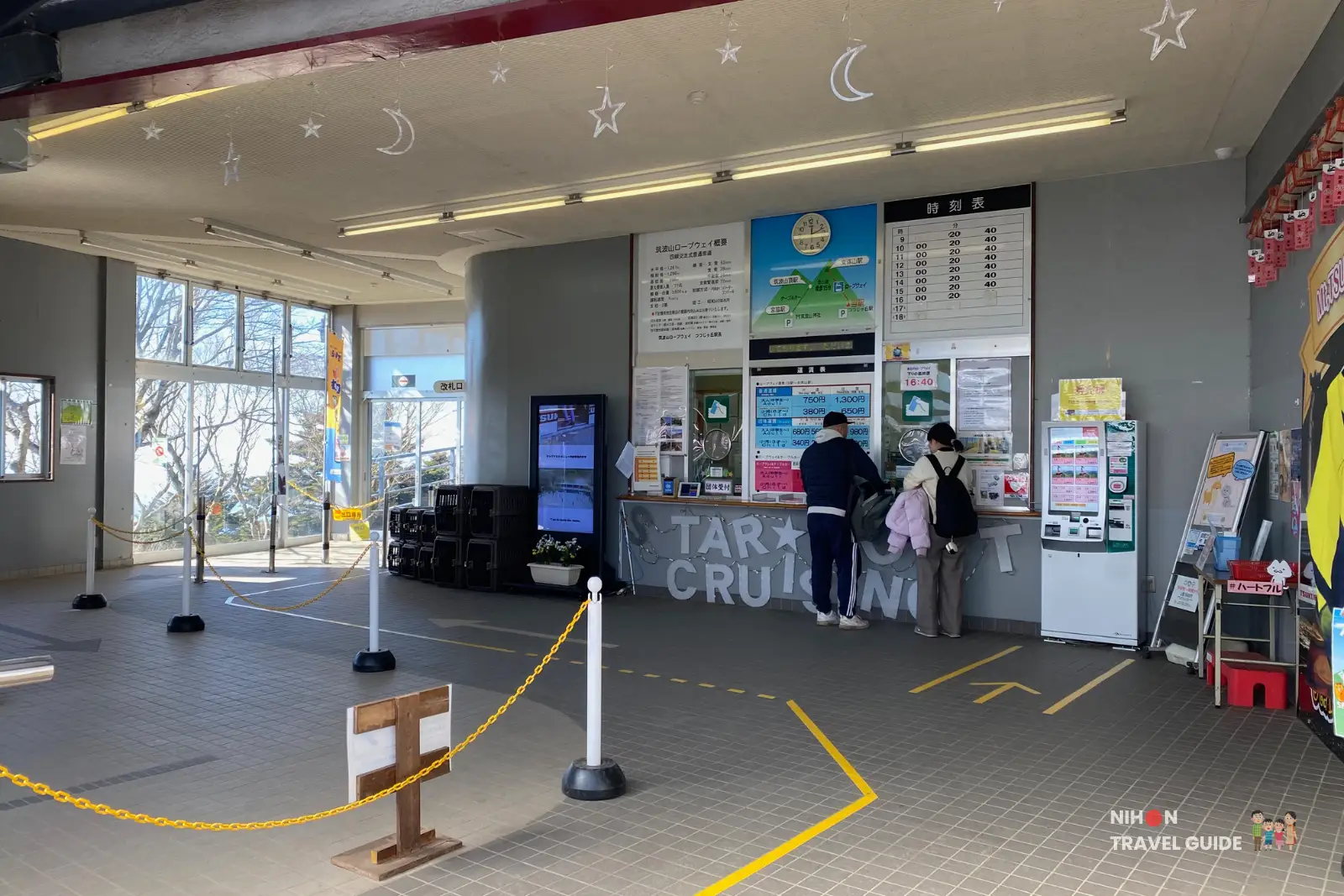
Mount Tsukuba Ropeway tickets cost are as follows: Adult: ¥750 one way, ¥1,300 round trip. Child: ¥380 one way, ¥650 round trip. You can purchase the tickets from the machine on the right of the counter. It has English language (amongst other languages) so it would not be a problem if you can’t read Japanese.
Mount Tsukuba Ropeway — Ticket Prices
| Ticket Type | Adult | Child |
|---|---|---|
| One Way | ¥750 | ¥380 |
| Round Trip | ¥1,300 | ¥650 |
Prices may change. Check the official website for the latest information.
Mount Tsukuba Ropeway Timetable
The Mount Tsukuba Ropeway runs every 20 minutes, at 00, 20, and 40 minutes past each hour. The typical operating hours of the ropeway are from 09:20 – 16:40 everyday. However the timing might change slightly based on the season.
I’m not sure why but the Mount Tsukuba Ropeway Station was much quieter than the Mount Tsukuba Cable Car. Probably because the Mount Tsukuba Cable Car Station is closer to the Tsukubasan Shrine and other hotels and shops in the area.
Mount Tsukuba Ropeway Parking
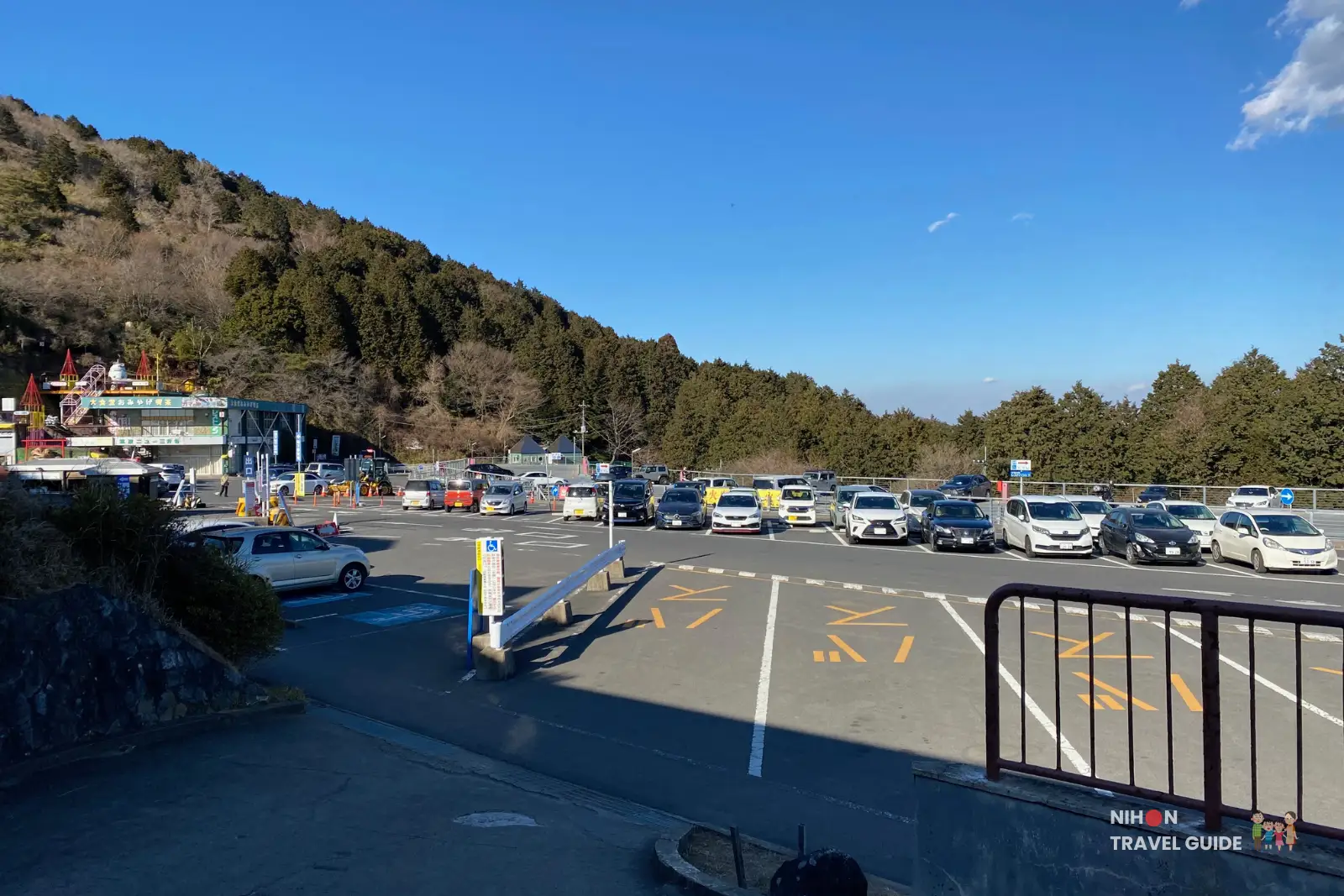
The Mount Tsukuba Ropeway Station also has plenty of parking should you choose to drive there. Only thing is that you have to come back down the same way you came since your car is parked there.
Mount Tsukuba Ropeway Pet Cages
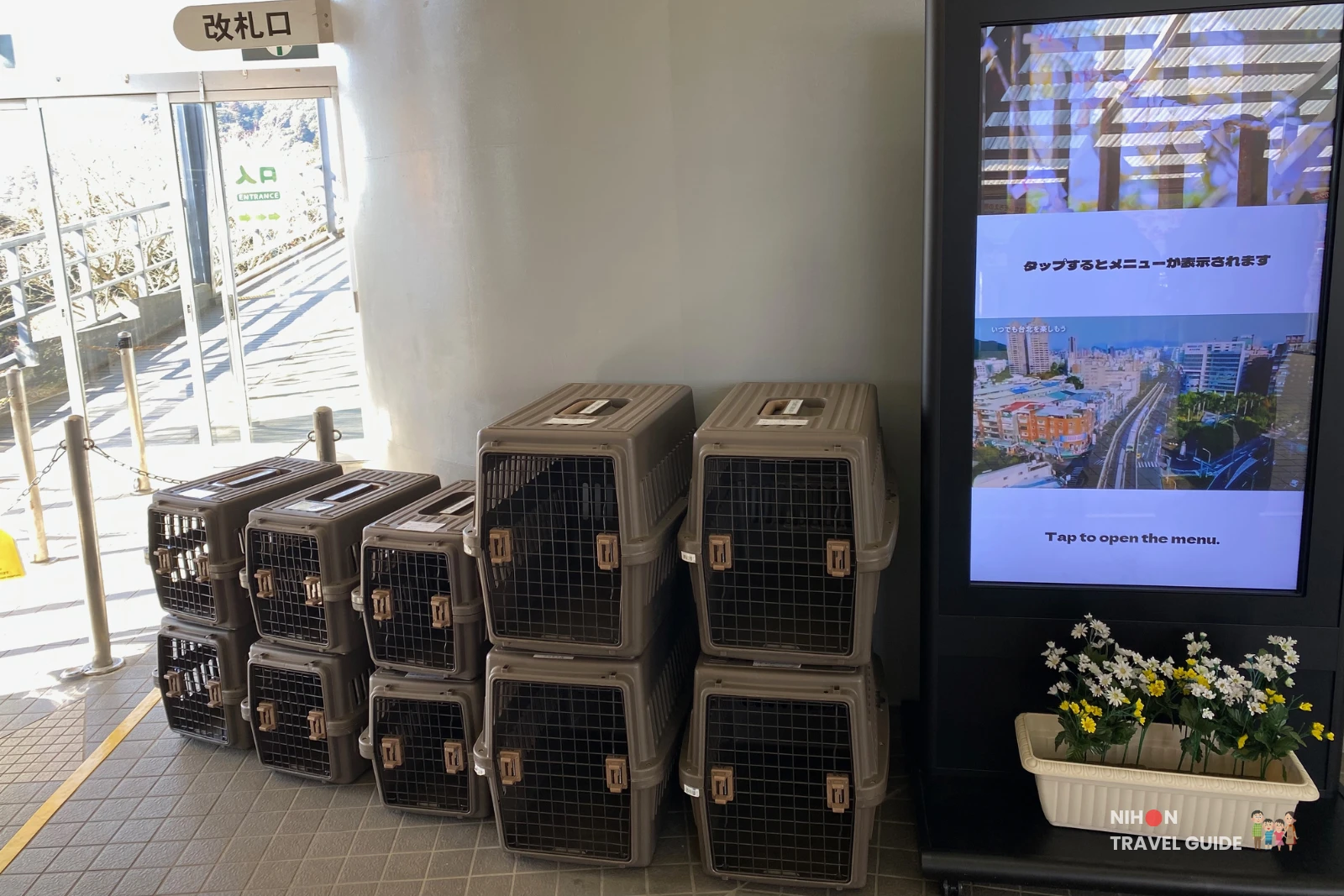
The one thing that really surprised me a lot during my hike at Mount Tsukuba was the amount of locals bringing their pets to climb the mountain with them. If you would like to bring your pet, you can use their pet cages at both the Mount Tsukuba Ropeway and Cable Car.
You can either bring your own or borrow their pet cages for free. You must keep your pet inside the cage for the entire ride and also take care of them in case they make too much noise and disturb the other passengers.
For your reference, the size of the pet cage is 40 cm high × 35 cm wide × 60 cm deep. Unfortunately if your pet can’t fit the cage you won’t be able to bring it with you.
Tsutsujigaoka Rest House
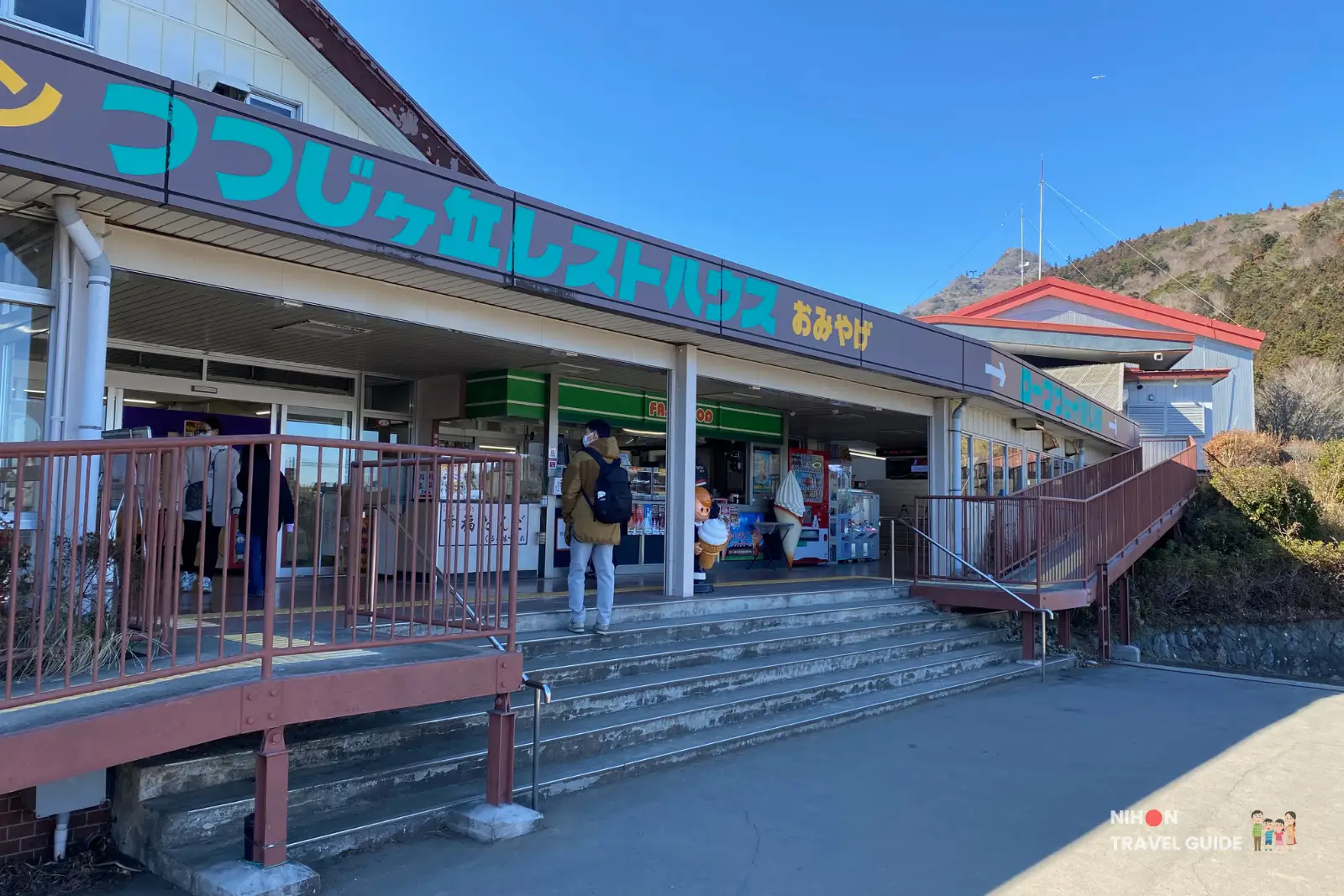
There are some other stuff at the Mount Tsukuba Ropeway Base Station (Tsutsujigaoka Station). There is a Tsutsujigaoka Rest House that has a gift shop selling souvenirs (omiyage お土産), some light snacks & drinks and a dining hall that looks out over Kanto Plain. You can enjoy the view there after your adventure up the mountain.
Check out their menu here.
Mitsuiya Sightseeing (Gama Cave / Gamaland)
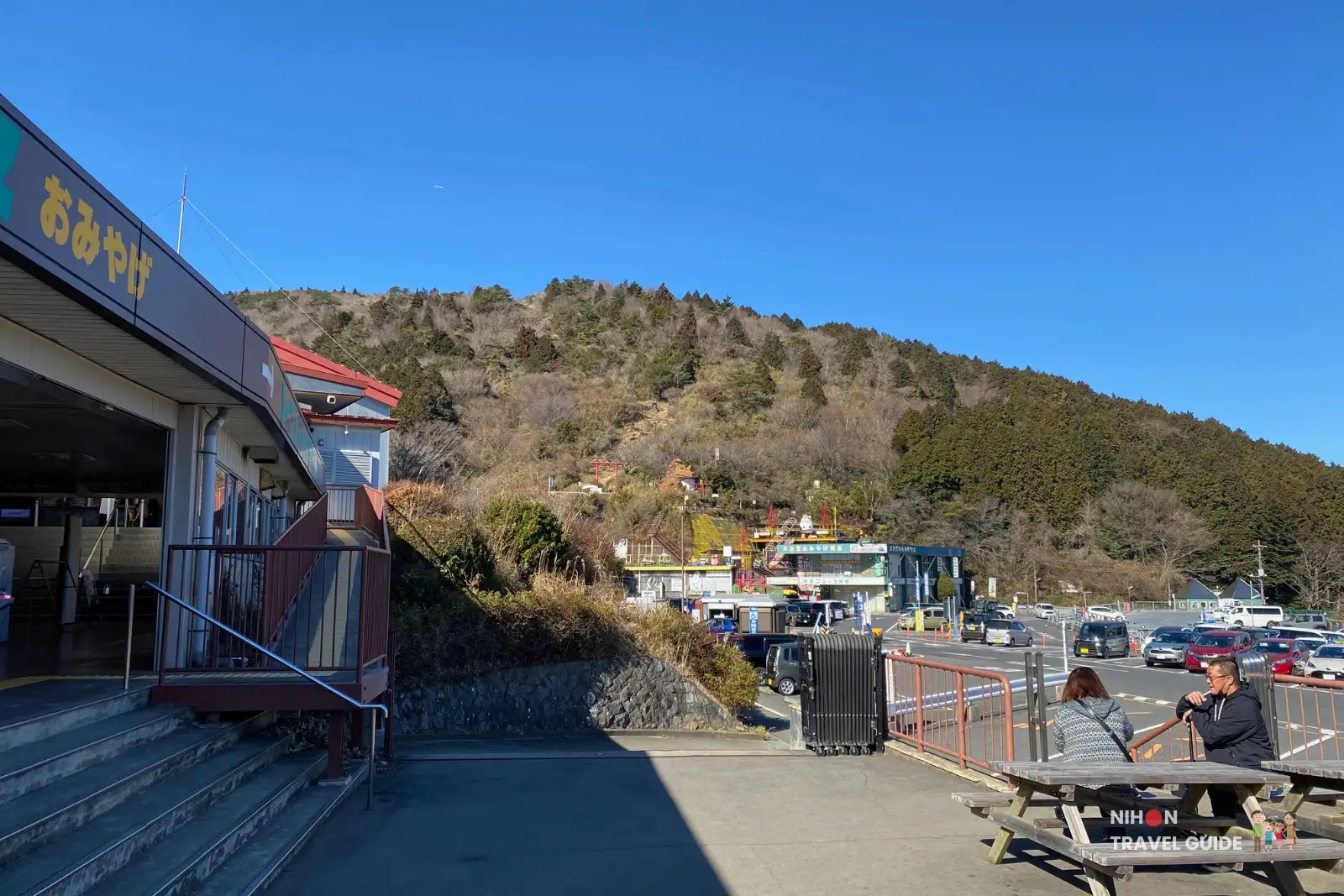
Near the Mount Tsukuba Ropeway Base Station (Tsutsujigaoka Station) is also the Mitsuiya Sightseeing (Gama Cave / Gamaland). It is a small and really old-school amusement area filled with statues, souvenir shops, some food, some games and an observation deck that looks out over Kanto Plain.
Unfortunately it was closed when I was there so I didn’t take a look. But it looks like it was built for kids mainly. I don’t think its something you would be missing out on if you don’t visit.
Mount Tsukuba Cable Car / Miyawaki Station
The second way to climb up Mount Tsukuba is by the Cable Car. This would take you the Mount Tsukuba Summit Village and closer to the Nantai-san (男体山) peak.
Mount Tsukuba Cable Car Tickets Pricing
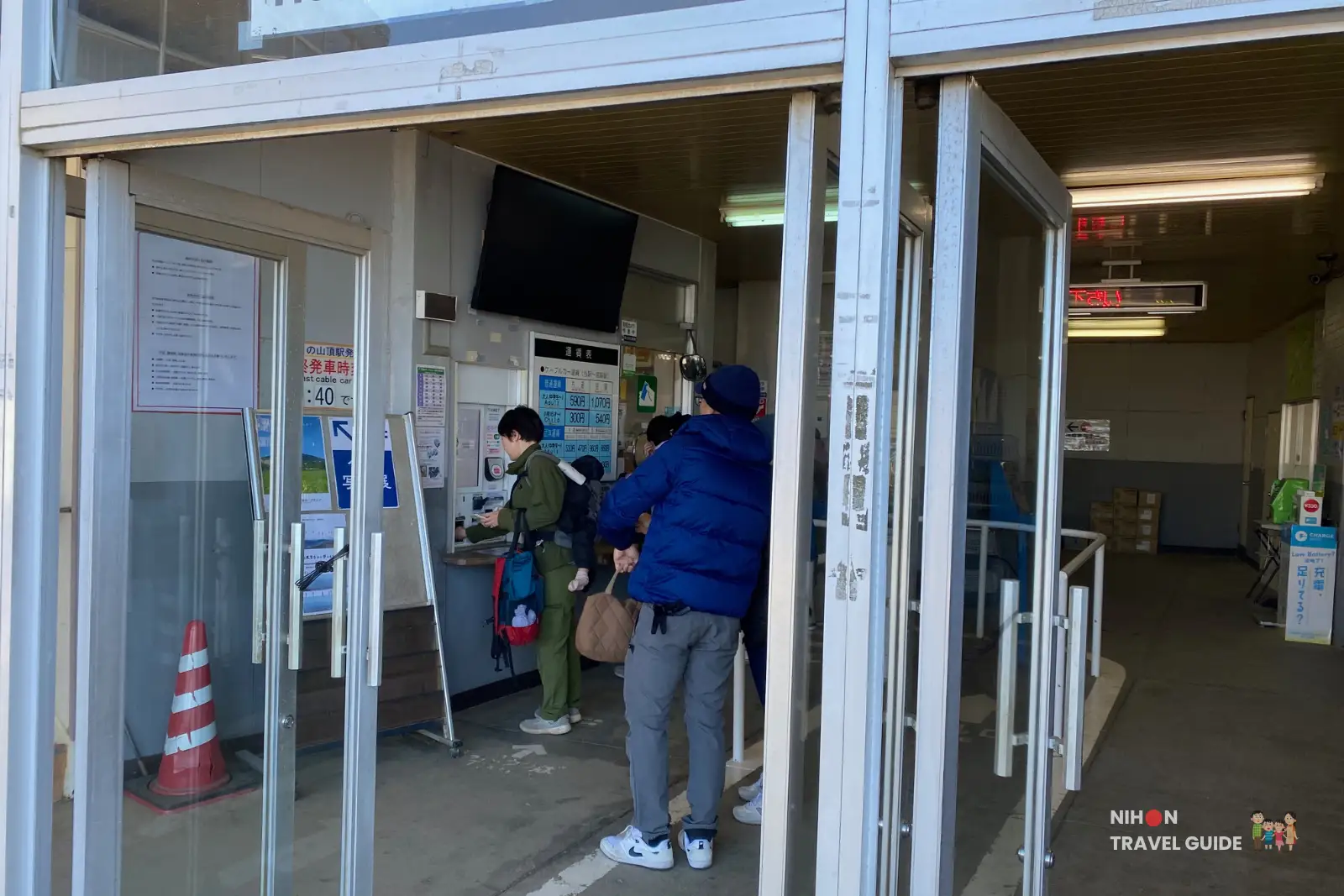
Here is the pricing for the Mount Tsukuba Cable Car: Adult: ¥590 one way, ¥1,070 round trip. Child: ¥300 one way, ¥540 round trip.
Mount Tsukuba Cable Car — Ticket Prices
| Ticket Type | Adult | Child |
|---|---|---|
| One Way | ¥590 | ¥300 |
| Round Trip | ¥1,070 | ¥540 |
Prices may change. Check the official website for the latest information.
Mount Tsukuba Cable Car Timetable
The Mount Tsukuba Cable car also runs every 20 minutes, at 00, 20, and 40 minutes past each hour.
Unfortunately I didn’t get a chance to take the Cable Car as I drove and parked at the Mount Tsukuba Ropeway Station so I had to come back down via the ropeway. The Cable Car has a lot more passengers (probably because it is cheaper and closer to the Summit Village), so if you want a shorter waiting time you might want to take the Ropeway instead.
Mount Tsukuba Cable Car Pet Cages
You can also bring your pets if you take the Mount Tsukuba Cable Car, it is the same rules as the Mount Tsukuba Ropeway. You may bring your own cages or use their cages for free. The dimensions are: 40 cm high × 35 cm wide × 60 cm deep.
Can I Hike up Mount Tsukuba?
Yes you can hike up Mount Tsukuba. There are a network of trails from the Tsukubasan Shrine and the Tsutsujigaoka Station. It takes roughly 1.5 – 2 hours to do so via the Miyukigahara course and Shirakumobashi course. You can find out more about them at their website.
I myself did not hike up Mount Tsukuba but climbing to the peak was already quite a challenge. Mount Tsukuba Hiking is definitely for people who have a higher level of fitness. If you just want to enjoy and see great views just take the Ropeway or Cable Car.
Nyotaisan Peak
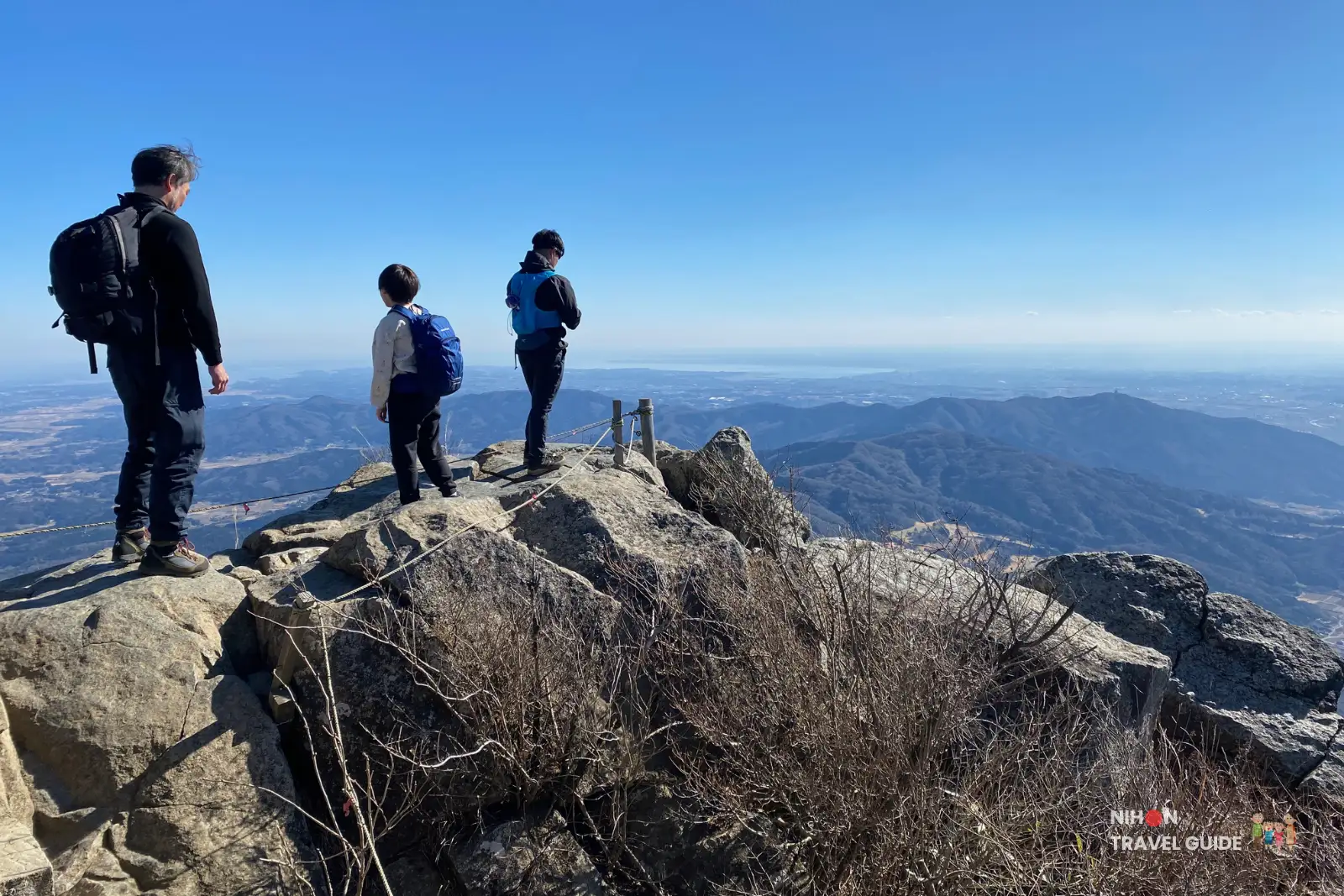
If you took the Mount Tsukuba Ropeway up, you would arrive at the Nyotaisan Station. The Nyotaisan Station is about 542m up the mountain and you would need to climb another 298m to the Nyotai-san (女体山) peak.
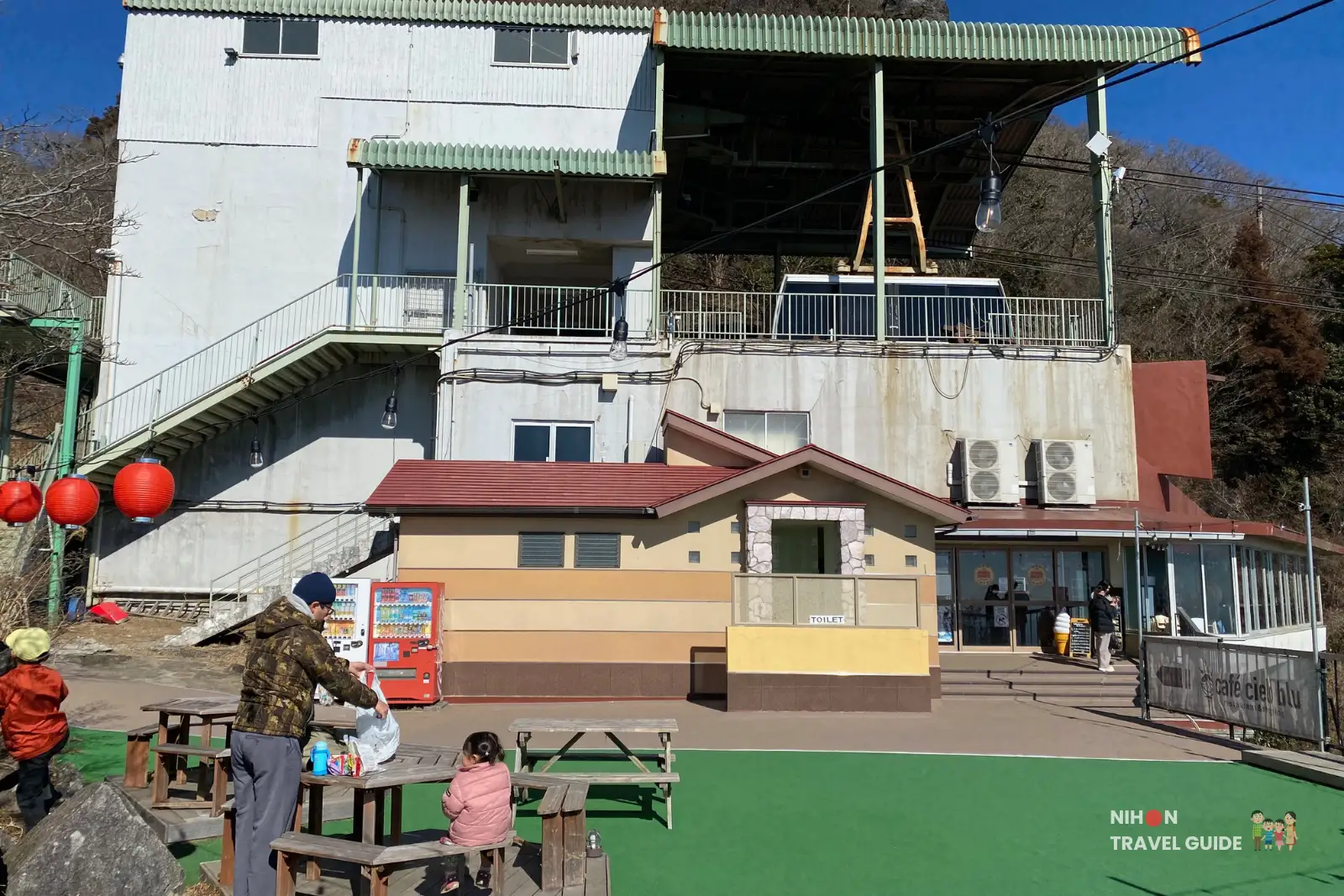
The Nyotaisan Station has an observation deck that gives you really great views. There is also a cafe (Cafe Cielo Blu), toilets and some vending machines.
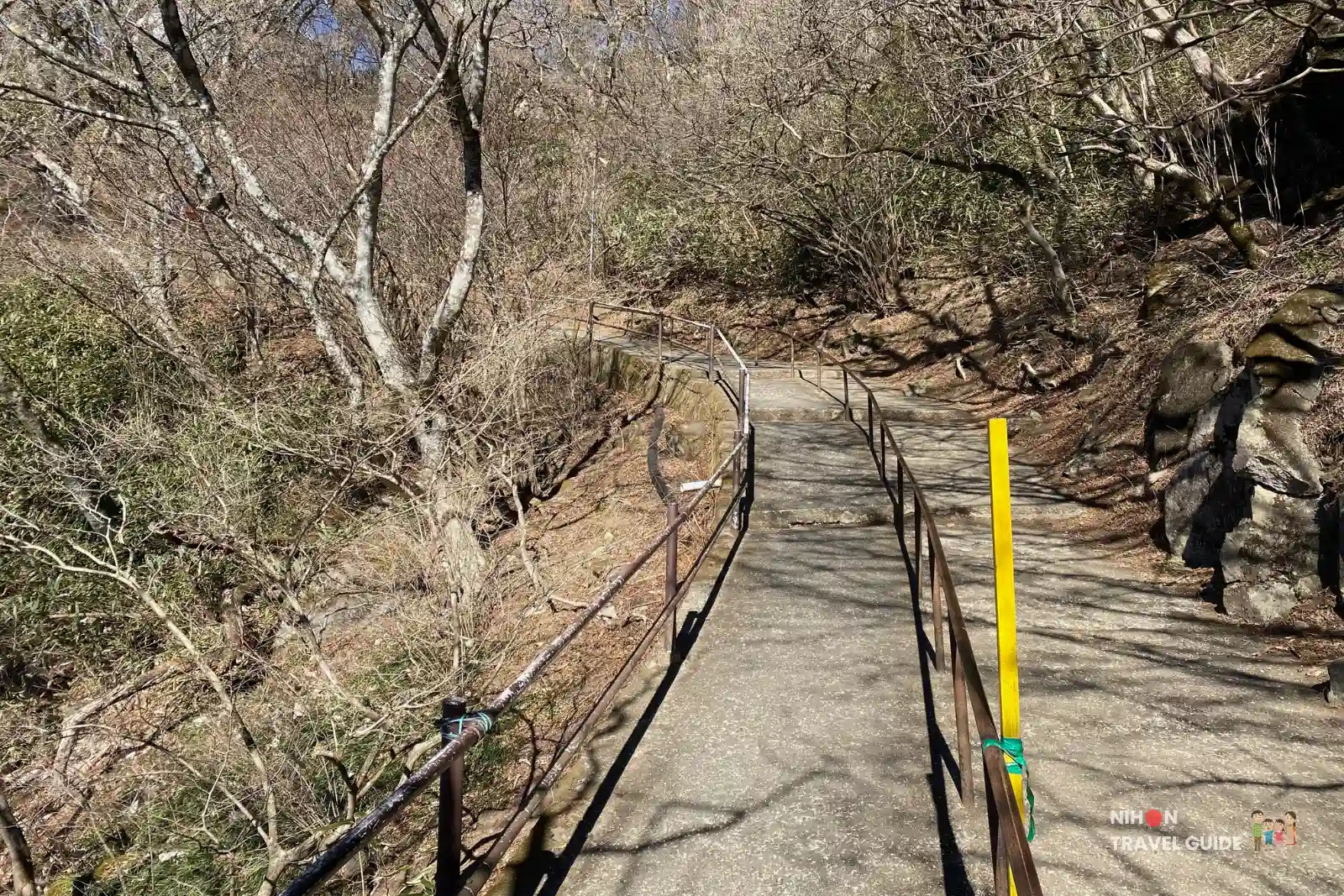
Once you are ready to start the hike, you can proceed up the footpath. This is probably the nicest path you are going to see while climbing Mount Tsukuba. This path would take you to a rocky summit approach area where you can rest a bit and catch your breath.
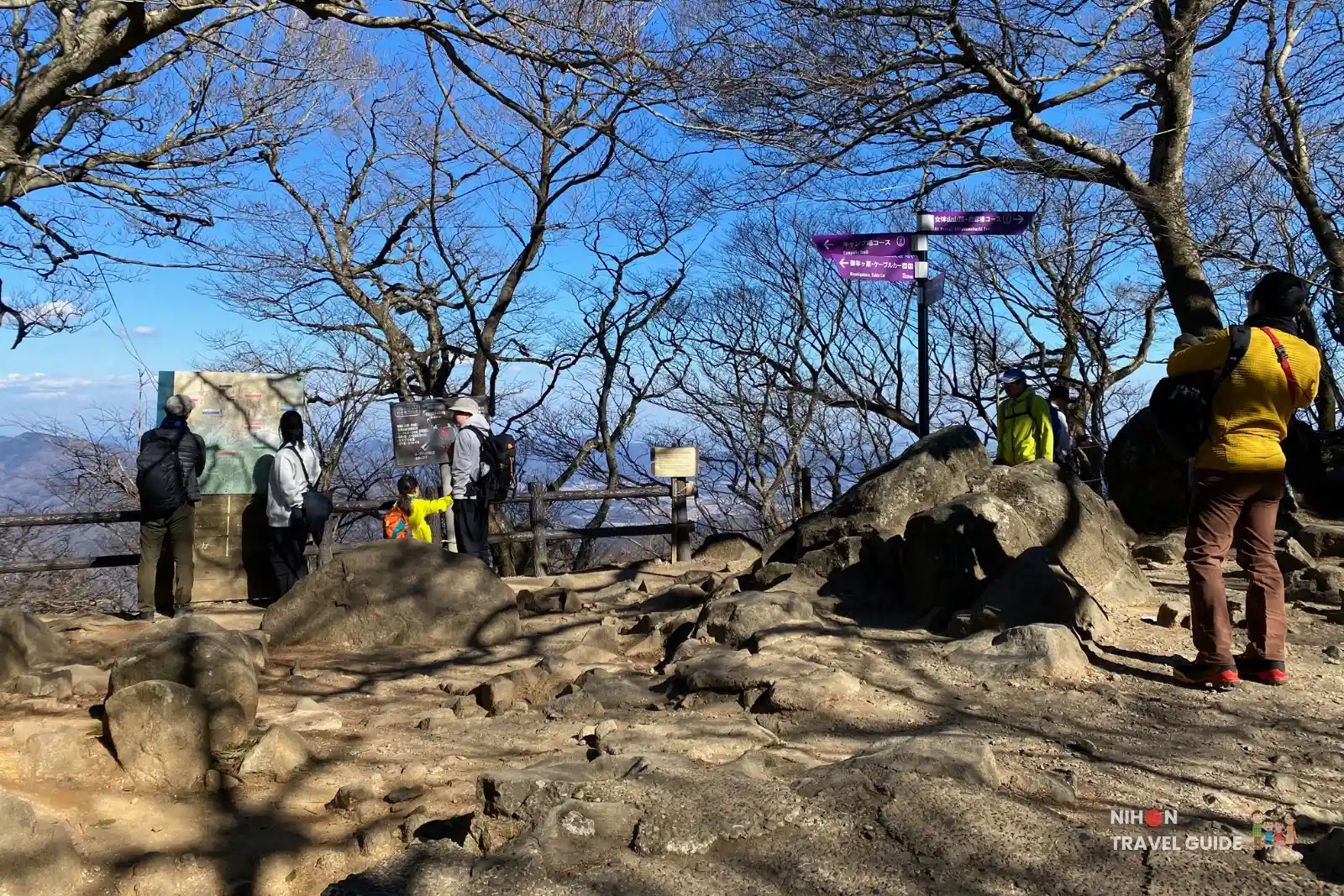
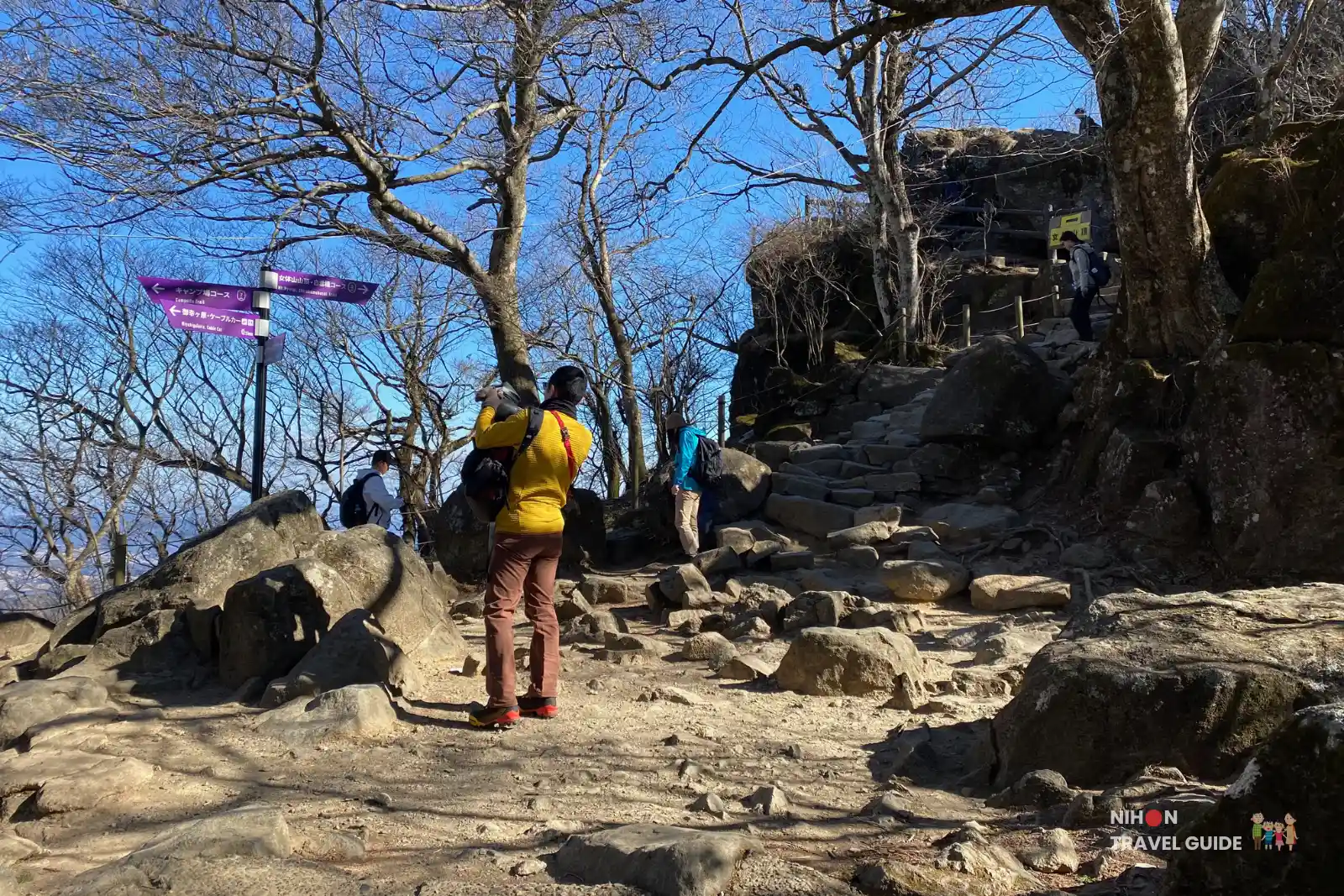
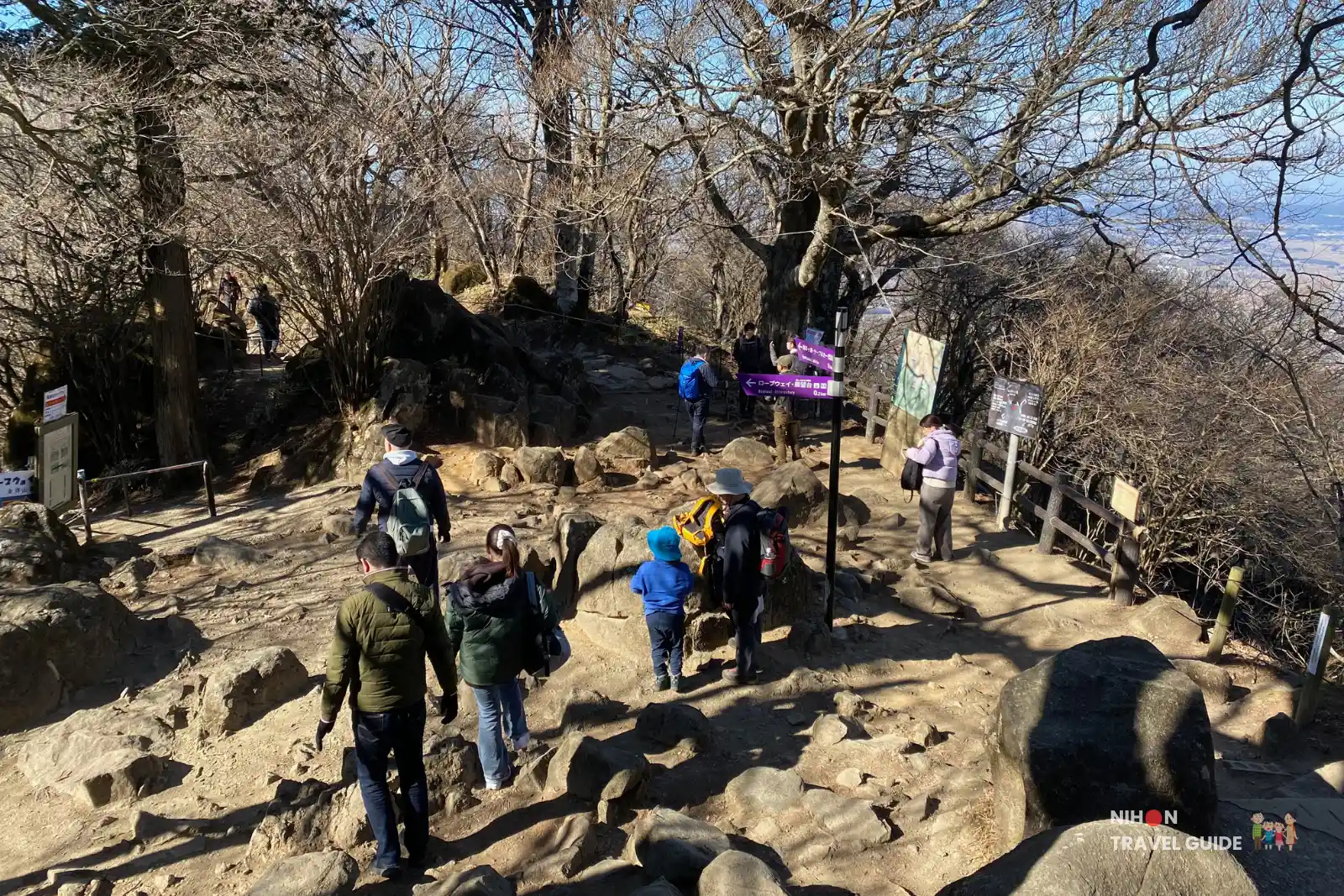
There are signs, maps and general information boards that give you more information.
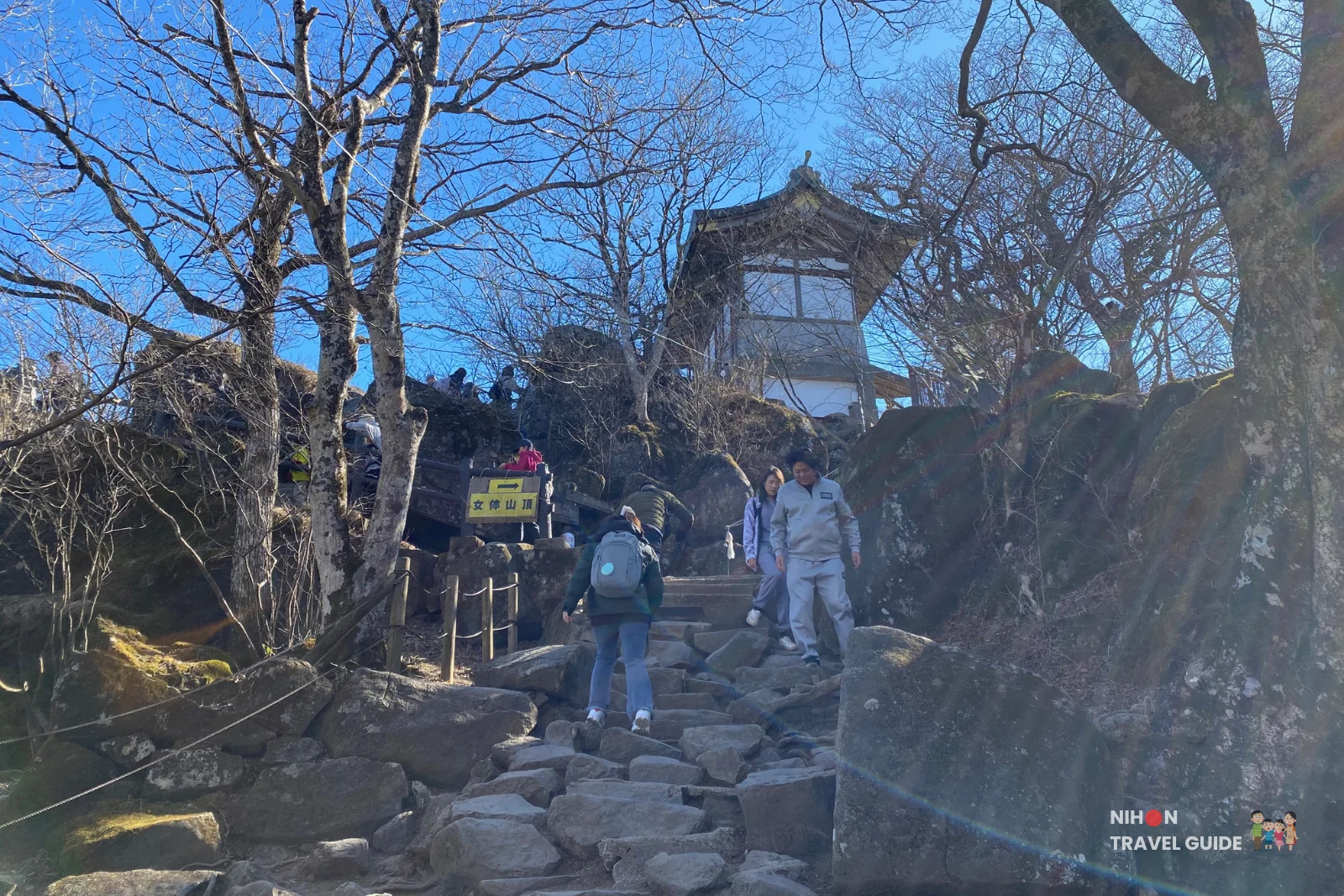
If you turn right, you would see a really steep rocky “stairway” that you climb to reach Nyotai-san (女体山) peak.
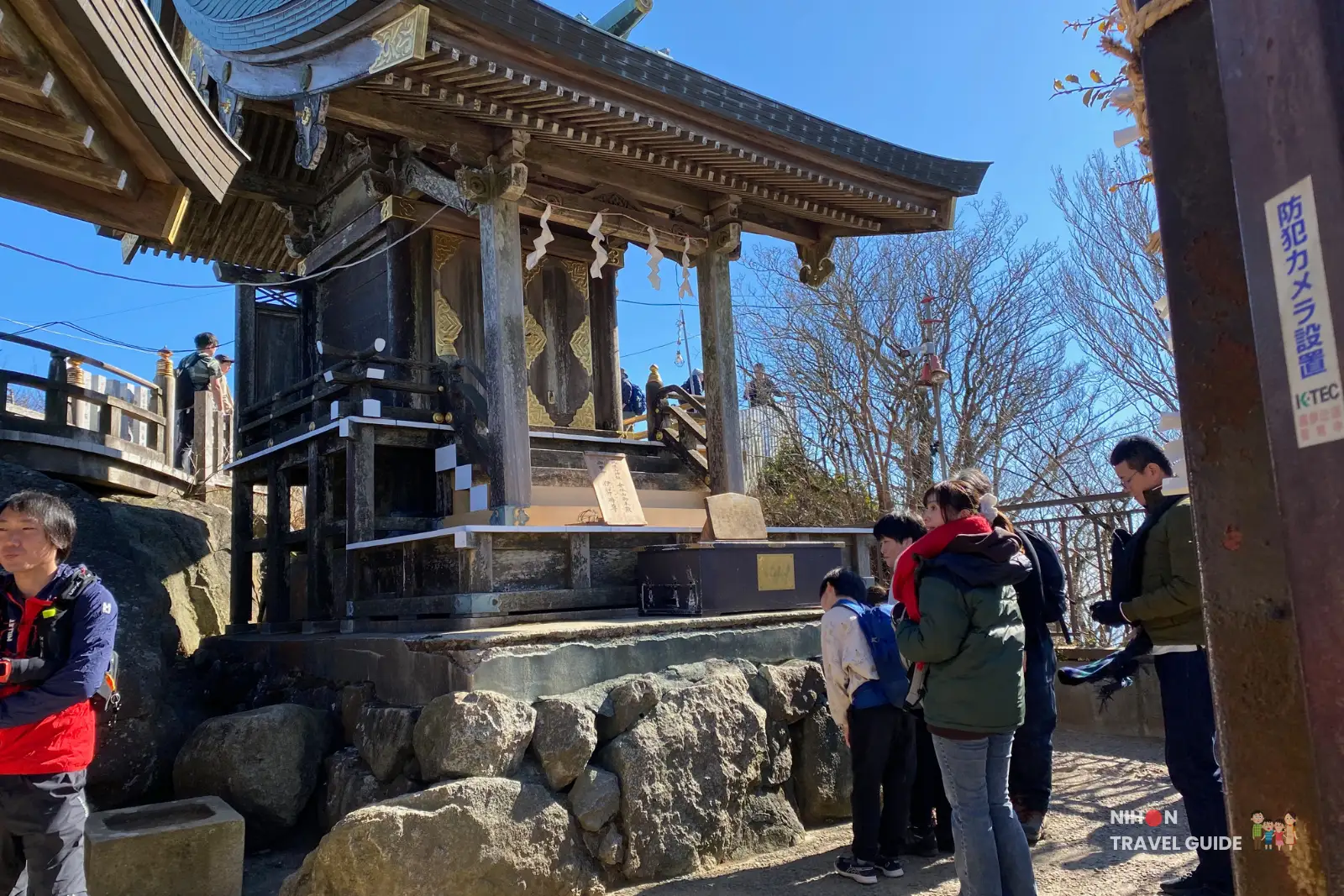
Once at the peak there is a shrine called the Nyotaisan Main Hall of Tsukubasan Shrine that the locals go to. From there just climb a bit more and you would reach the Nyotai-san (女体山) peak.
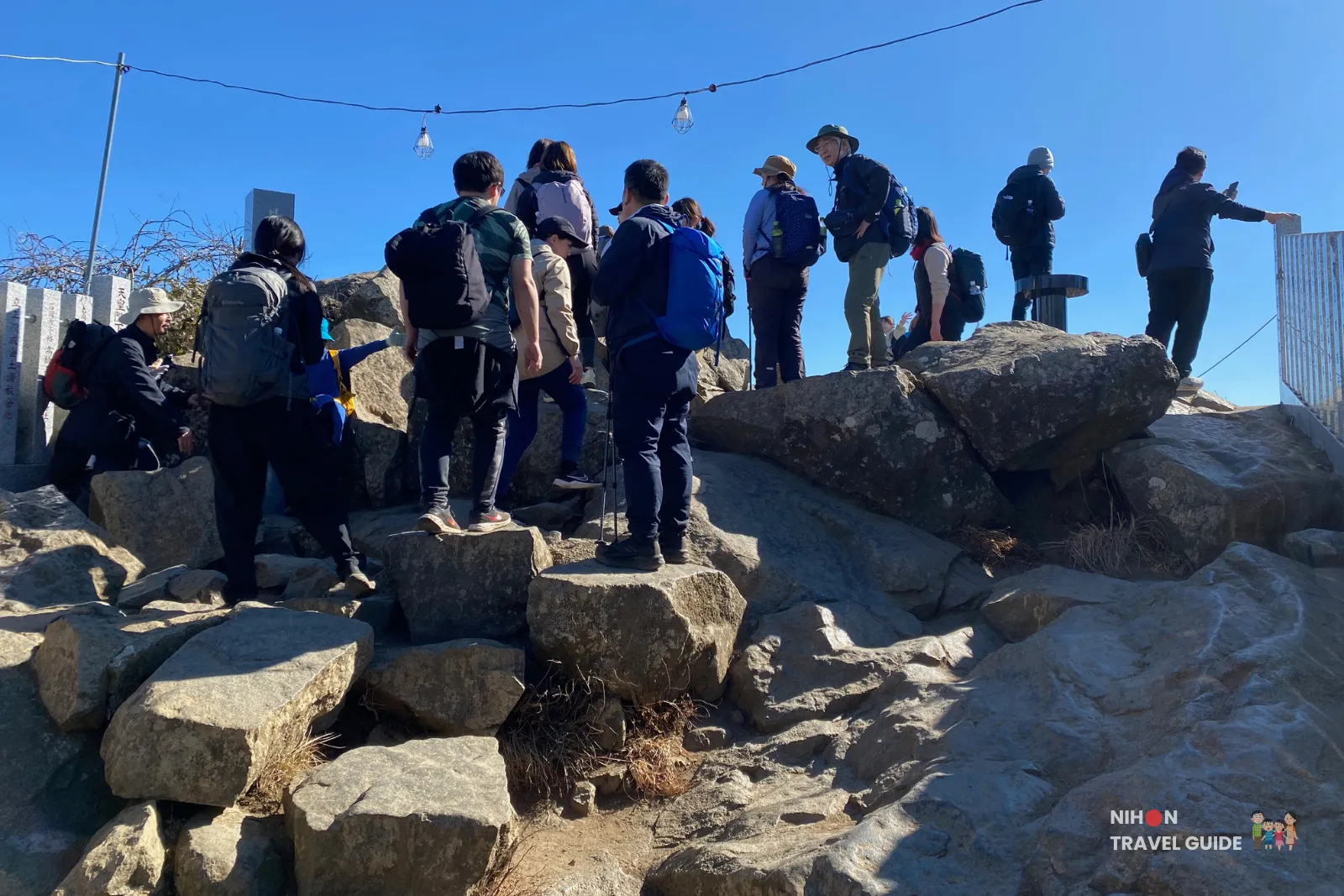
Depending on which day you go there might be a lot of people queuing up to take photos at the peak.
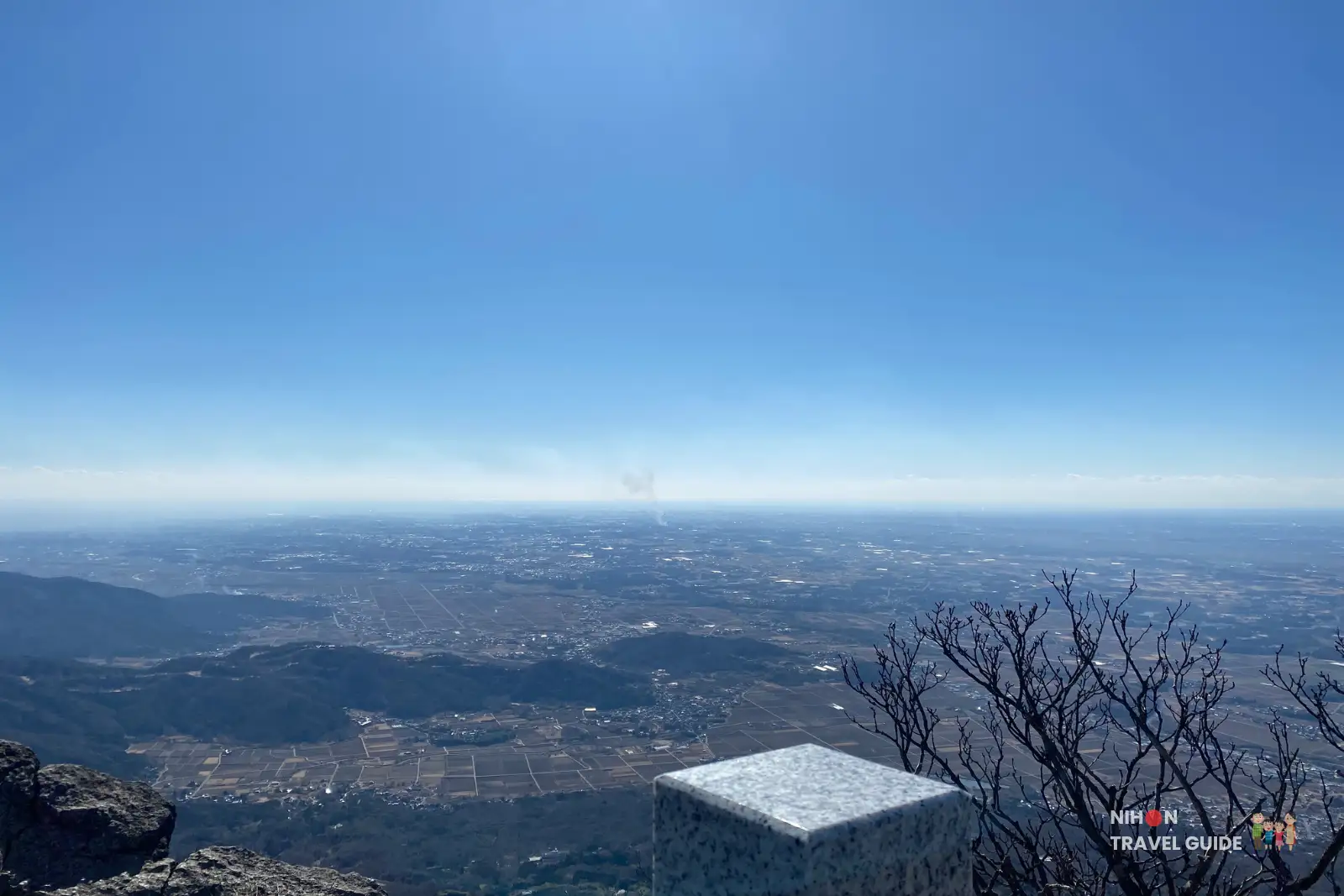
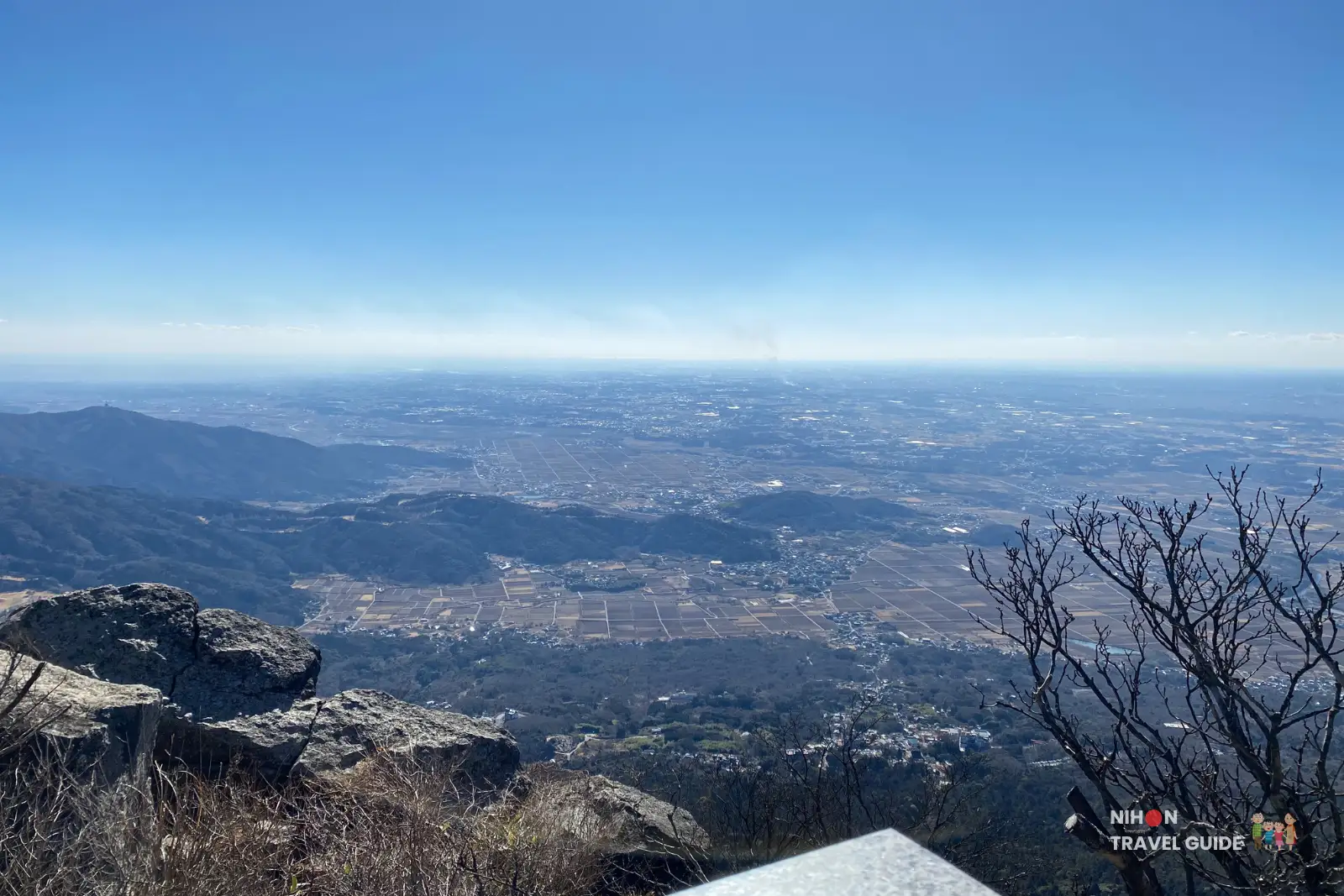
But even if you can’t stand on the peak, there are lots of good spots to look at the stunning view around you. You would still be able to see stunning views from the side. The view from Nyotaisan Peak was so good that I actually climbed it twice!
Cafe Cielo Blu

There is a cafe at Nyotaisan Station and they sell full meals like Hamburg Steak, Beef Stew Plate together with drinks and ice cream. They are open from 10:00 to 16:30 (last order at 16:00) matching the opening hours of the Ropeway’s opening hours.
It has large windows that give you views of Lake Kasumigaura and the Kanto Plain, a great place to have some food and enjoy the view. It is also the nicest looking food place of all the food places at the Mount Tsukuba Peak (to me at least). The other food places look and feel a bit more “rural”.
They have a menu on their website you can check it out here.
Hiking from Nyotaisan to Nantaisan Peak
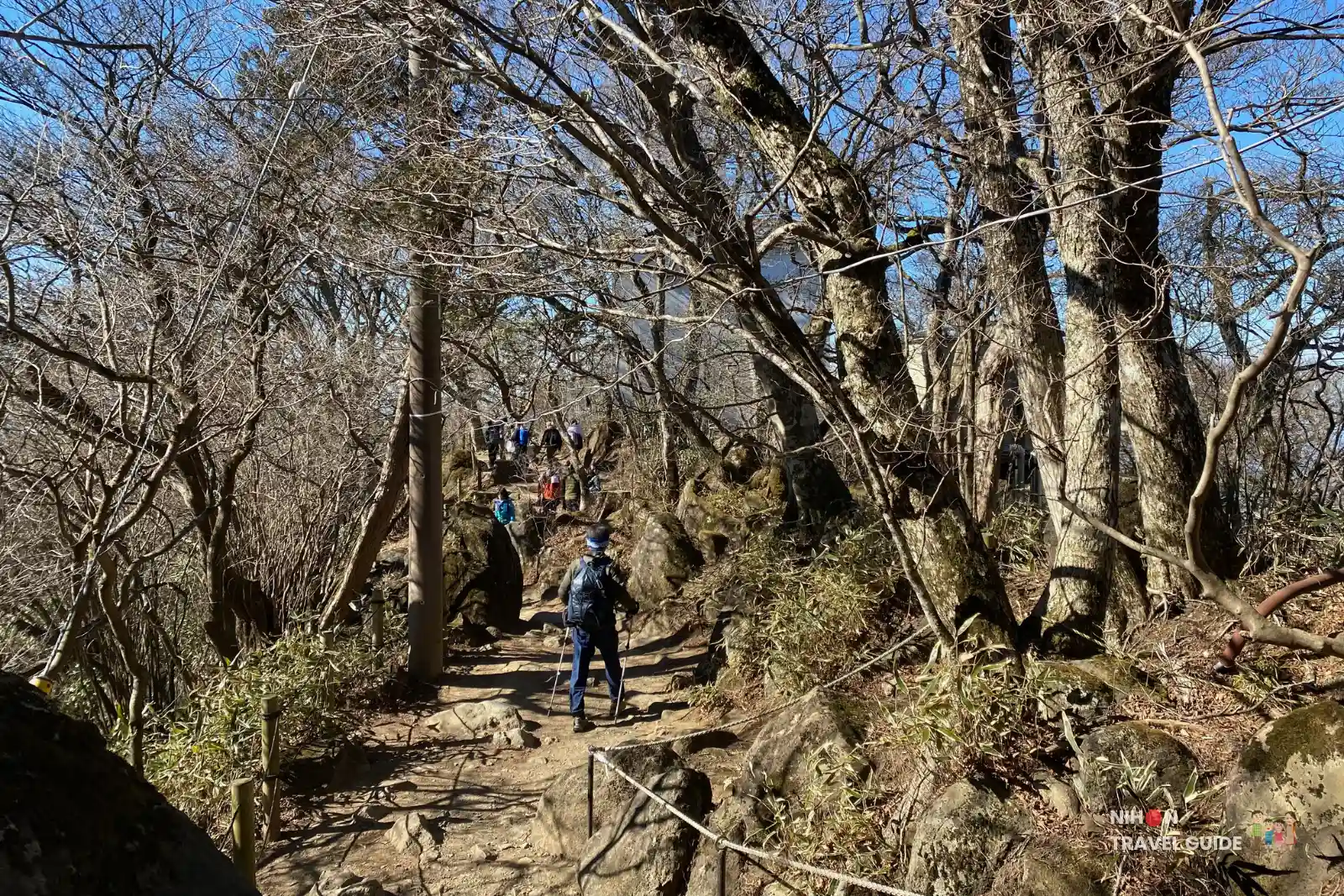
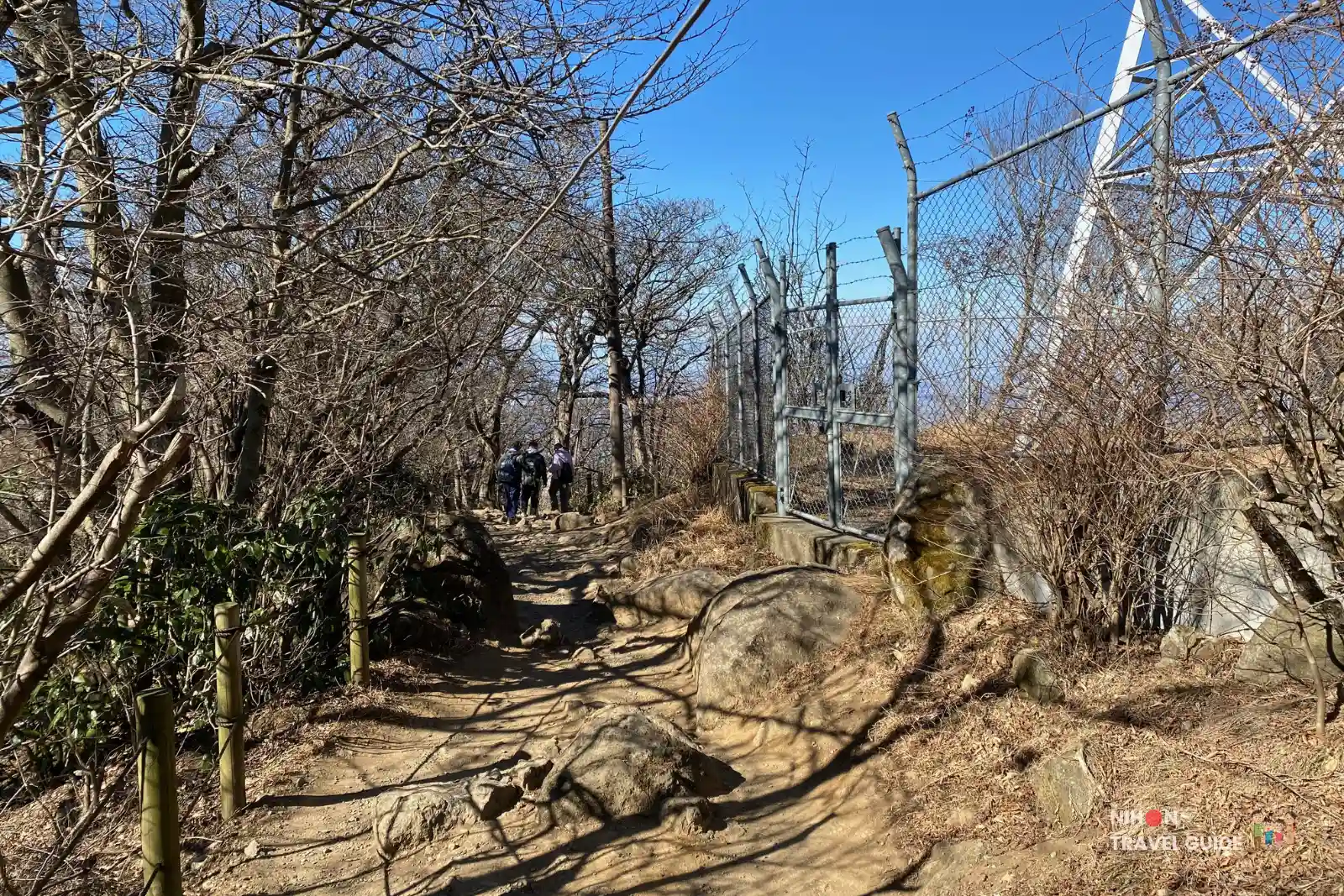

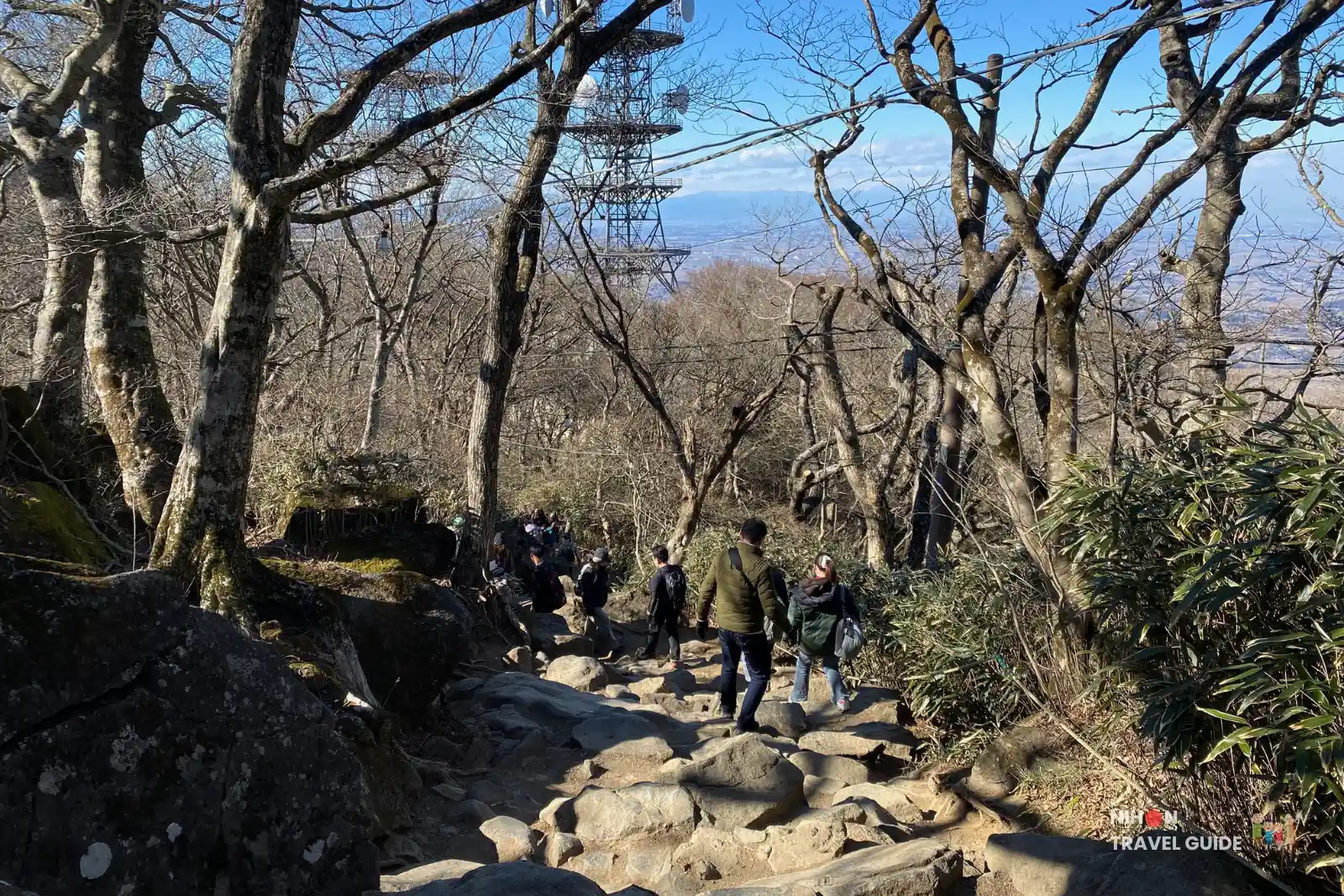
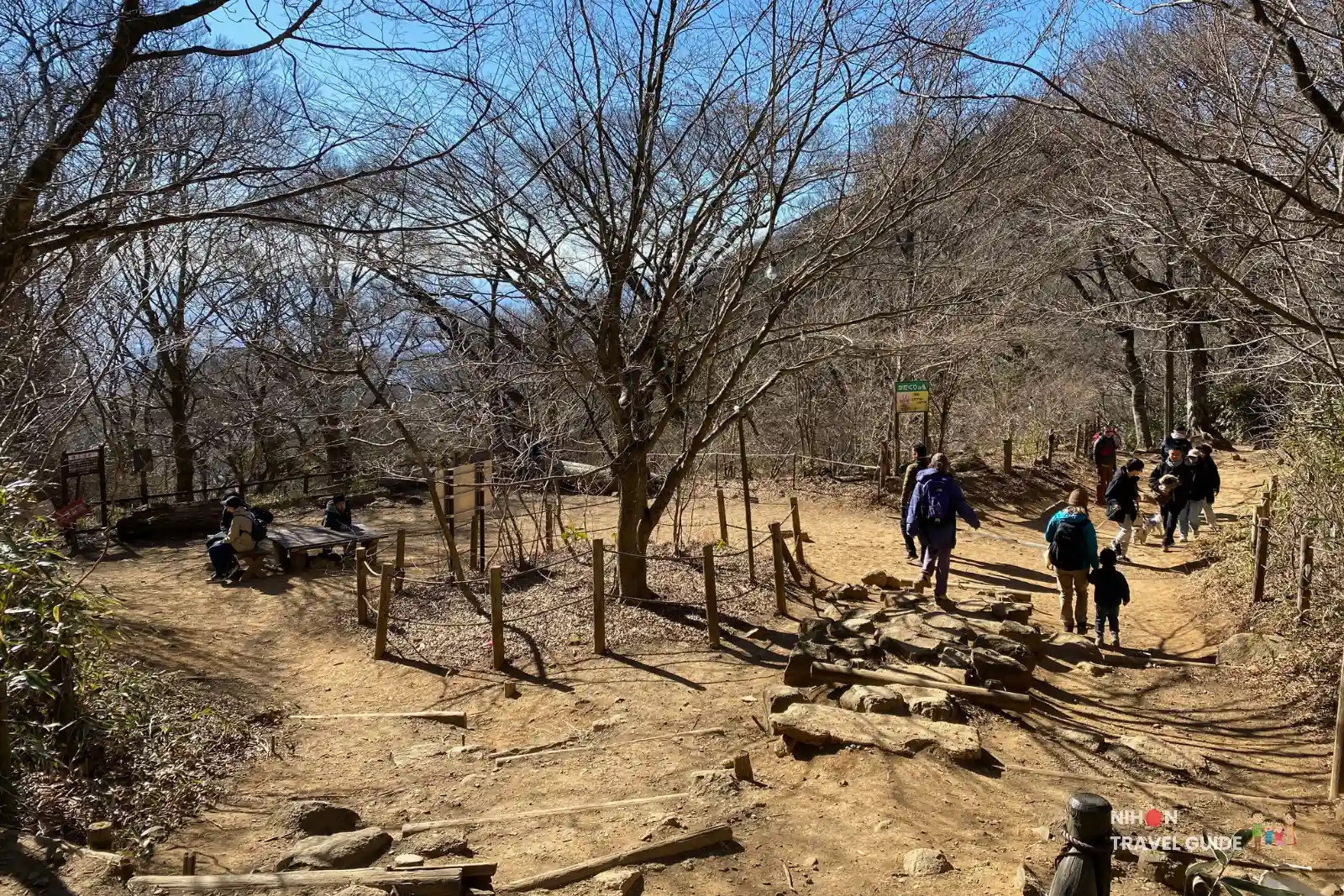
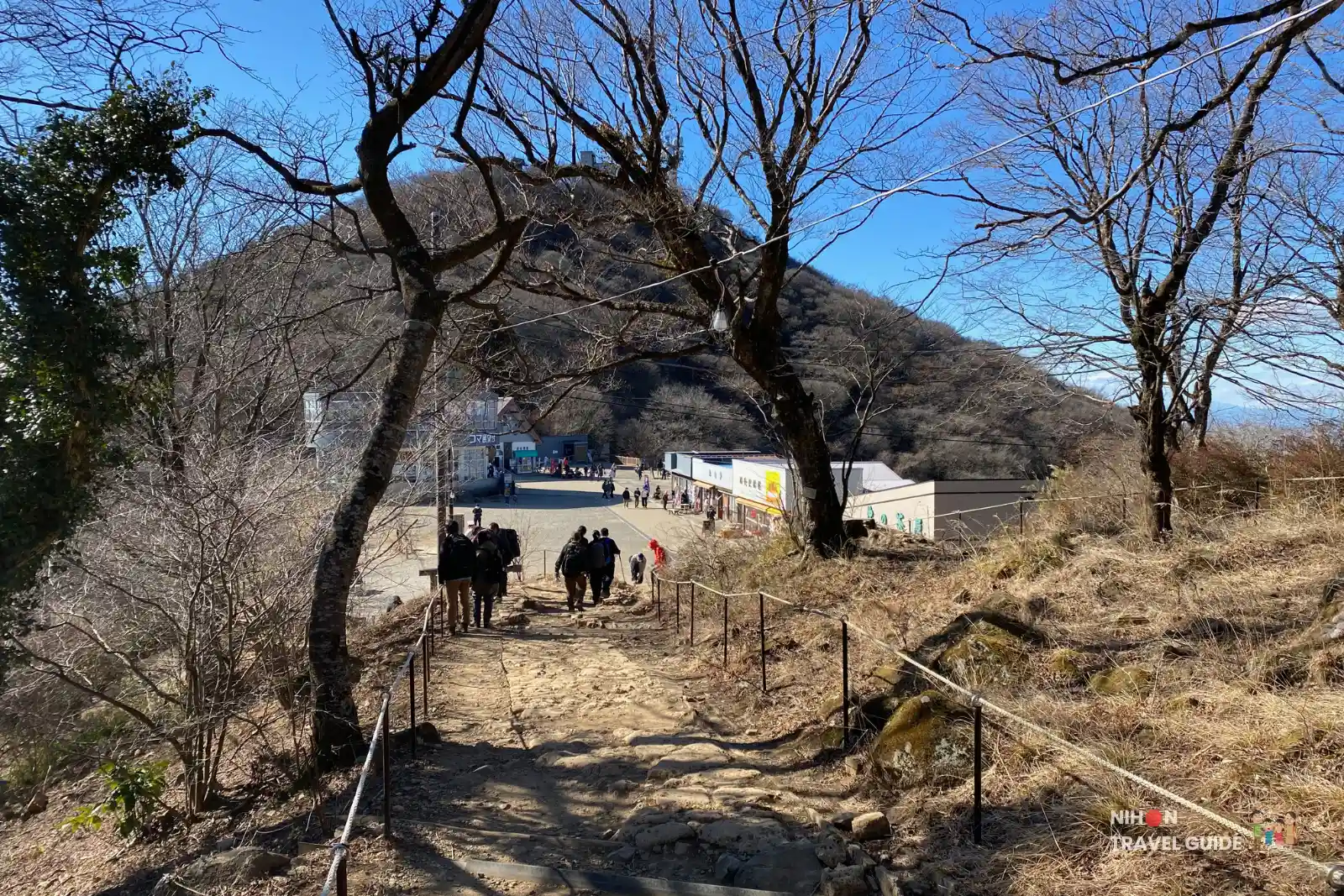
Once you’re done with Nyotaisan Peak, just head back down and follow the other path towards the Summit Village. The distance from Nyotaisan Peak to the Summit Village is actually not really far and there isn’t much elevation change. But there isn’t always a proper footpath. Most of it is a rock path. So hiking towards the Summit Village becomes a slightly tedious and a bit slow.
Miyukigahara Summit Village
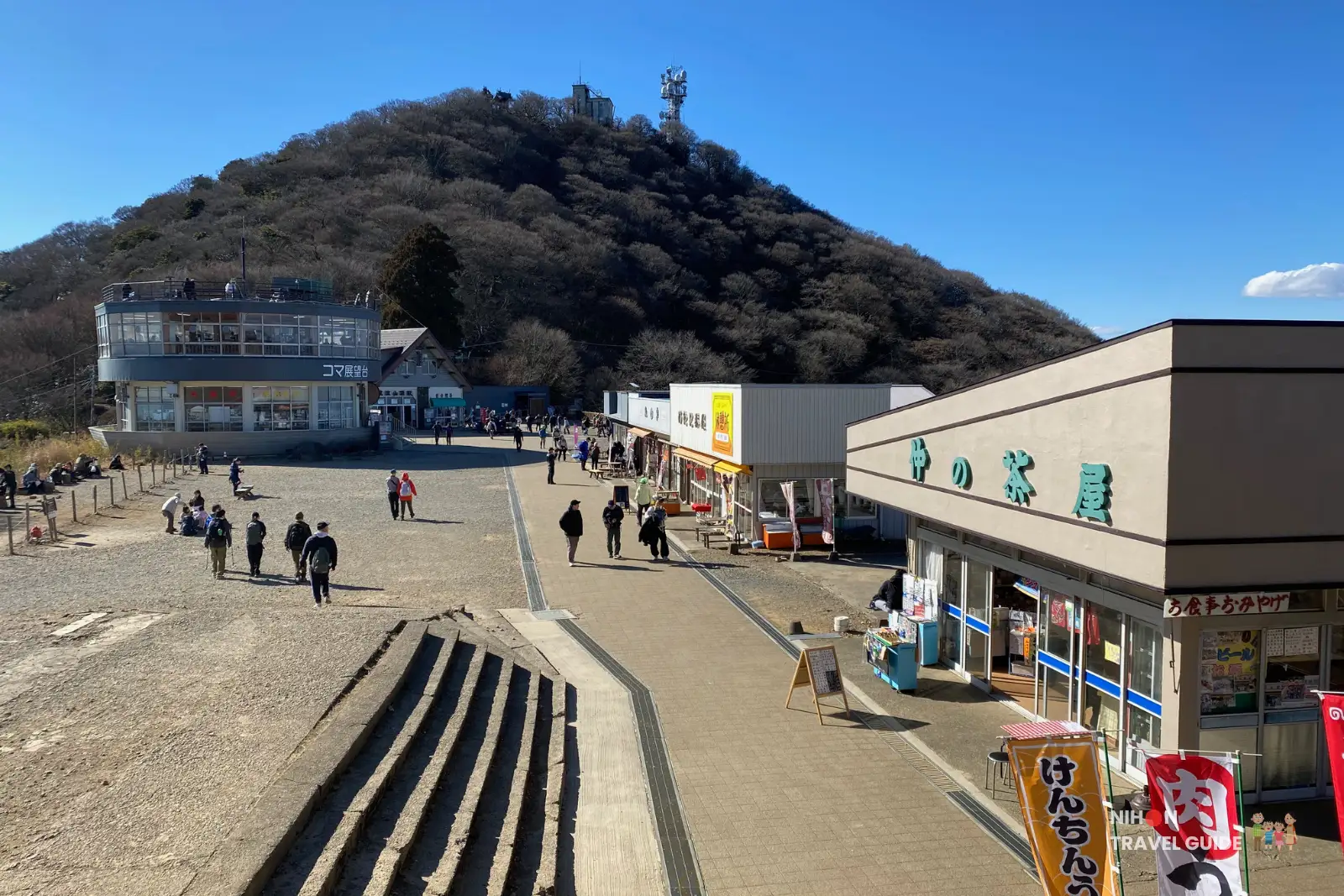
The Miyukigahara Summit Village is a welcome sight after you have hiked through the stone paths. I was actually really surprised to see a nicely paved area with quite a few buildings. There is a cafe, Soba shop, tea house (Miharashi‑tei), restaurants and several souvenir shops.
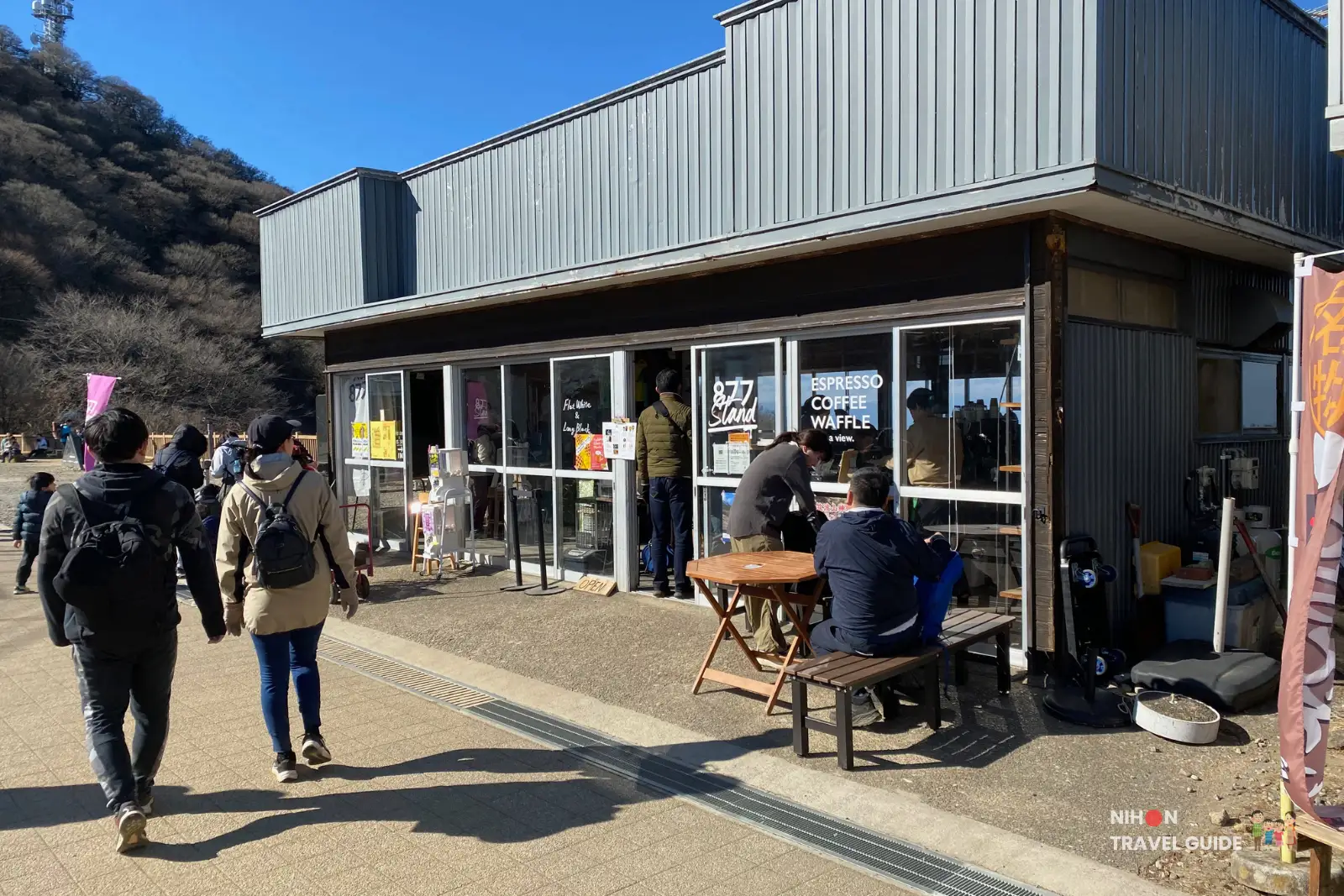
If you climbed up Nyotaisan Peak first, the Summit Village would be a great place to get some food, drinks, rest, use the toilet and tackle the Nantaisan Peak after.
Koma Observation Deck
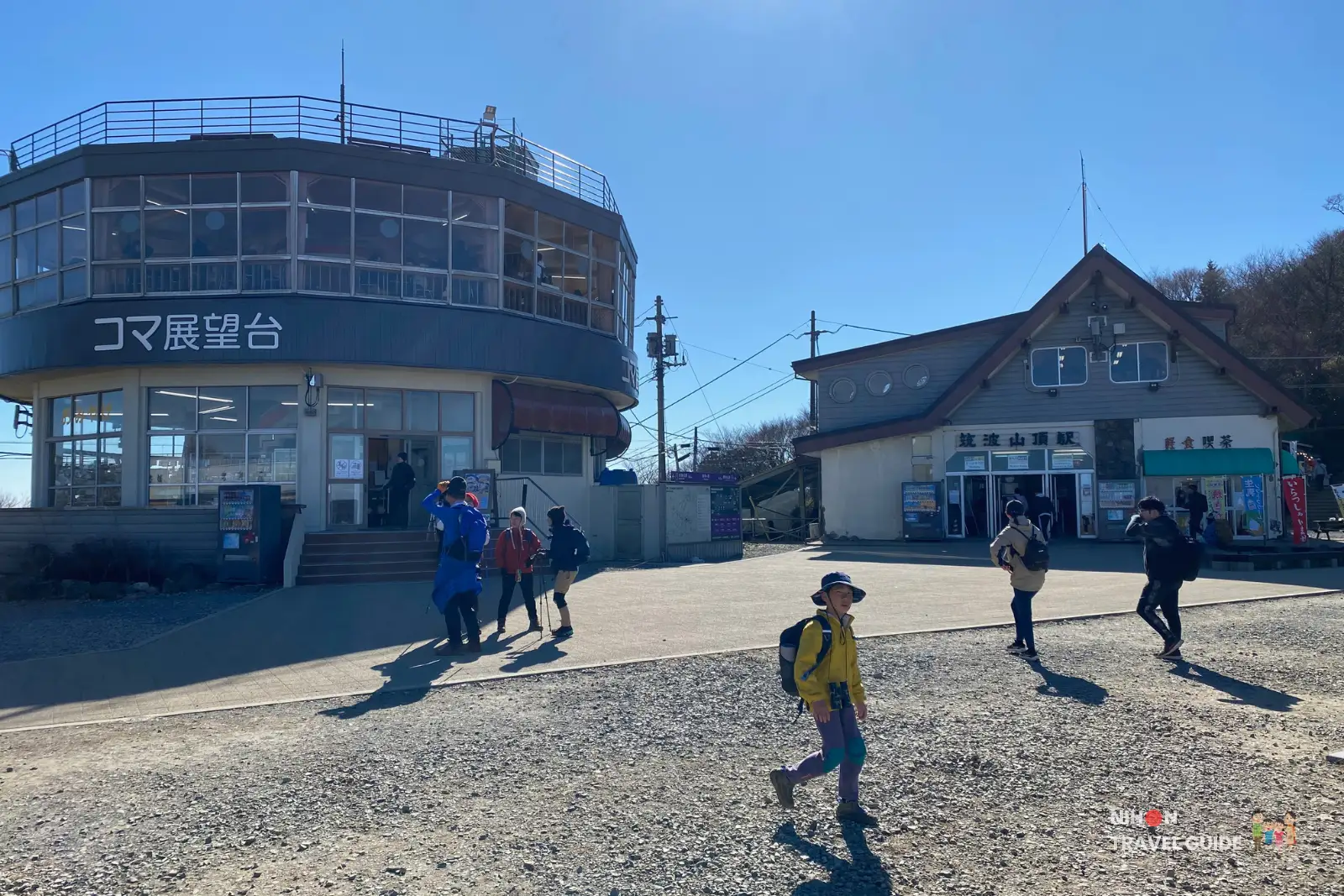
If you would like to see the great views from Mount Tsukuba without climbing the peaks, you can always go up Koma Observation Deck (コマ展望台 Koma View Terrace). The Koma Observation Deck is basically a souvenir shop on the ground level, resultant on the second level with an observation deck on the top floor.
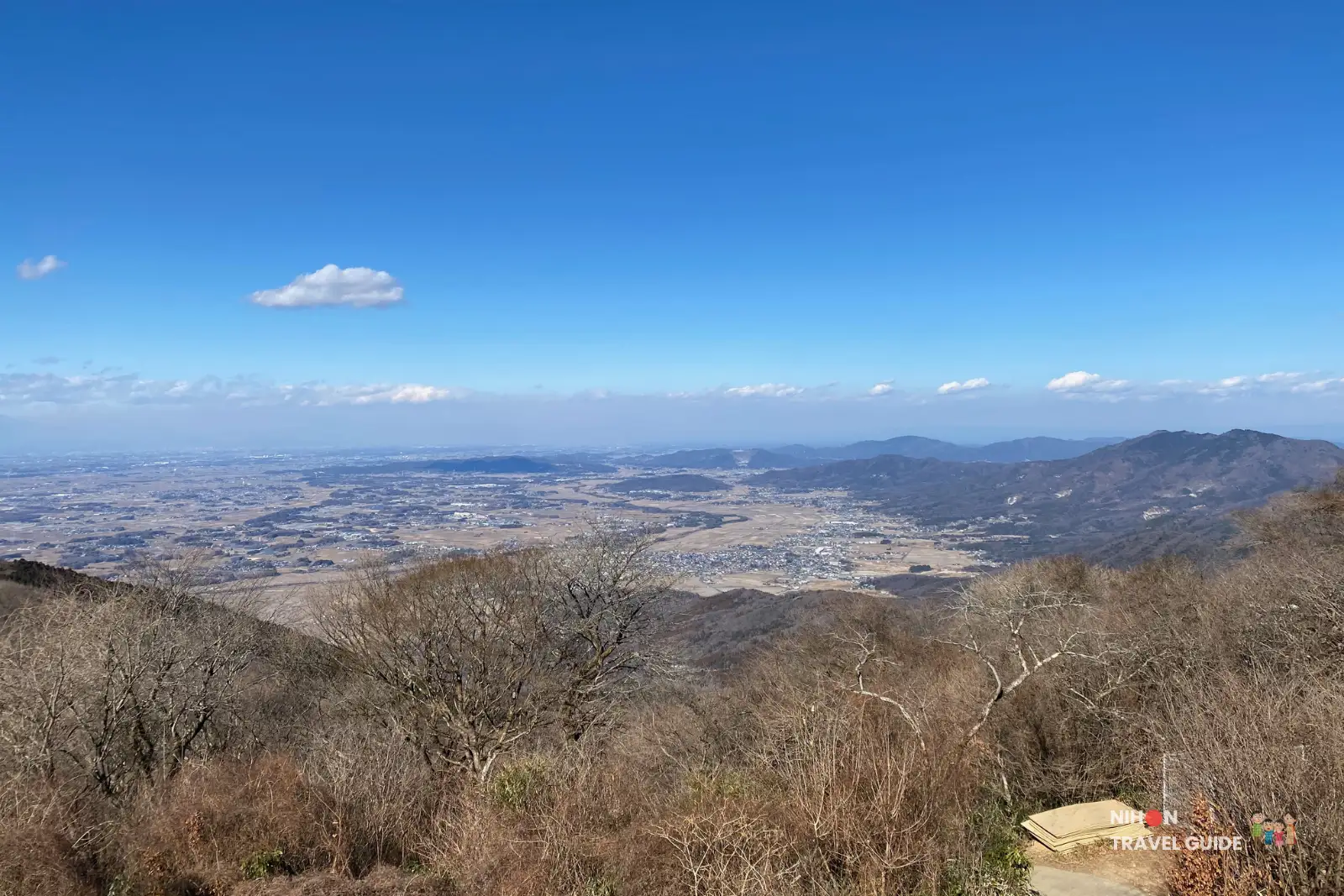
It gives you a 360 degree view of the area, about the same views that you would get at both peaks. However I feel that the view from the peaks are better because they are higher up. But this is a great option if you do not want to work so hard or are unable to climb the peaks.
Mount Tsukuba Summit Station
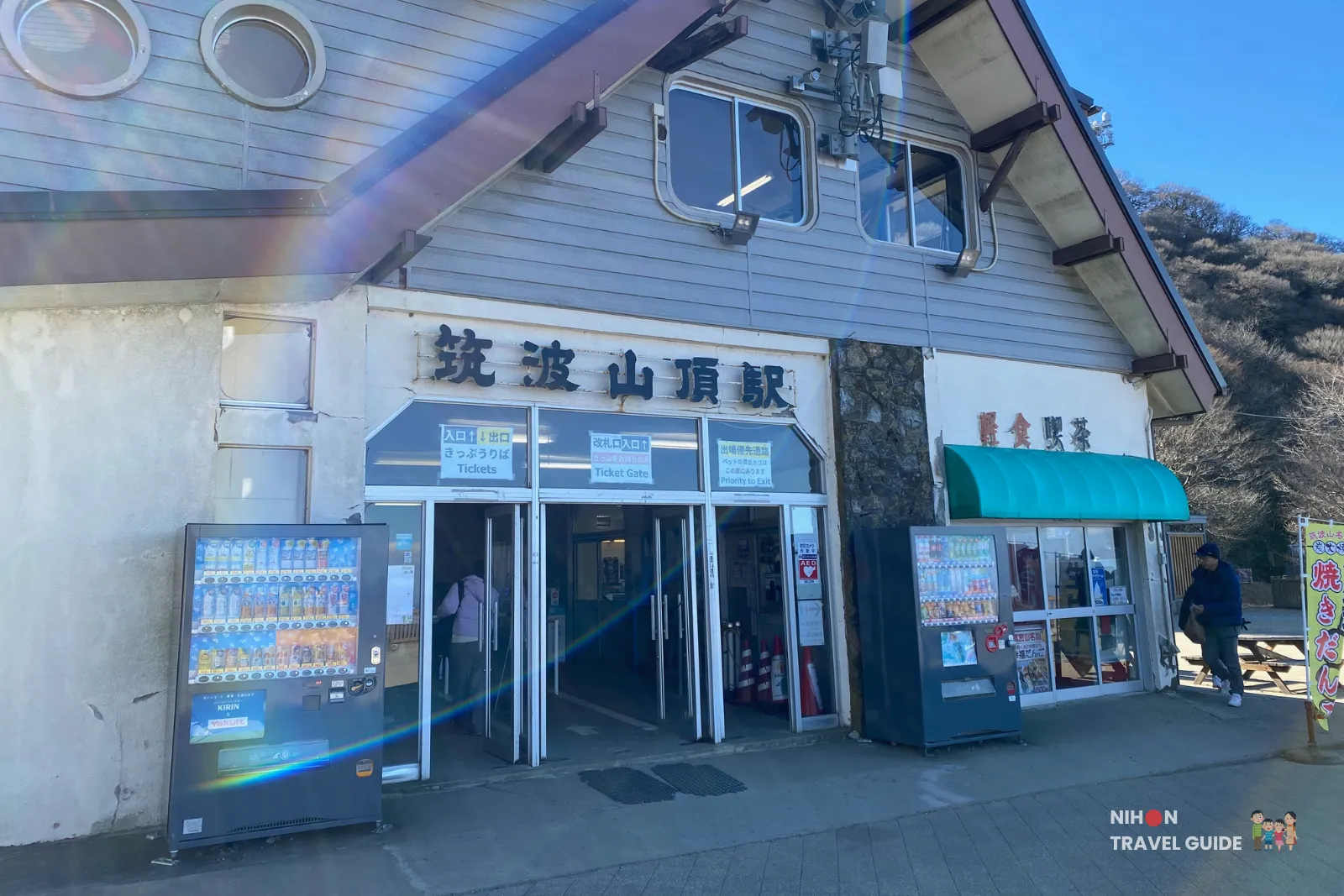
If you are taking the Mount Tsukuba Cable Car, you would arrive and depart at this station.
Nantaisan Peak
There isn’t much left to climb from the Summit Village to Nantaisan Peak (about 70m). However, it is really steep and in some parts really vertical. So it might take a good 15 minutes plus just to reach the peak.
There are some “rest areas” in between the vertical rock stairs that you can wait and catch your breath. Just take your time climbing and tackle each section one at a time.
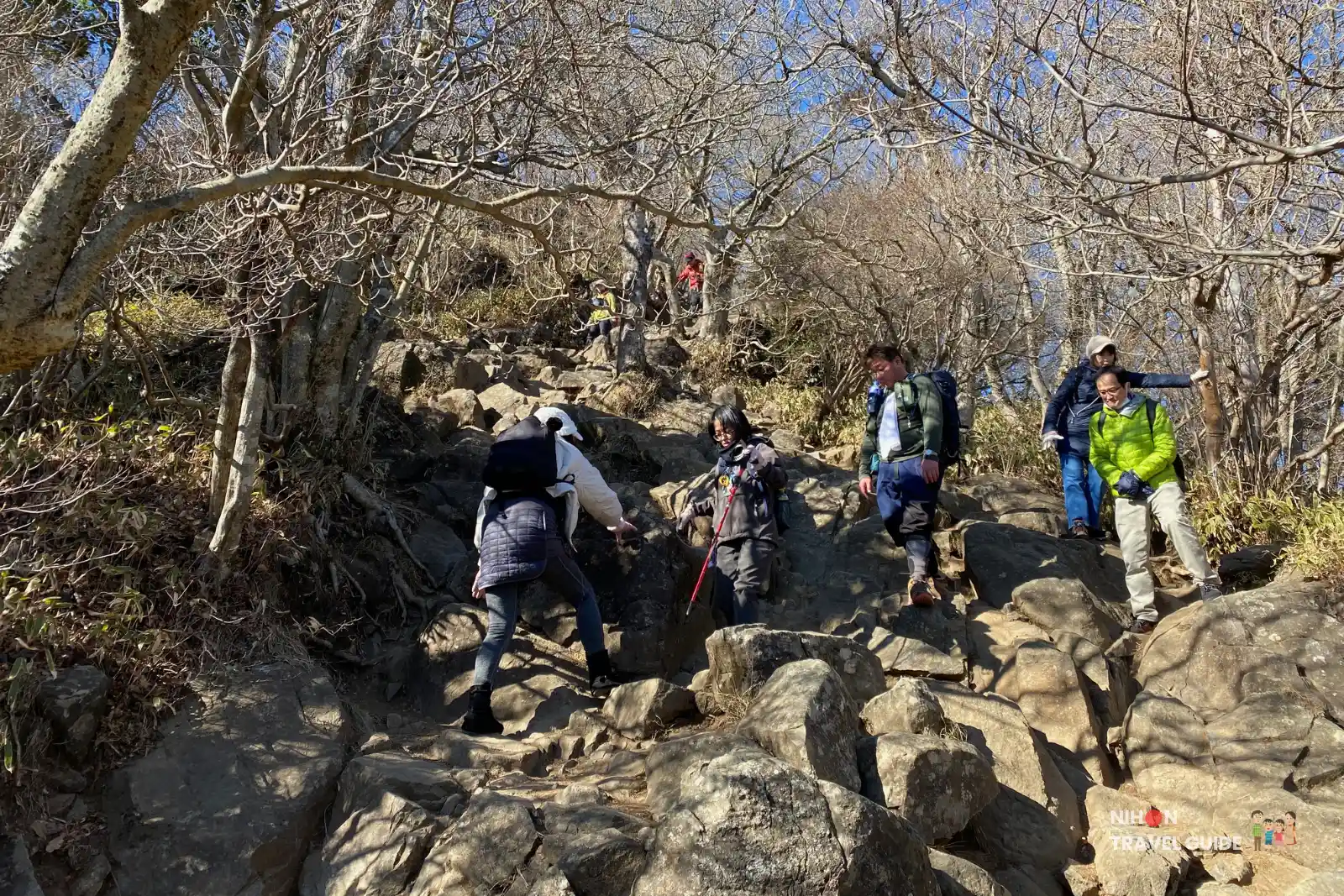
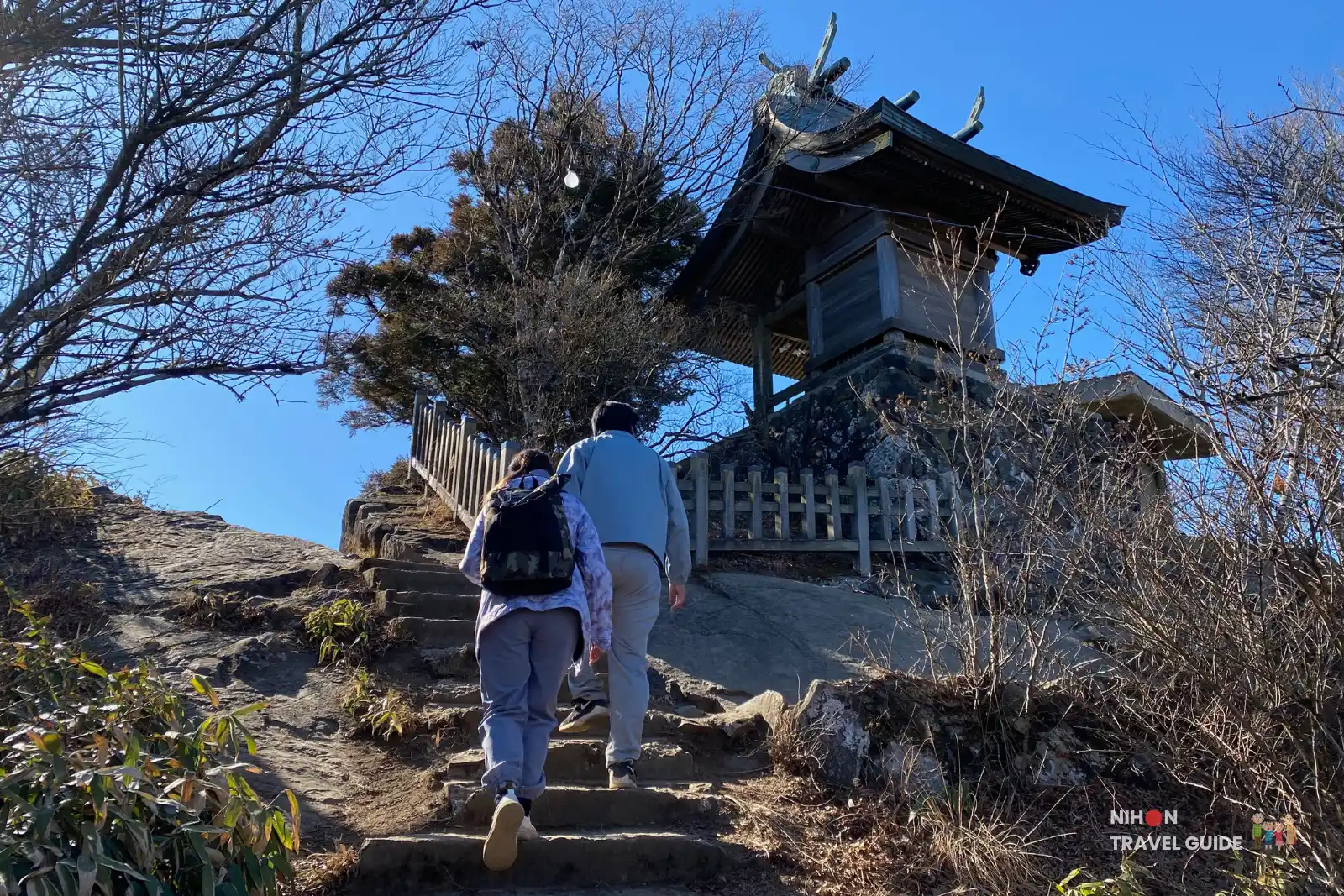
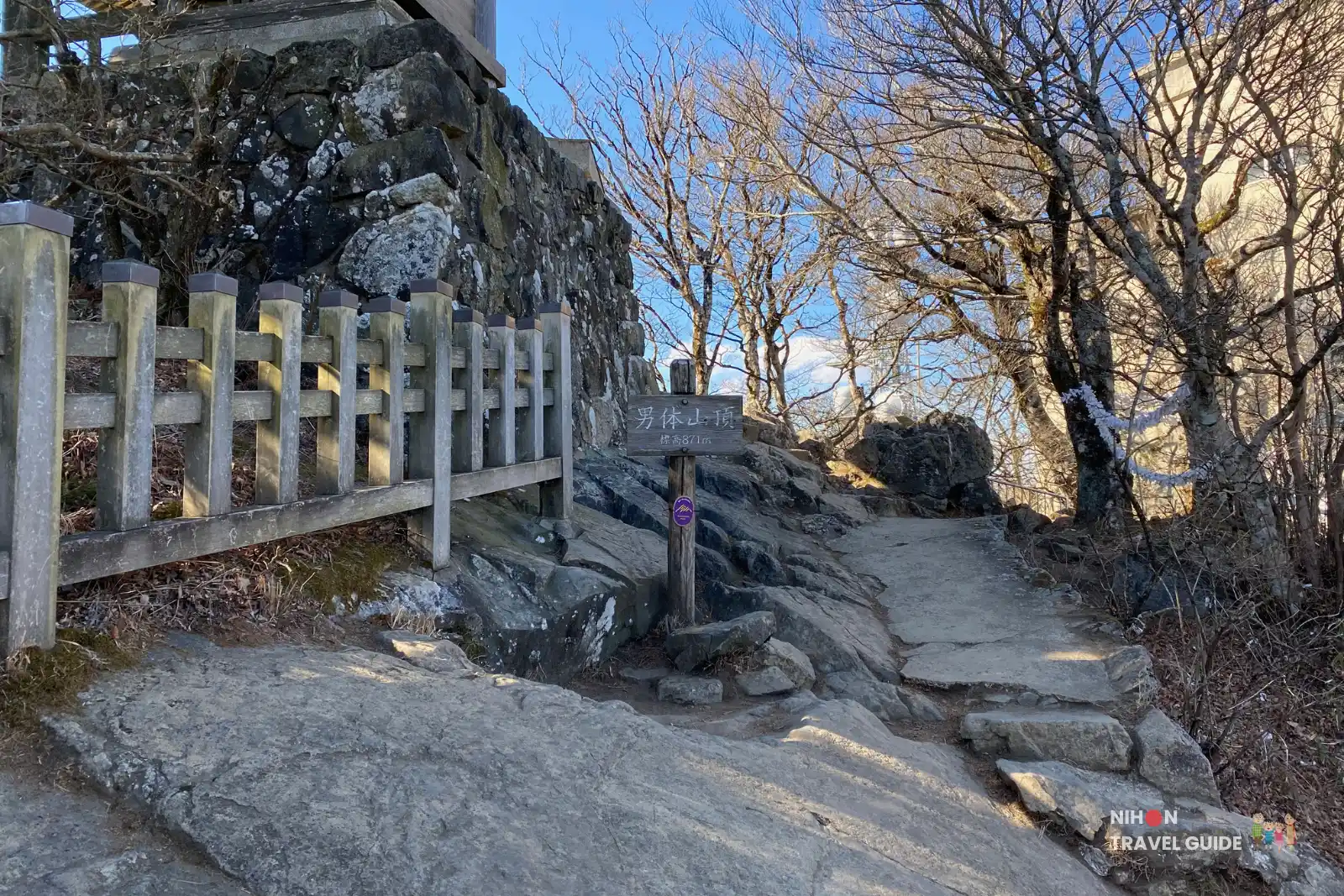
The rock stairs you see in the picture is the final climb up to Nantaisan Peak. When I reached this area there were a few people standing around catching their breaths. I joined them and just stared at the climb I had ahead of me.
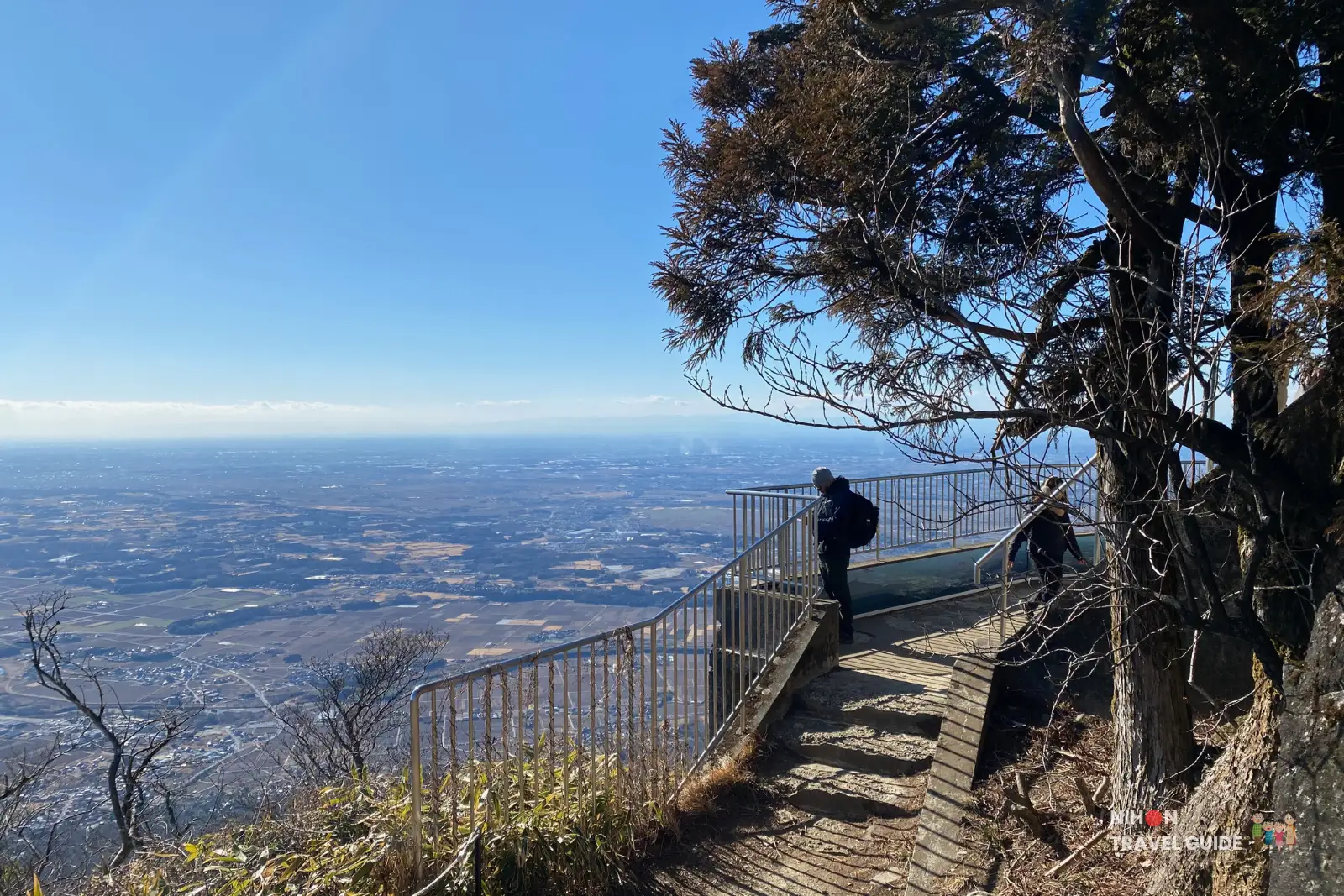
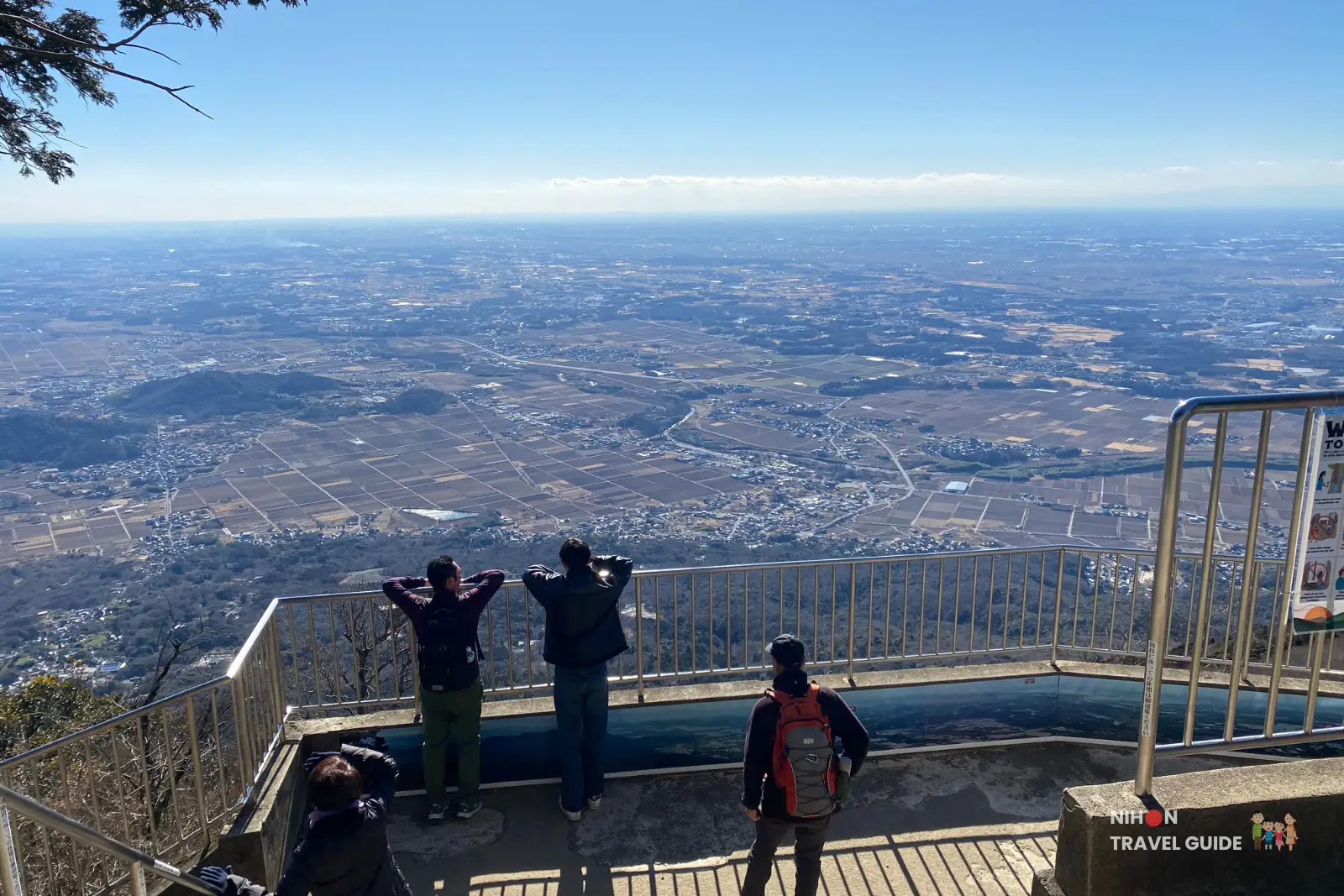
Once you reach the top, there is a viewing platform that you can look out from. The view was stunning and no matter how many pictures I took, what settings I used, it could not accurately capture what I was experiencing with my own eyes.
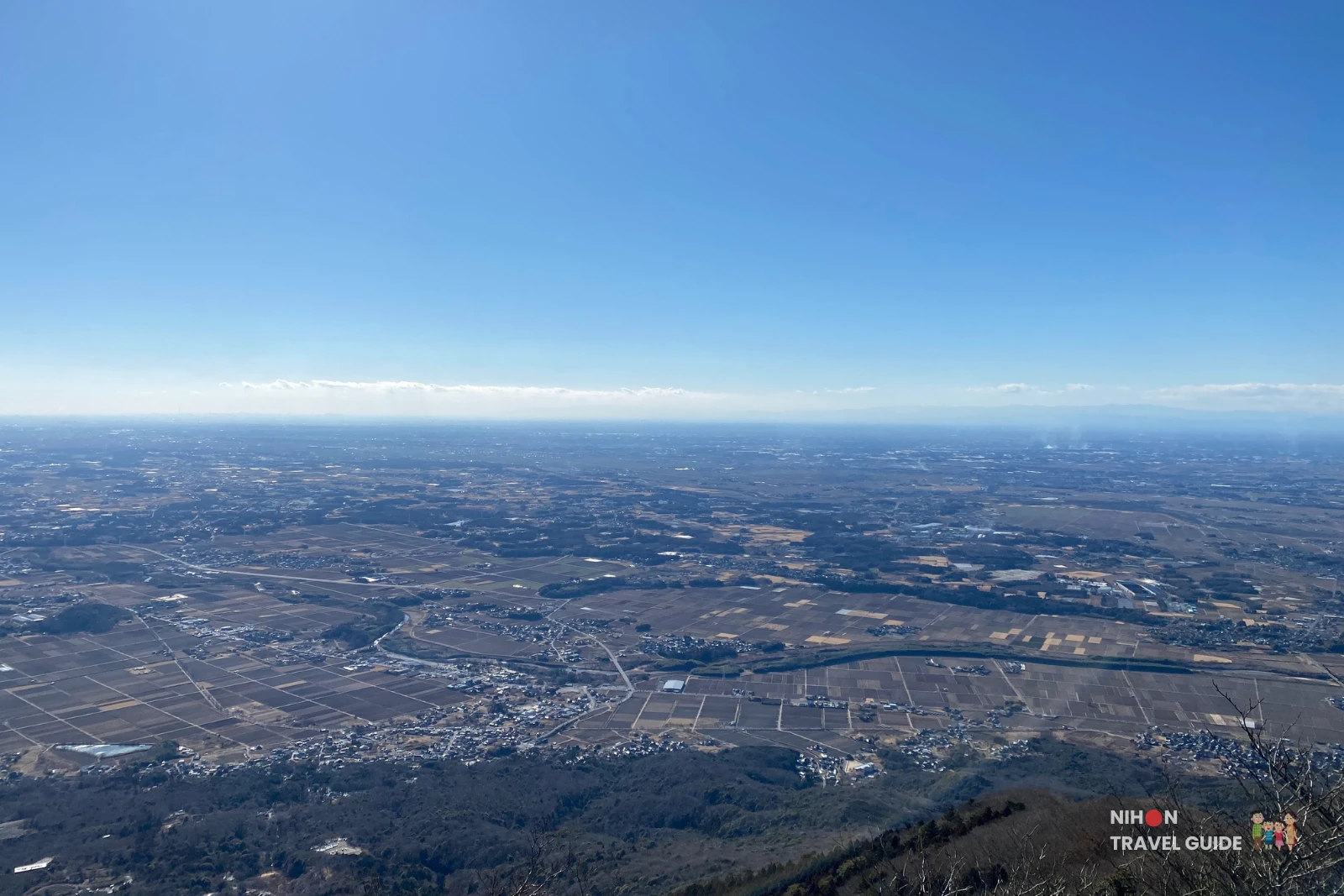
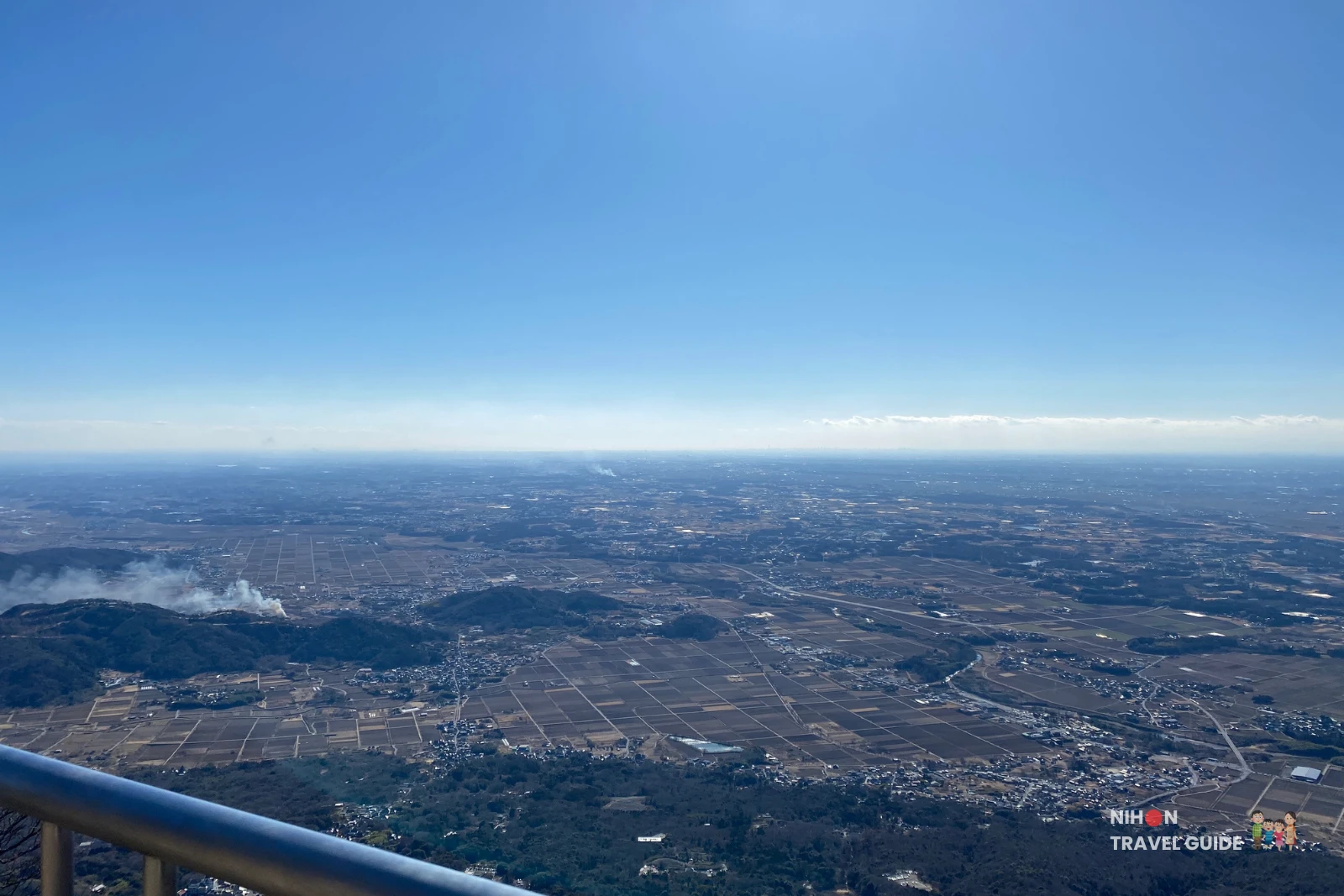
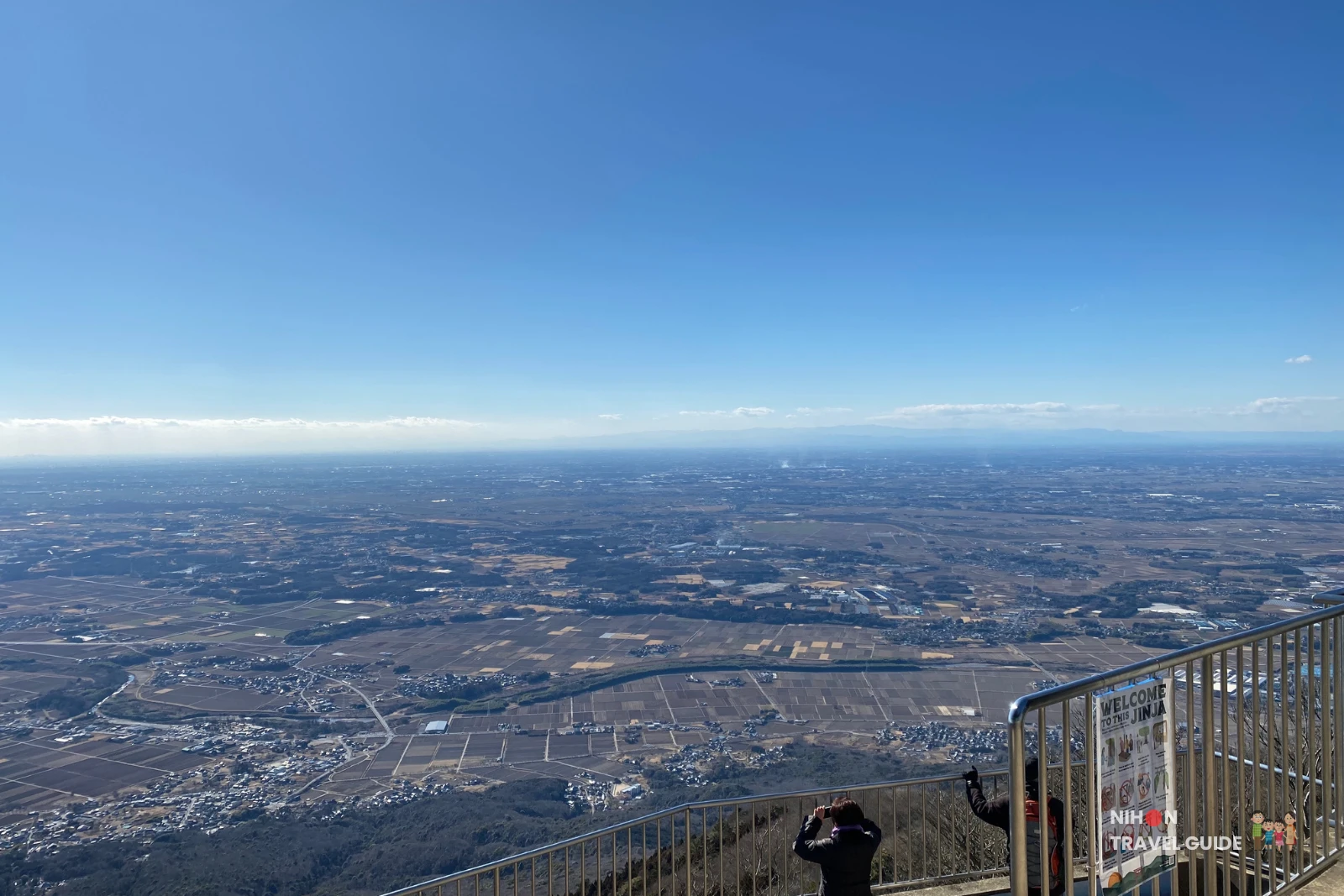
It was slightly cloudy on the day that I climbed, but on a clear day you would be able to see Tokyo City (buildings like the Tokyo Tower should be obvious) and even Mount Fuji. I was probably standing there for a good 20 minutes. It was definitely a good reward for the hard work climbing up.
Tsukuba Shrine Nantaisan Main Hall
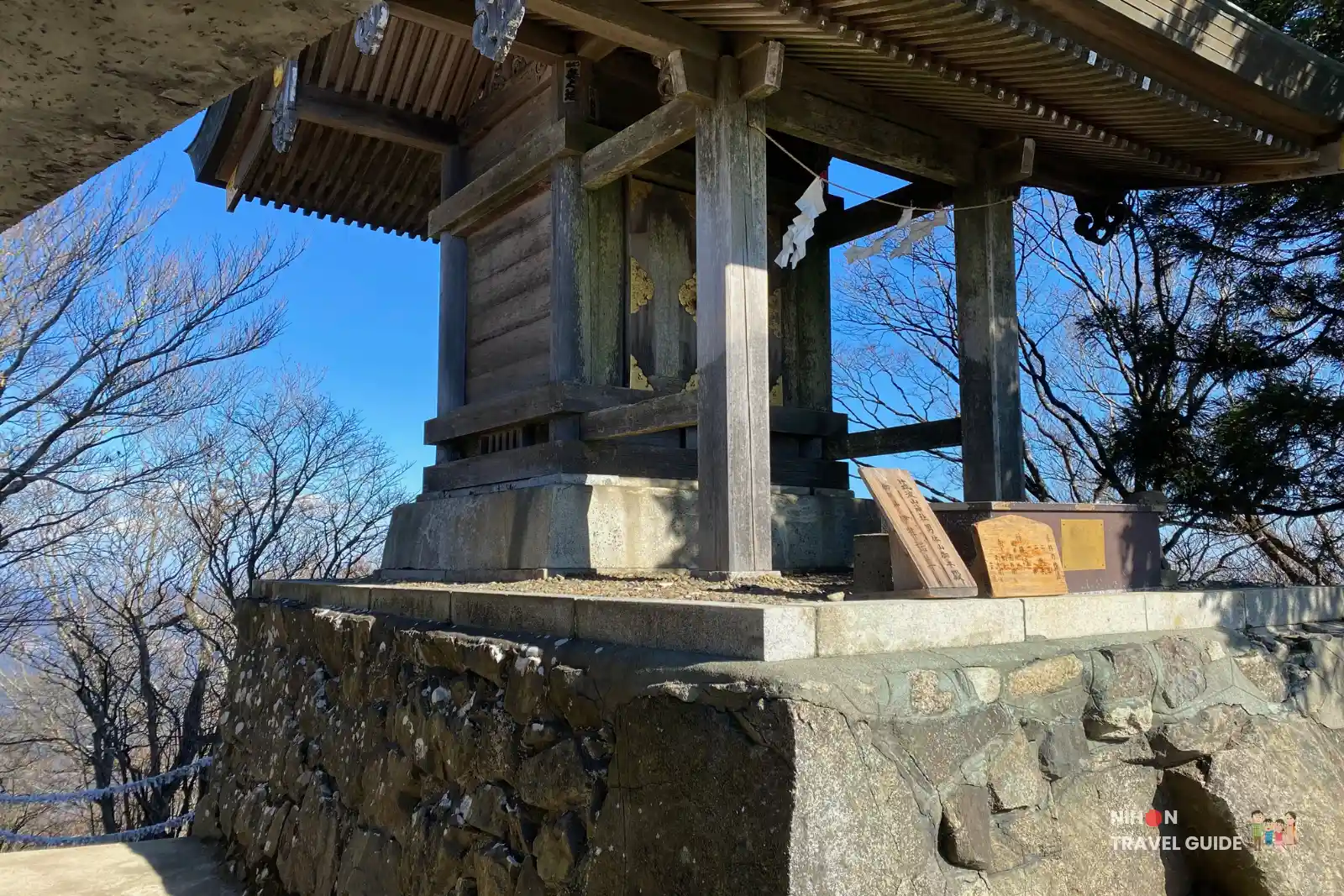
At the Nantaisan Peak there is also a shrine that locals come to. As with most shrines in Japan there are some rules so just be consider and be careful not to disturb the locals who are visiting the shrine.
Meteorological Observation Station
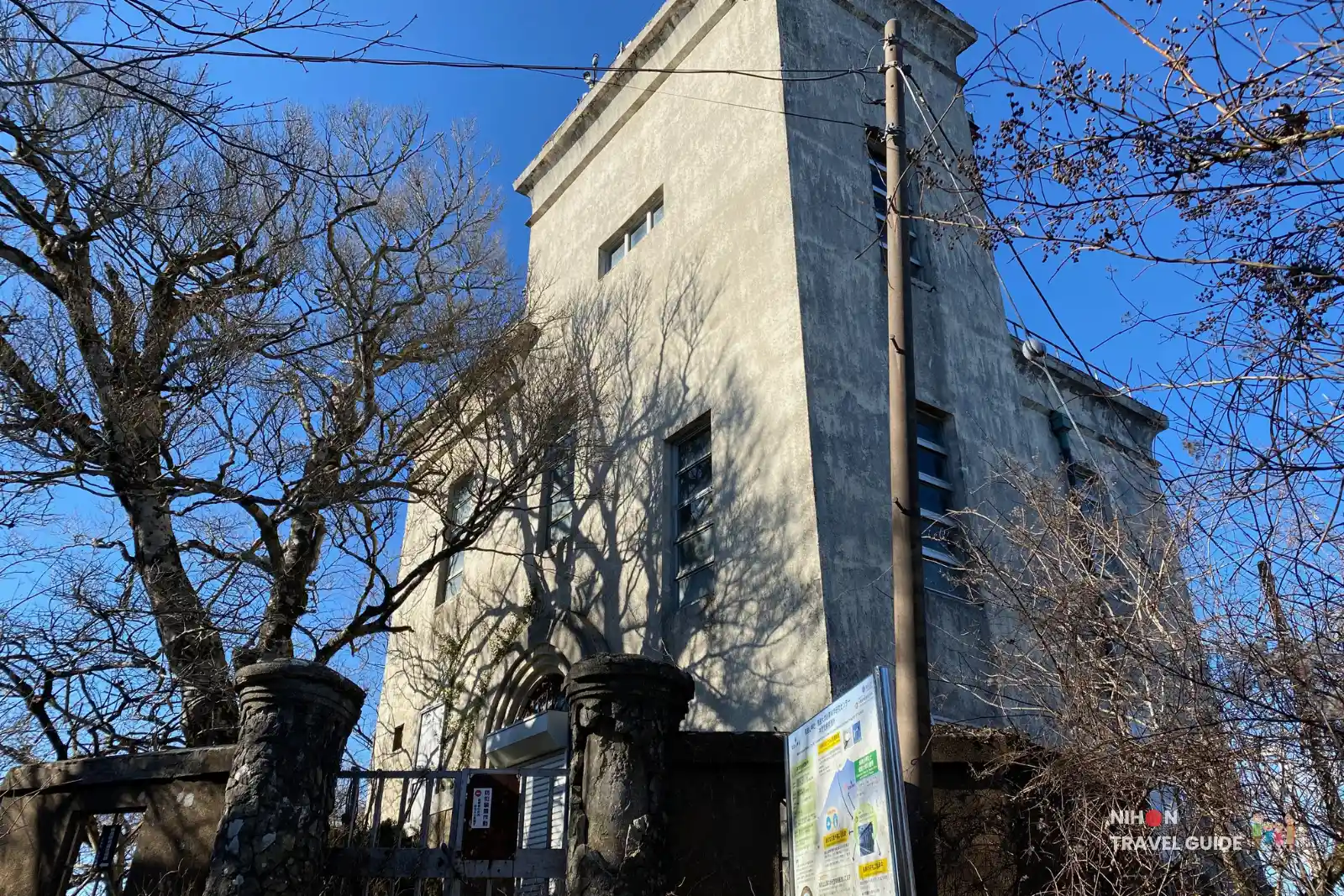
On your way down from Nantai-san Peak, you would see a Meteorological Observation Station. It’s a small weather observatory run by the Tsukubasan Shrine and University of Tsukuba’s Center for Computational Sciences.
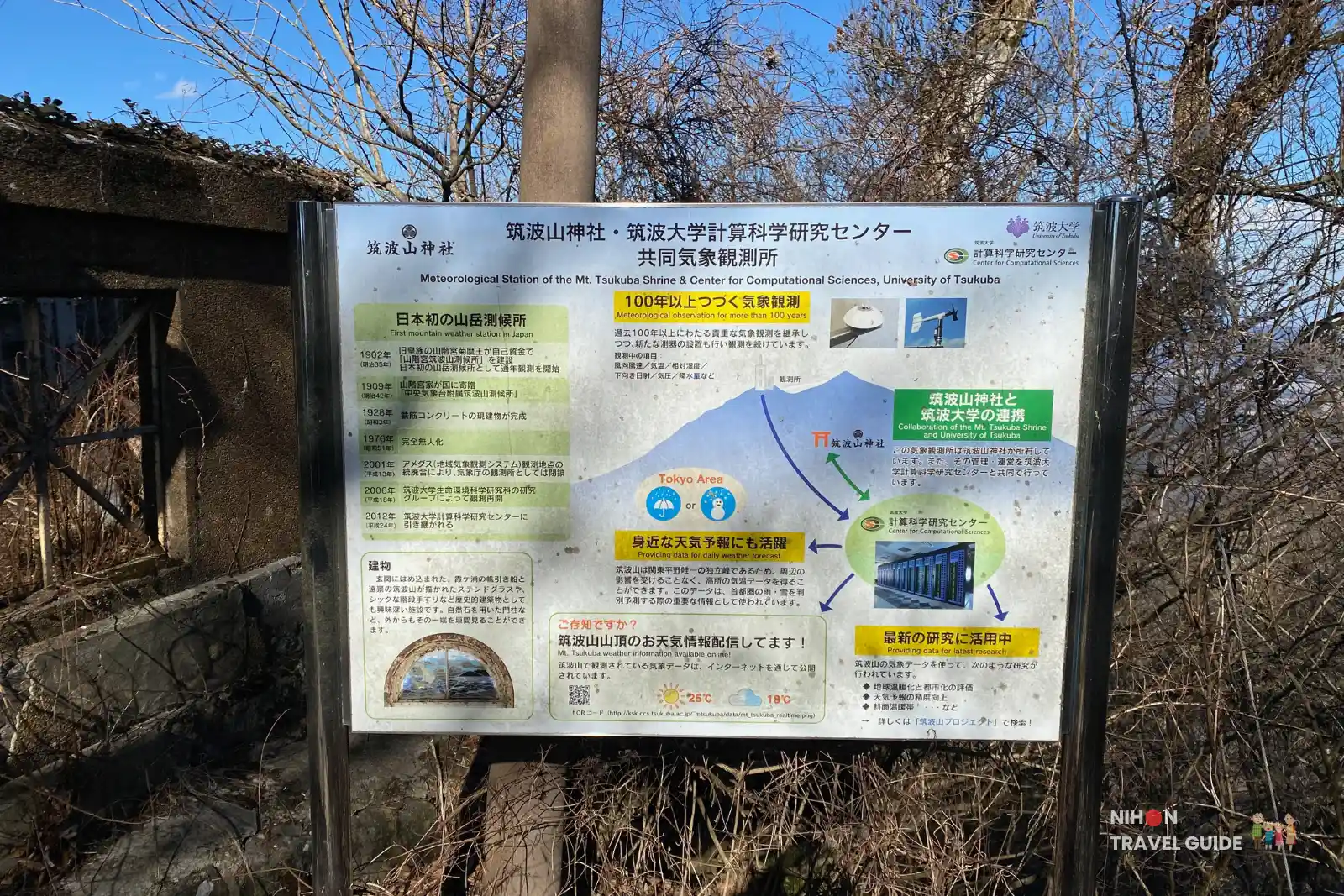
According to the on-site information board, it was built in 1902 as Japan’s first dedicated mountain weather station. The information board goes on to talk about how the station works.
Some Tips
– Lots of locals visit Mount Tsukuba on the weekends. If you want lesser people go on weekdays. If you want to climb with more locals then go on the weekends.
– Consider taking the Mount Tsukuba Ropeway instead of the Cable Car as it had fewer passengers and shorter queues.
– Be prepared with comfortable hiking clothing and shoes.
– Go slowly and take your time when climbing each section. There are lots of areas to wait and catch your breath.
– The locals are really considerate and would “look out” for one another. Consider going during busy periods if you don’t want to climb the peaks “alone”.
– Mount Tsukuba is not stroller friendly with all the rock paths. I did see a lot of young children climbing with their parents though.
Do I recommend Mount Tsukuba?
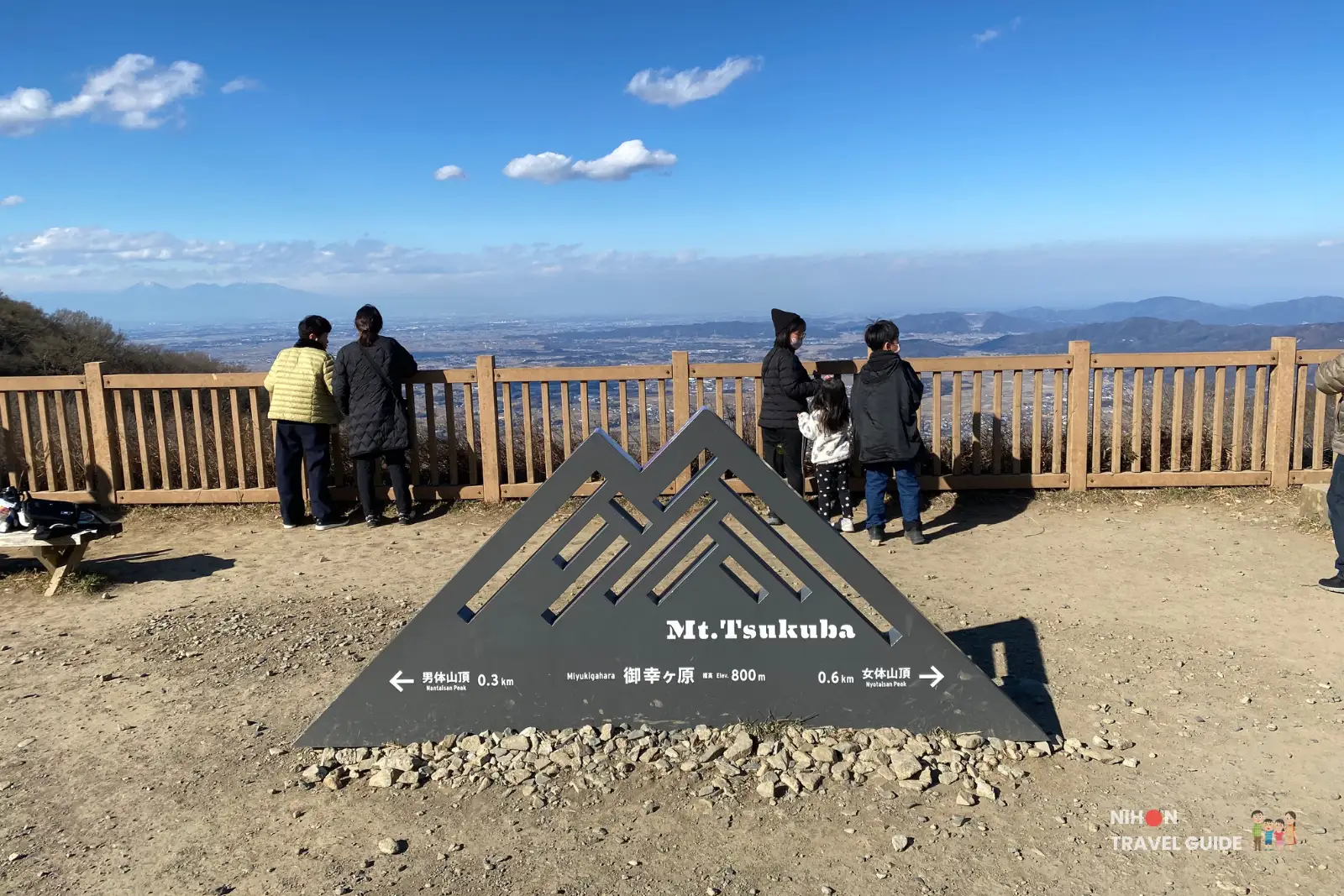
Yes I do recommend climbing Mount Tsukuba. I really love the stunning views especially from the Nantaisan Peak. Even the views from the Koma Observation Deck are spectacular too. Even though it may not have the charm or tourist appeal that Mount Fuji has, I would say that Mount Tsukuba is a hidden gem in the Ibaraki region and truly worth visiting.
If you would like to explore Japan even more and visit places that the locals love, Mount Tsukuba is a great place to visit.
My Rating: 4.5 / 5
Stunning summit views, easy Ropeway/Cable car access, but a very Sweaty Experience.
When is the best time to visit Mount Tsukuba?
If you want to see slightly better views and a chance to see the Tokyo City and Mount Fuji, it is better to go during the summer period (from June to August). But it will be a lot hotter so the hike might be tougher and you would be a lot sweatier.
If you want to sweat a lot less and still get great views, going during winter (like I did) is what I would recommend as the views are stunning still and it’s a great reward for the exercise.
How long should I spend at Mount Tsukuba?
I arrived at about 10 am and left the Ropeway Station at around 2pm. So I spent about 4 hours hiking up both peaks (including Nyotaisan twice). If you are looking to climb both peaks as well spending 4 hours at Mount Tsukuba should be just fine.
If you are just looking to visit the Summit Village without climbing the peak I would say 1-2 hours is good enough.
FAQ – Mount Tsukuba
1) When is the best time to visit Mount Tsukuba?
Winter for cooler temperatures and clear views. Summer for the best chance of seeing Tokyo and Mount Fuji from the peaks, though it will be hotter. Weekdays are quieter than weekends.
2) Is there parking at Mount Tsukuba?
Yes, there is parking available at the Ropeway Station (Tsutsujigaoka Station).
3) What is the difference between the Ropeway and the Cable Car?
The Ropeway takes you closer to Nyotai-san (female peak, 877m) and the Cable Car takes you closer to Nantai-san (male peak, 871m). The Ropeway tends to have shorter queues.
4) Ropeway or cable car – which should I choose?
Ropeway for Nyotai peak and Cafe Cielo Blu; cable car for Miyukigahara “summit village” and Koma Observation Deck. Many people ride one up and the other down.
5) Can I hike up Mount Tsukuba?
Yes. The Miyukigahara and Shirakumobashi courses take roughly 1.5–2 hours from the Tsukubasan Shrine. That said, even just climbing between the peaks after taking the Ropeway up is already quite challenging.
6) How long does it take to reach the peaks from the top stations?
From Nyotaisan Station to Nyotai peak: about 10–15 minutes up a steep rocky path. From Miyukigahara to Nantai peak: about 15 minutes.
7) Can I bring my pet?
Yes. Both the Ropeway and Cable Car have pet cages available to borrow for free. Max cage size is 40cm high × 35cm wide × 60cm deep.
8) Is there food at the top?
Yes. Nyotai side has Cafe Cielo Blu; Miyukigahara has several simple restaurants, a soba shop, tea house and souvenir stands.
9) Is Mount Tsukuba stroller-friendly?
No. The paths between the peaks are rocky and uneven. That said, young children do make the climb with their parents regularly.
10) Is Mount Tsukuba a good alternative to climbing Fuji?
Yes if you want big views with far less time, altitude and effort. It’s a good “practice” or substitute for people who don’t want Fuji’s long overnight climb.