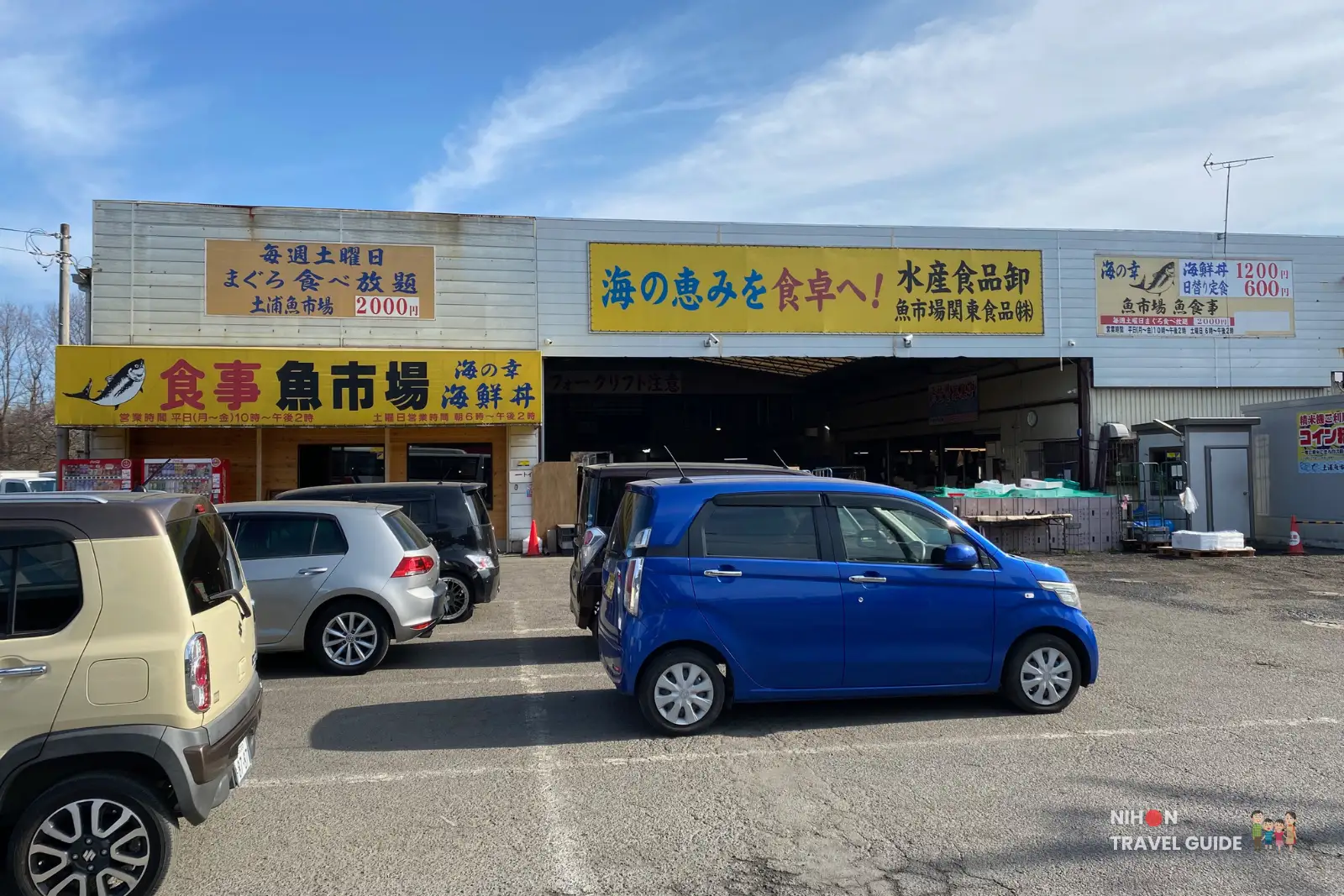
Authentic rural wholesale fish market with affordable fresh seafood and famous ¥2,000 Saturday tuna all-you-can-eat. But arrive early or miss the best action.
TL;DR – Recommended If you are looking for an authentic rural Japanese market and are travelling in the Ibaraki area
- Arrive early (6am opening) = fresh seafood stalls + easy dining seats.
- Dining hall is wildly popular with locals—affordable grilled sets (¥600–¥2,500) and packed even before lunch.
- Saturday highlight: ¥2,000 maguro (tuna) all-you-can-eat with unlimited sashimi refills—lines form before 6am.


On a recent trip to Tsuchiura Ibaraki in February 2026, I visited Tsuchiura Fish Market and it’s a little bit like swiping right on a dating app after looking at the profile, but when you show up for the date you get something completely… different.
Because you probably visited Tsukiji fish market in Tokyo or Hakodate Morning Market in Hakodate and thought you would get a similar Japanese market experience. But what you get instead is something smaller, less flashy and slightly underwhelming.
Tsuchiura Fish Market (土浦魚市場) is a local wholesale-style seafood market and casual dining spot in Tsuchiura City. It’s similar to other local fish markets in Japan where they buy fresh seafood directly from fishers and fishing ports around Japan. They also supply fish and other food products to hotels, restaurants and golf courses in the region.
If you go early enough you would get to see a wide variety of fish that is brought in early in the morning.
It may be small but it’s not all bad though. I will let you know what my experience was like and why you should consider visiting if you are travelling in Ibaraki.
- TL;DR – Recommended If you are looking for an authentic rural Japanese market and are travelling in the Ibaraki area
- How to get to Tsuchiura Fish Market
- Tsuchiura Fish Market Opening Hours
- Tsuchiura Fish Market Main Hall
- Tsuchiura Fish Market Dining Hall
- Saturday maguro 鮪 (tuna) all-you-can-eat
- Some Tips
- Is Tsuchiura Fish Market Worth Visiting in 2026?
- FAQ – Tsuchiura Fish Market
All photos on this page are mine, shot on an iPhone 11 pro.
How to get to Tsuchiura Fish Market
To get to Tsuchiura Fish Market (土浦魚市場), you want to travel to Arakawaoki Station and take the Tsukuba CenterLine bus from the station’s West Exit. It is about a 12 minute bus ride (5 stops, ¥240) and you would alight at the Tsuchiura Industrial Technical College. Just cross the road and you would reach.
Travelling from Tokyo
If you are travelling from Tokyo, the fastest way would be to take the express highway bus line called Tsukuba-go Highway Bus from the Tokyo Station to Tsukuba Center at Shimohirooka. From there you can walk about 13 mins to the Tsuchiura Fish Market.
| Direction | IC card fare | Cash fare |
|---|---|---|
| Tsukuba → Tokyo Station | ¥950* | ¥1,260 |
| Tokyo Station → Tsukuba (regular bus) | ¥1,200 | ¥1,260 |
| Midnight Tsukuba bus | – | ¥2,350 |
*IC card discounts may vary; always confirm the latest fares before you travel.
Visit their website to check for the latest timetable, fares, and service notices: JR Bus Kanto Tsukuba-go Highway Bus page .
You could also drive there like I did. There are quite a few parking lots at Tsuchiura Fish Market and it’s free.
Tsuchiura Fish Market Opening Hours
Tsuchiura Fish Market is open everyday from 6am to 2pm (except on Sundays and public holidays.The fish stalls may close earlier when they have sold out their fish, but the market will still open selling other food products.
The dining hall is open from 10am to 2pm on Weekdays and 6am to 2pm on Saturday only.
| Area / activity | Day type | Opening hours | Notes |
|---|---|---|---|
| Dining hall (食堂) | Weekdays | 10:00–14:00 | Lunch only. |
| Dining hall (食堂) | Saturday | 6:00–14:00 | Popular tuna all-you-can-eat events often on Saturdays. |
| Fresh fish sales (鮮魚販売) | Weekdays | 6:00–9:00 | Ends earlier if sold out. |
| Fresh fish sales (鮮魚販売) | Saturday | 6:00–13:00 | Ends earlier if sold out. |
| All areas | Sun, public holidays, market holidays | Closed (some exceptions) | Check the market calendar on their homepage; some holidays are open. |
Take Note: When travelling in Japan, please always check their website for opening hours as they do not always update the opening hours on their Google Business Profile. By default these are the opening hours but they do change it quite a lot so their own website has the most accurate information.
Also their Google Business Profile only states the opening hours for the Dining Hall and NOT the whole market itself. I ended up arriving at the market in the late morning when most of the fish had been sold out.
Tsuchiura Fish Market Main Hall
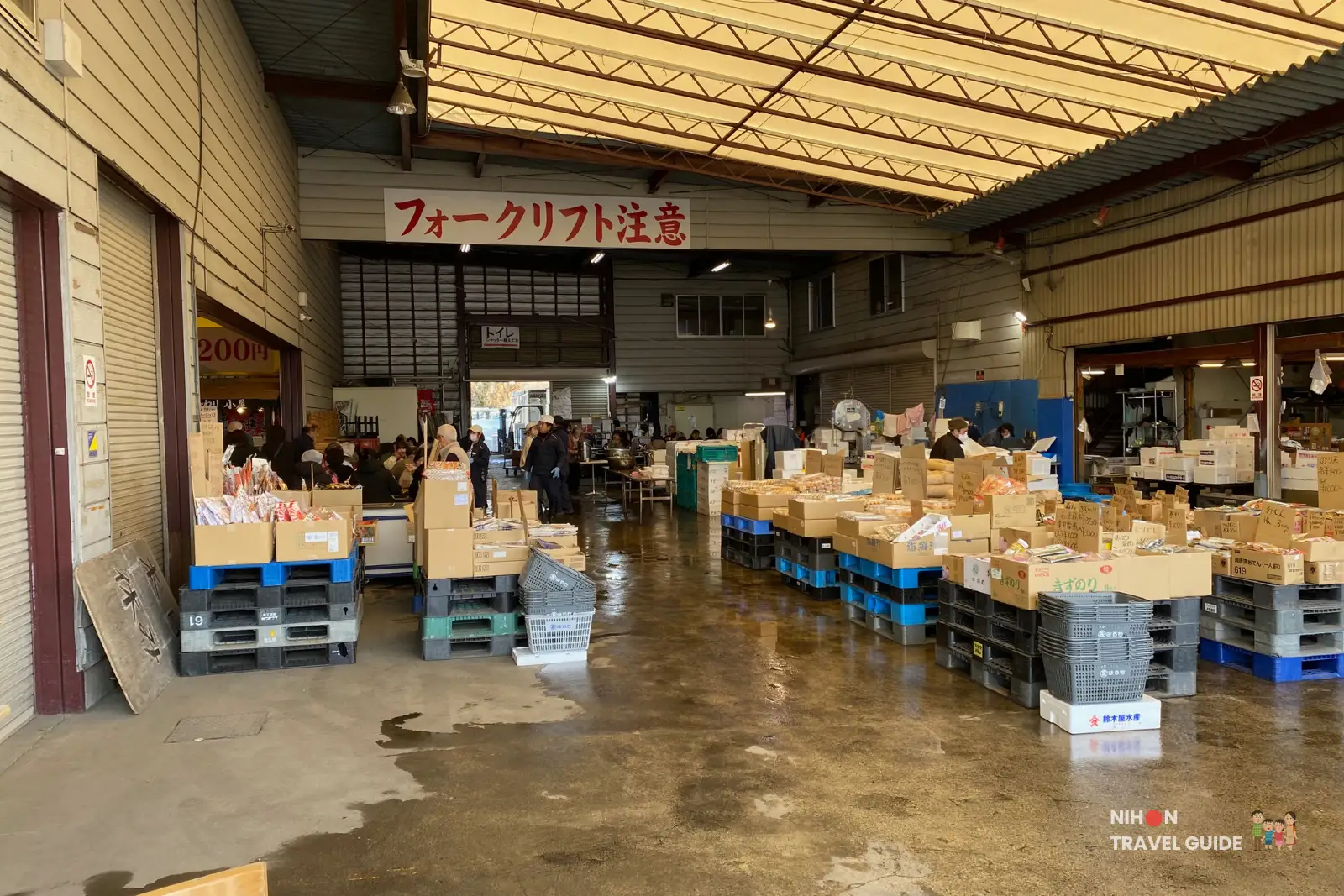
Once you have arrived, you would see the main hall where most of the stalls are located. It’s not a large hall compared to Tsukiji fish Market but there are quite a number of stalls selling fish. It has more of a rural market warehouse vibe instead of a more polished “touristy” vibe that Tsukiji fish Market gives.
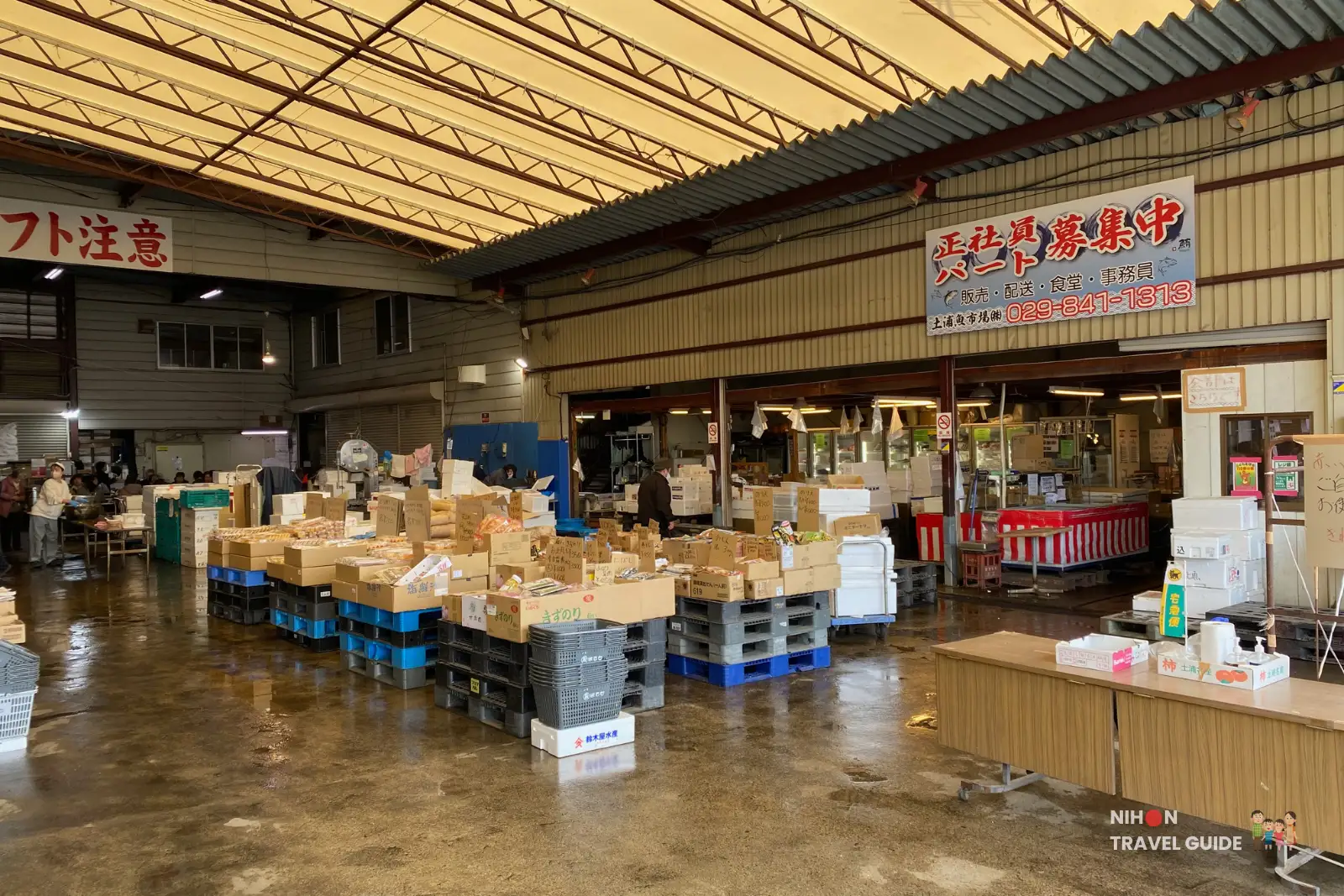
On the right side you would see the fish stalls. Unfortunately I arrived in the late morning so a lot of the fish stalls had finished selling their fish and were starting to close. The market was still open and lively as they were selling the other products.
In the middle area it’s mostly fruits, seaweed, processed fish products and various omiyage (お土産). The processed fish products and omiyage here are actually really well packaged just like what you would see in the shopping malls or the more “touristy” shops back in Tokyo. I wasn’t expecting that to be honest, but this is what I noticed in general when travelling around the rural areas and visiting the more local tourist attractions.
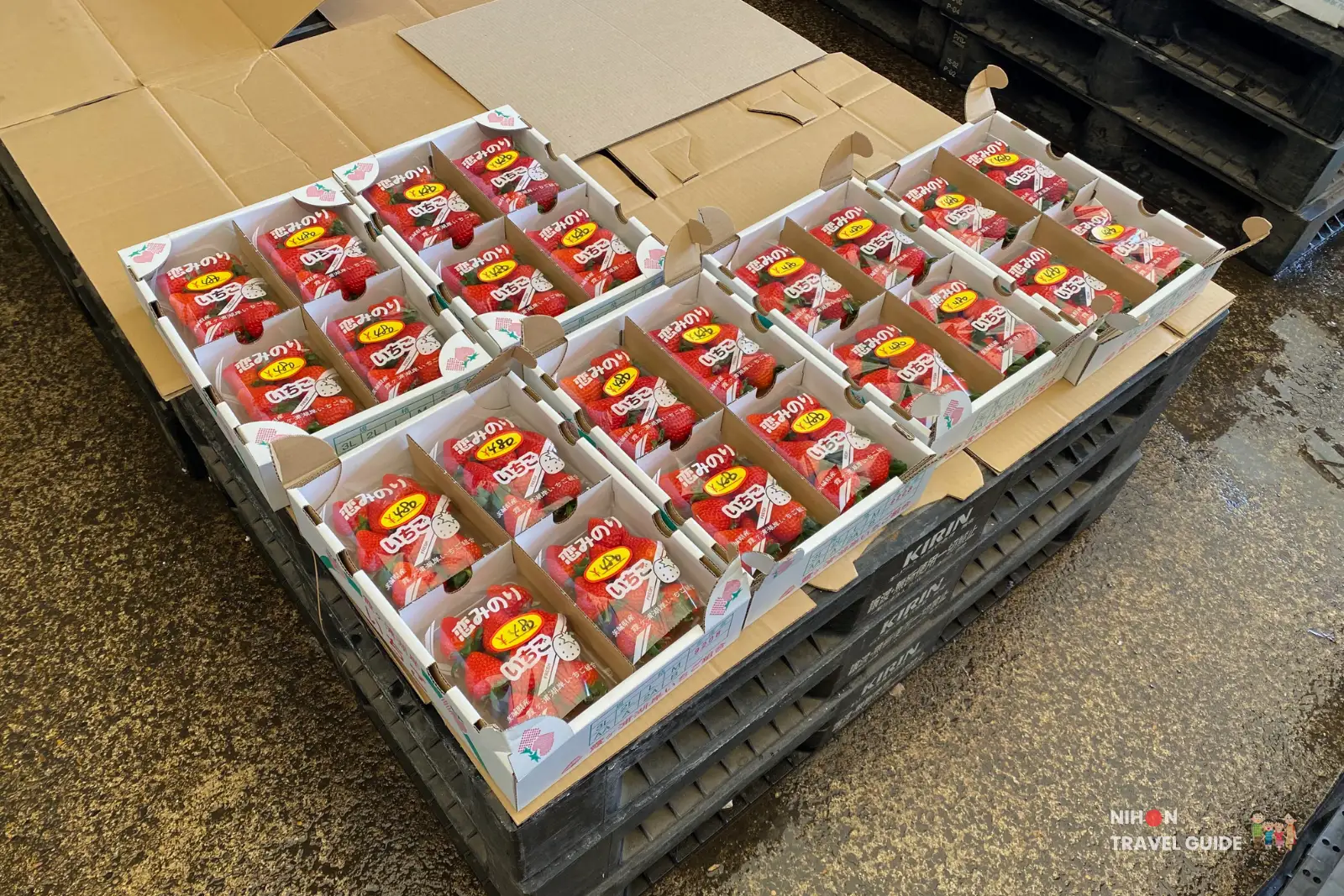
What stood out to me were the stacks of crates filled with seasonal produce, like those bright red ほほえみの いちご (Smiling strawberries?) strawberries in decorative packs going for ¥480 per box (about 8 strawberries). They looked incredibly fresh and juicy, a nice reminder that this market isn’t just seafood—locals come for affordable fruits and veggies too.
If you want to get the full rural Japanese market experience, aim to arrive as early as possible (it opens at 6am). Arriving late like I did would mean missing out on most of the fish displays. The market still feels genuine, unpolished and as is authentic as it’s going to get.
Tsuchiura Fish Market Dining Hall
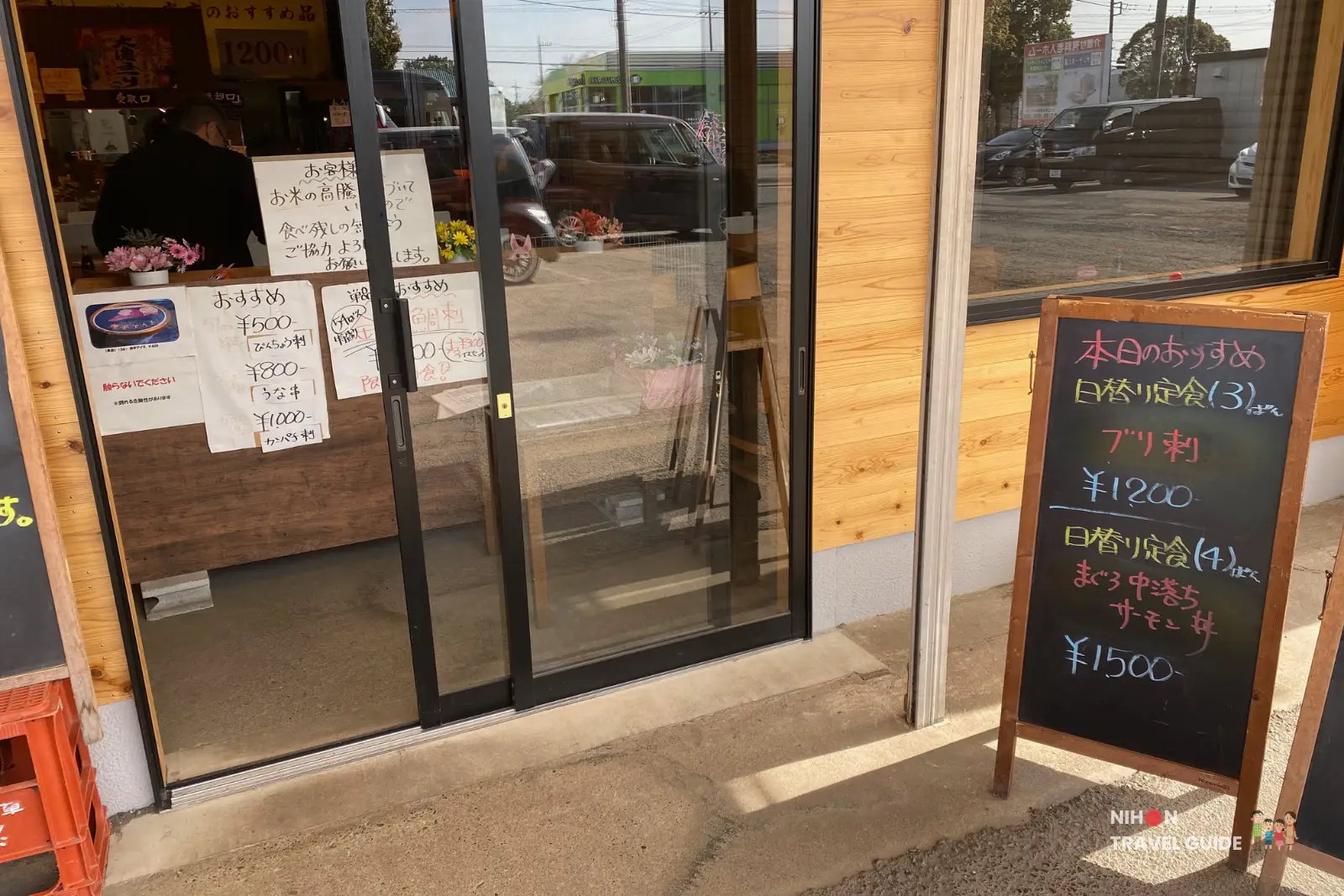
Once you have entered the main hall, you would see the dining hall on your left where the main eating area is. They sell fish like Tuna (鮪), Mackerel (鯖), Yellowtail (鰤), Atka Mackerel (ホッケ) and Red Fish (赤魚). Here is a table of the prices when I was there on that day:
| Item | Price (yen) |
|---|---|
| Daily set meal – grilled tuna collar & sashimi | 2,000 |
| Medium-fatty tuna sashimi (today only) | 2,500 |
| Daily set meal – tuna nakaochi rice bowl or bonito sashimi | 2,000 |
| Premium grilled mackerel set (3 slices) | 1,000 |
| Premium grilled mackerel set (4 slices) | 1,200 |
| Premium grilled Atka mackerel set (3 slices) | 1,000 |
| Premium grilled Atka mackerel set (4 slices) | 1,200 |
| Premium grilled red fish set (3 slices) | 1,000 |
| Premium grilled red fish set (4 slices) | 1,200 |
| Mackerel simmered in miso set | 600 |
| Daily set meal – yellowtail sashimi | 1,200 |
| Daily set meal – tuna nakaochi & salmon bowl | 1,500 |
This was the pricing board for the dining hall on the day that I was there. Take note that the fish (and prices) on offer may change on the day of your visit.
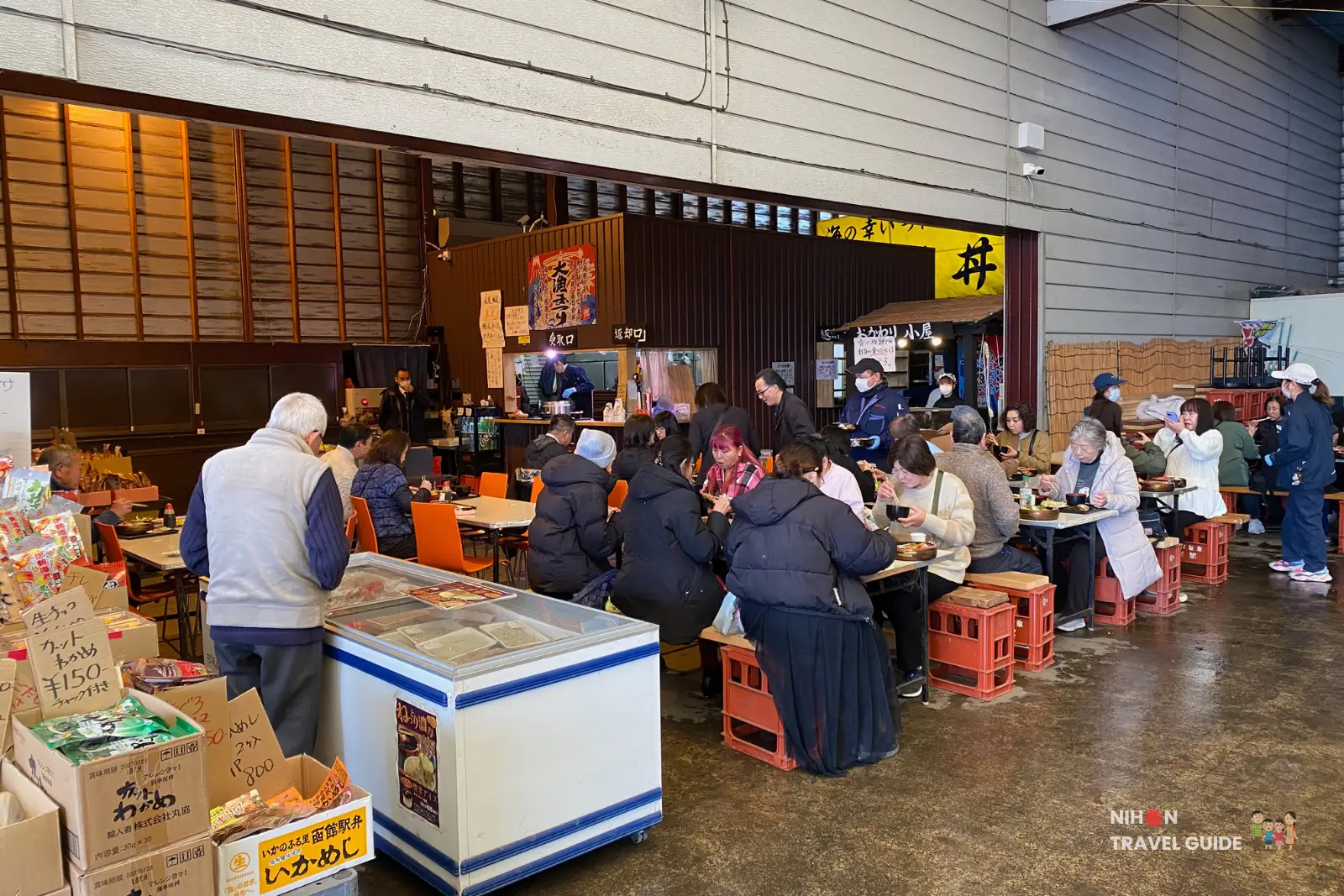
The dining hall was packaged when I arrived even though it was not lunch time yet and I was not able to find a seat or try the food. It turns out that the Tsuchiura Fish Market canteen is wildly popular amongst the locals in the area and is probably considered a hidden gem to them (probably because of the taste and affordable price).
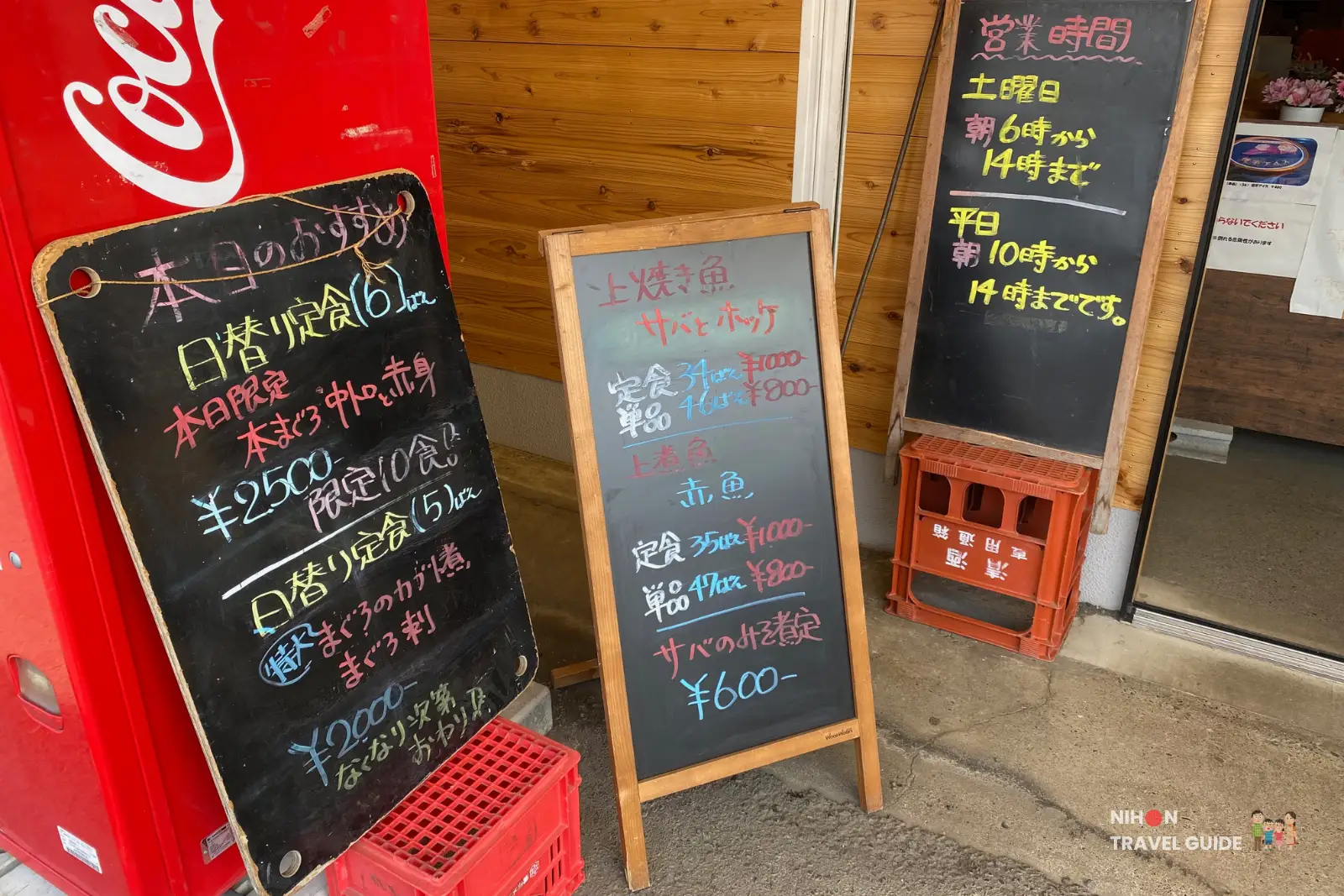
The prices in general are quite reasonable (ranging from ¥600–¥2,500). However I have yet to visit other markets in the area so I’m not sure how it compares to them yet. But based on an eye test from the crowds it must be really good.
Unfortunately I also didn’t have time to wait too long as I had a busy schedule that day and had to travel to other attractions in the area.
If you would like to eat at the Tsuchiura Fish Market, I would advise arriving earlier before 10am. I was there close to 11am and it was already packed. I would also advise going with a friend who speaks Japanese if you can’t speak it yourself. Broken Japanese is also generally good enough in this region to be able to communicate.
Saturday maguro 鮪 (tuna) all-you-can-eat
Every Saturday, the Tsuchiura Fish Market holds an all you can eat maguro 鮪 (tuna) for ¥2,000 and it includes unlimited sashimi (akami, negitoro, etc., depending on catch), rice and miso soup. There is no time limit and limited seating so it will probably fill up quite quickly.
Be sure to arrive before opening hours (6am) if you would like to try this. Also the parking is quite small so be prepared to have to park a bit further away.
Some Tips
– Check their website for opening hours as the Google Business Profile does not show the market opening hours.It only shows the Dining Hall opening hours.
– Arrive early to see most of the action and fish.
– Arrive early to get a seat at the dining hall as it is quite popular and busy.
– Go with a Japanese friend if you can’t speak Japanese as most people in the Ibaraki region may not be able to speak English. Broken Japanese is good enough in most scenarios.
– They didn’t mention anything about payment methods but it is advised to use cash when travelling around the Ibaraki region.
– Rough budget for a meal and some shopping: most set meals are ¥600–¥2,500; ¥3,000–¥4,000 should be enough per person.
Is Tsuchiura Fish Market Worth Visiting in 2026?
If you are looking for a real authentic rural Japanese market and are travelling in the Ibaraki area, then I would recommend visiting Tsuchiura Fish Market. There is quite a variety of fresh fish (if you go early) and at an affordable price.
However I would recommend going with a friend who speaks Japanese as the locals in this area tend not to speak too much English. If you have basic broken Japanese it would help as well.
If you are looking for something bigger with more shops, restaurants, variety and something more “touristy” then I think the Tsukiji fish Market would be what you are looking for.
Unfortunately I didn’t manage to find space to try the fish and I didn’t have time to wait as I had a tight schedule this trip. But I will be looking to return in the future to try it out again.
My Rating: 3.5 / 5
Authentic rural wholesale fish market with affordable fresh seafood and famous ¥2,000 Saturday tuna all-you-can-eat. But arrive early or miss the best action.
Best Time to Visit Tsuchiura Fish Market
If you would like to visit Tsuchiura Fish Market and look at the fish stalls or attend Saturday’s maguro 鮪 (tuna) all-you-can-eat event, the best time to do so would be as soon as it opens (6am). If you would just like to visit the Tsuchiura Fish Market canteen on normal days then arriving before it opens at 10am would be advisable.
Again please check their website for opening hours as they do not update it on their Google Business Profile.
FAQ – Tsuchiura Fish Market
1) Is the maguro (tuna) all-you-can-eat every Saturday?
Yes, every Saturday only. ¥2,000 for adults. Unlimited tuna sashimi refills (akami, negitoro, etc., catch-dependent). No time limit.
2) What time should I arrive for the tuna event?
Before 6:00 AM—lines form early (often 5:00 AM or sooner). Expect crowds, long waits, and possible full seating. Arrive super early if you want in.
3) Does the Tsuchiura Fish Market dining hall have all-you-can-eat sides?
Yes—many meals include free refills on rice, miso soup, salad, and simmered veggies. Self-service sides available to all diners.
4) Are prices and menu the same every day?
No—daily specials change based on fresh catch. Prices range ¥600–¥2,500. Check chalkboards on arrival.
5) Is English spoken or are there English menus?
Very Limited English don’t expect them to know any. Most staff and locals speak Japanese only. Point at the board or use basic/broken Japanese—it’s usually enough.
6) Is parking available?
Yes—plenty of free parking at the market. It fills fast on Saturdays (especially for tuna event).
7) Can I pay by card?
Cash recommended. Cards not reliably accepted—bring yen.
8) Is the market open on holidays?
Closed Sundays, most public holidays, and some market holidays. Always check the official calendar at https://www.tsuchiurauoichiba.com/.