Full-scale trains, immersive Shinkansen and Train Simulators, go on non–school-holiday weekdays.
TL;DR – Yes, the SCMaglev and Railway Park is worth ¥1,200 for train fans & families.
- Full-scale steam, Shinkansen, and SCMaglev trains you can walk through and photograph.
- Immersive Shinkansen and Train Simulator.
- Huge Railway Diorama for kids and Train Geeks.
- Best enjoyed on non–school-holiday weekdays with at least 2 hours set aside.


I recently visited the SCMaglev and Railway Park in Nagoya and it’s a little bit like opening an old family photo album because you can trace decades of progress in Japanese rail and still feel that same childlike thrill of watching a train speed by.
The SCMaglev and Railway Park (リニア鉄道館) in Nagoya is a large railway museum run by Central Japan Railway Company (JR central) and it showcases Japan’s past, present and future train travel. They have 39 rolling stock displays from the very first Japanese steam train engines to the futuristic SCMaglev train that is still under going testing.
Anyway, in this article I’m going to tell you exactly what my experience at the Nagoya Railway Park was like, what are the highlights, and why you should consider visiting the SCMaglev and Railway Park instead of it’s neighbour Legoland.
- TL;DR – Yes, the SCMaglev and Railway Park is worth ¥1,200 for train fans & families.
- How to get to SCMaglev and Railway Park
- SCMaglev and Railway Park Tickets & Cost
- SCMaglev and Railway Park Opening Hours
- Symbolic Rolling Stock Exhibit
- Great Rolling Stock Hall
- Relic Train Area
- Superconducting Maglev Room
- Train Driving Simulators
- Great Railway Diorama Room
- Lounge & PLUSTA Bento
- Outdoor Train Exhibit
- Some Tips
- Do I Recommend it?
- FAQ – SCMaglev and Railway Park Nagoya
All photos on this page are mine, shot on an iPhone 11 pro. Photos shot by Tessa Leong were using iPhone 14 pro.
How to get to SCMaglev and Railway Park
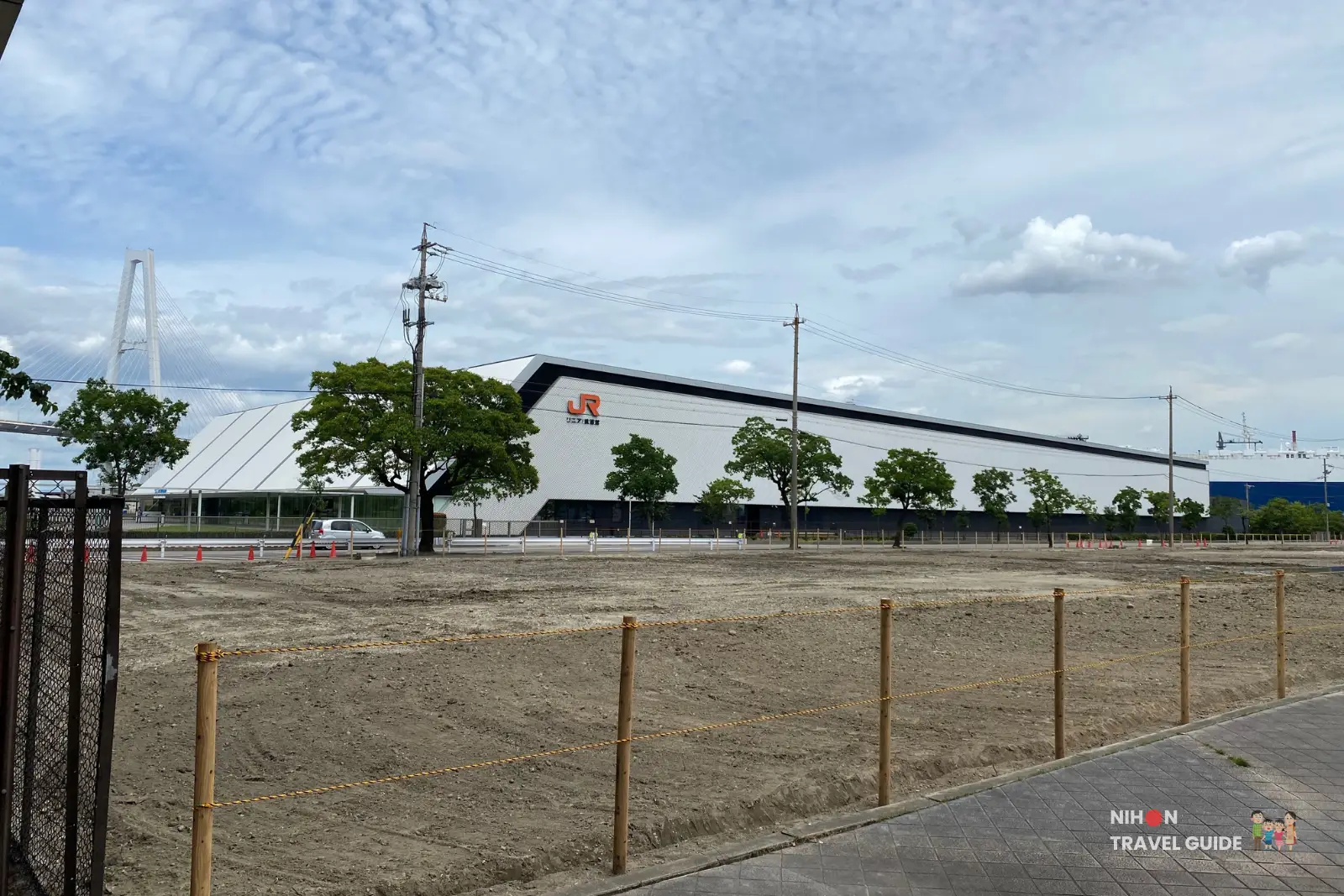
The SCMaglev and Railway Park is really convenient to get to if you are traveling from Nagoya Station (you probably will be). It’s a 25 min ride (10 stops)on the Aonami Line all the way to the end at Kinjofuto Station. From Kinjofuto Station you can easily see the railway park and Legoland and it’s a quick 1 minute walk to the Railway Park. There are also plenty of signs so you can’t miss it. This train ride would cost you ¥360.
The train ride itself can be quite full if you are going during school holiday season (roughly late July to late August), as there would be a lot of families traveling to Legoland Nagoya. I travelled in July during the Nagoya in late July but it was not too crowded.If you are traveling during off peak seasons then it should be even less crowded.
If you decided to drive, there isn’t parking at the Railway Park itself. You would have to park at the Nagoya Shiei Kinjofuto Parking Lot near the Kinjofuto Station.
SCMaglev and Railway Park Tickets & Cost
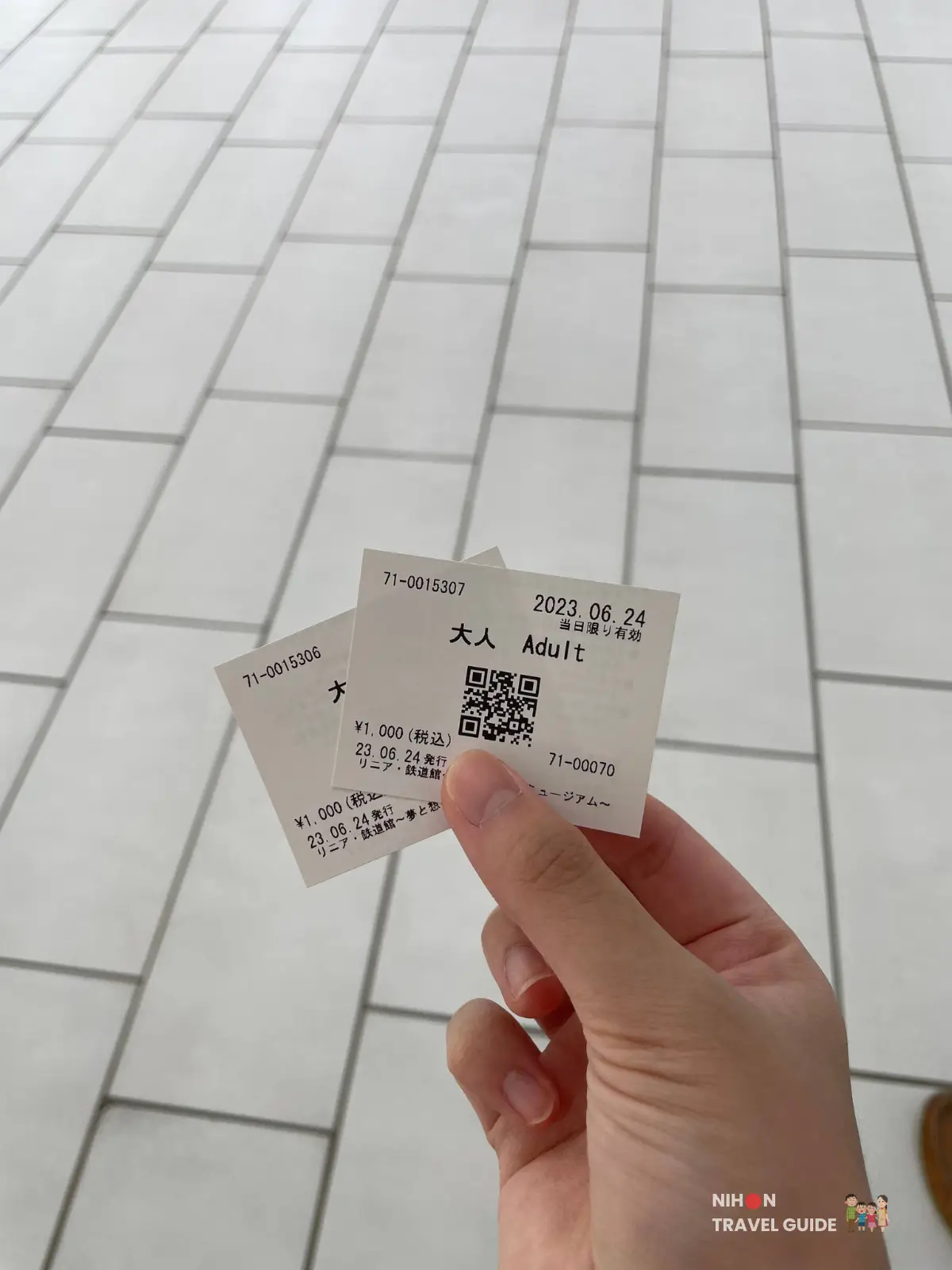
Tickets to the SCMaglev and Railway Park cost me ¥1200 and it’s an additional ¥100 or ¥500 if you want to use the simulators in the railway park. You can buy the tickets on the day itself at the counter before going in. You don’t have to purchase them in advance.
🚄 SCMaglev and Railway Park — Admission Ticket Prices
Prices subject to change — check the official website for the latest ticket information before visiting.
| Category | Regular Price | Group (20+ people) | Notes |
|---|---|---|---|
| Adult | ¥1,200 | ¥1,000 | — |
| School Child | ¥500 | ¥400 | — |
| Child (age 3 and over) | ¥200 | ¥100 | — |
| Adult with Physical Disability | ¥500 | — | One accompanying guest may enter for the same fee. |
| School Child with Physical Disability | ¥200 | — | One accompanying guest may enter for the same fee. |
| School Groups (elementary, junior high, high school) | Special Price | Special Price | Available for curriculum visits such as field trips and school excursions. |
⚠️ Children under 3 enter free. Always check the official SCMaglev and Railway Park website for the latest pricing before visiting.
🚃 SCMaglev and Railway Park — Train Simulator Tickets
Experience hands-on train simulator sessions inside the museum. Tickets available on the day — no advance booking required.
| Simulator | Hours Available | Session | Where to Buy | Fee |
|---|---|---|---|---|
| Shinkansen Train Driving Simulator | 10:15 – 17:30 | 15 min | Information Booth | ¥500 |
| Conventional Train Crew Simulator | 10:15 – 17:30 | 15 min | Information Booth | ¥500 |
| Conventional Train Driving Simulator | 10:00 – 17:30 | 10 min | Ticket Vending Machine | ¥100 |
I reached around 11am before lunch and there was only a short queue to get tickets. So waiting time to enter the SCMaglev and Railway Park was quite fast.
Audio Guide
SCMaglev and Railway Park has an audio guide that you can access through your phone on their free Wi-Fi. The audio guide would introduce to you each exhibit and give an overview of the Railway Park. It provides easy explanations and images of the trains. It comes in the following languages: Japanese, English, Chinese, Korean, French, German, Spanish and Portuguese.
The audio guide is also free of charge.
Group Visit Reservation
If you are visiting in a group (more than 20 people), you can make a reservation from the first day of the month that is 3 months prior to the visit using their PDF. You would then have to fax the form to +81-52-389-6101. Unfortunately as of 2026, they do not have an online group reservation system.
SCMaglev and Railway Park Opening Hours
The SCMaglev and Railway Park is opened from 10:00am to 5:30pm (last entry 5:00pm) everyday except Tuesday. If a national holiday falls on the Tuesday, the Railway Park will be opened on the Tuesday and closed the following day. The SCMaglev and Railway Park is also closed during the New Year Period (28th Dec to 1st Jan).
Symbolic Rolling Stock Exhibit
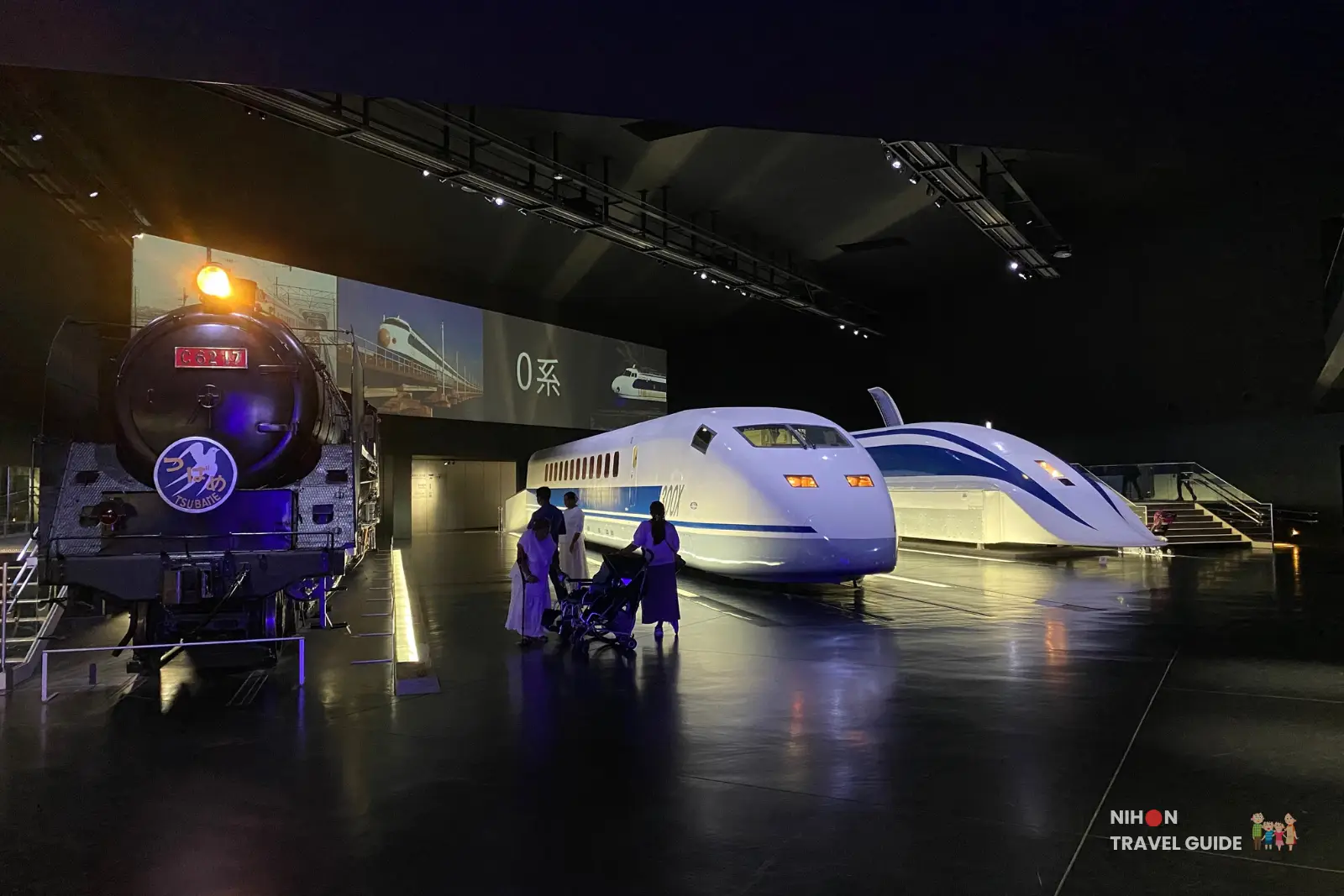
When you first enter the SCMaglev and Railway Park, you would be greeted with a dark hall with three trains in the Symbolic Rolling Stock Hall: The Class C62 Steam Locomotive (the fastest steam locomotive on narrow gauge), the Class 955 Experimental Shinkansen (300X) and the MLX01-1 Superconducting Maglev.
The main theme of the SCMaglev and Railway Park is to showcase Japanese Railway history and technology from the steam train era all the way to the future Maglev era and it starts with these three trains.
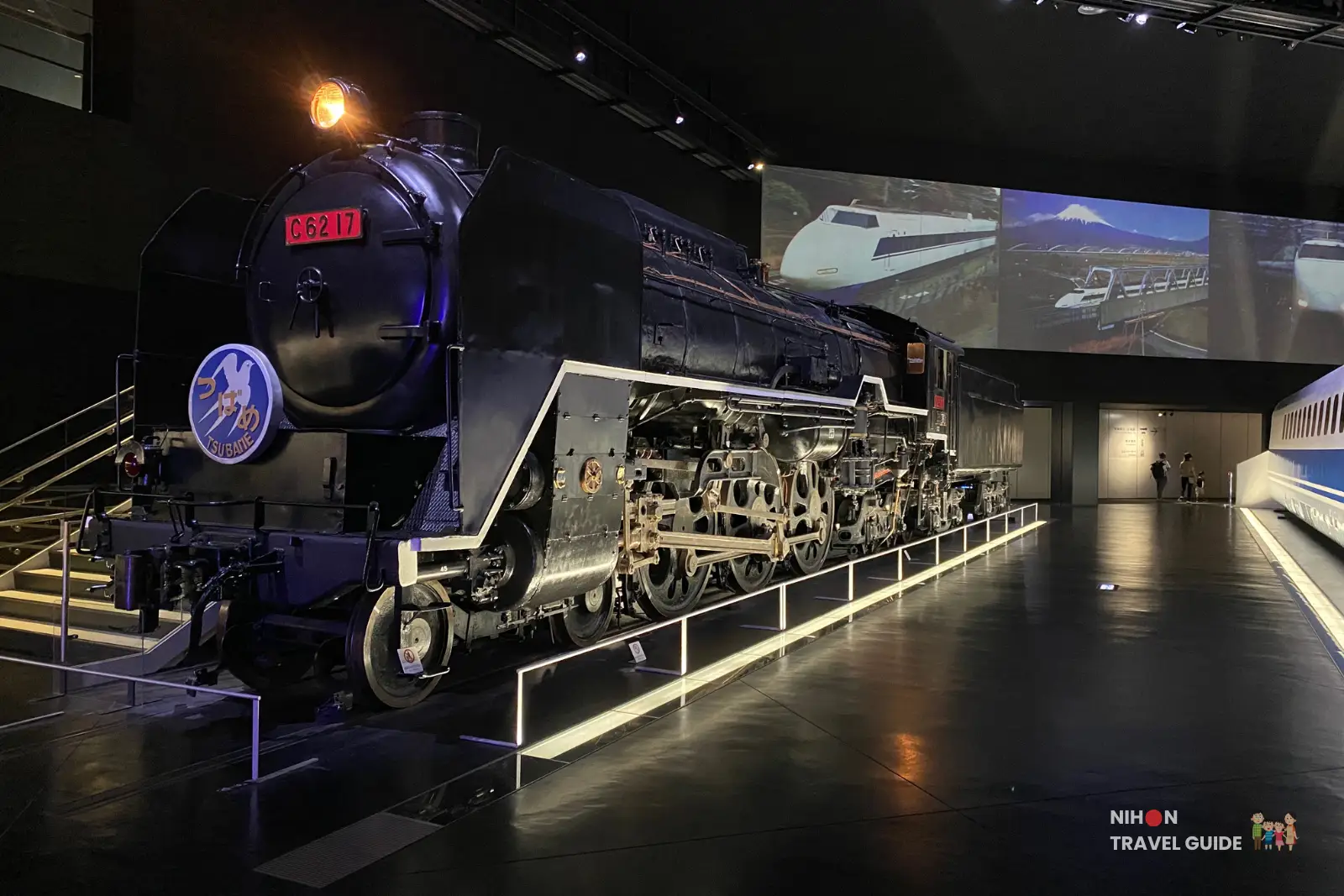
These 3 trains each symbolize Japanese railway engineering at its peak in different eras. The Class C62 Steam Locomotive was the fastest steam train on Japan’s narrow gauge tracks and is a reminder that it laid the foundations for high speed rail later on.

The Class 955 Experimental Shinkansen was a groundbreaking high-speed train that pushed the Shinkansen technology to new limits in the 1990s and held world records during that period. It proudly showcases it’s advances in aerodynamics and power systems.
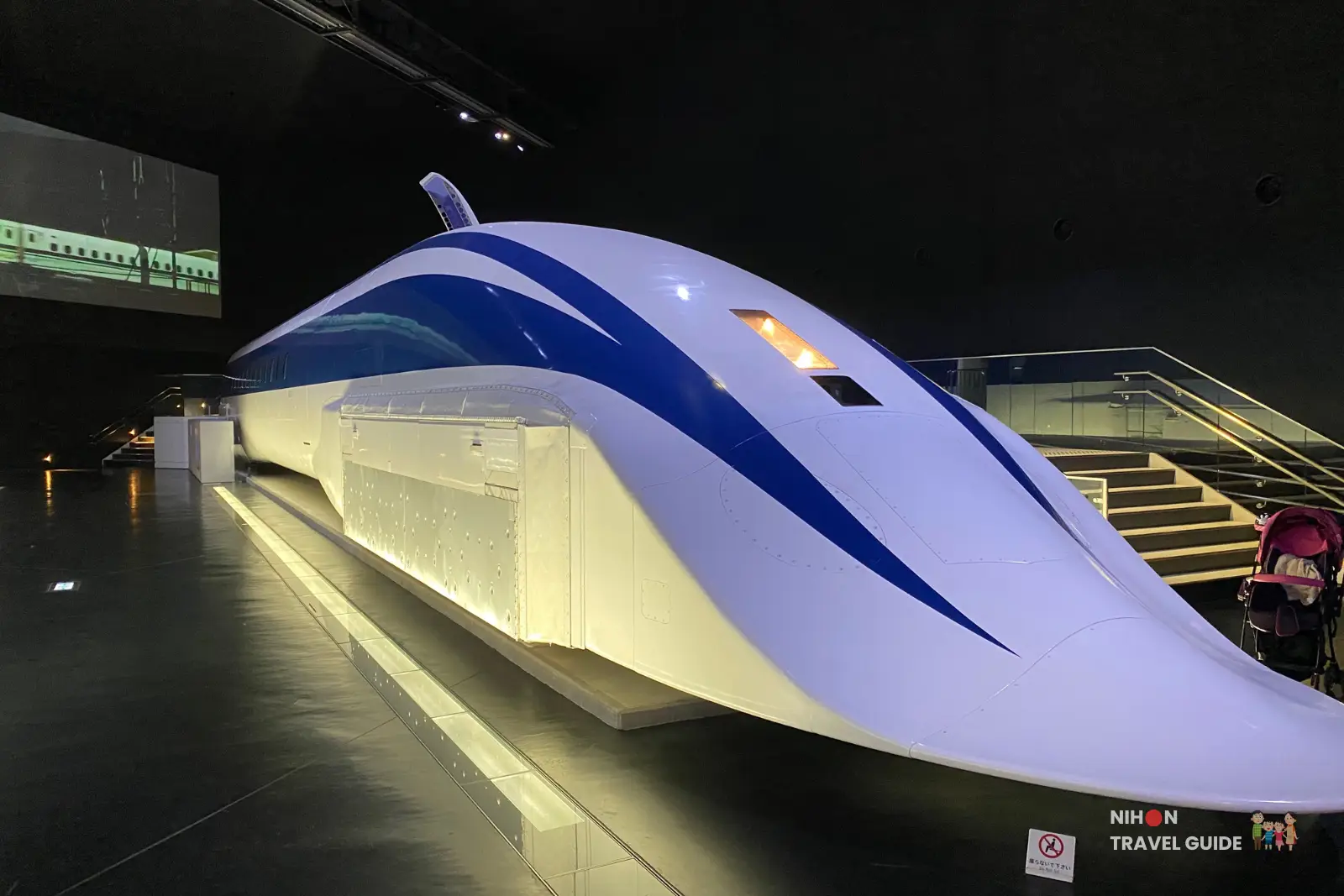
And lastly the MLX01-1 Superconducting Maglev is the future. A prototype Maglev train that uses superconducting magnets to levitate and run at speeds at 500km/h. This technology will revolutionise railway travel not just for Japan but for the world.
You can freely enter each train and take photos. Although as the hall is dark, it can be a bit tricky to take photos. This exhibit is not really crowded either as most visitors would quickly move on to the main section of the Railway Park.
Great Rolling Stock Hall
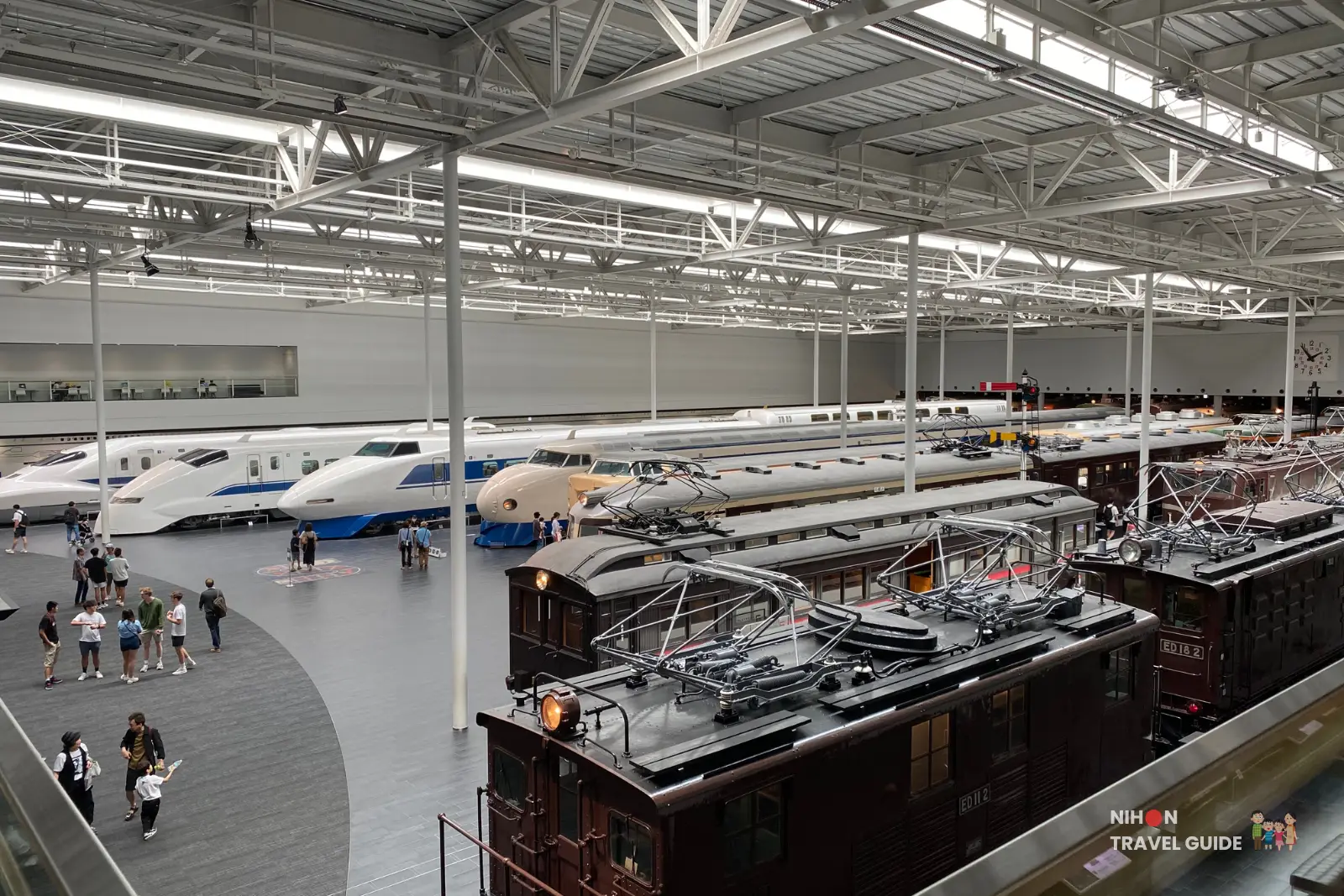
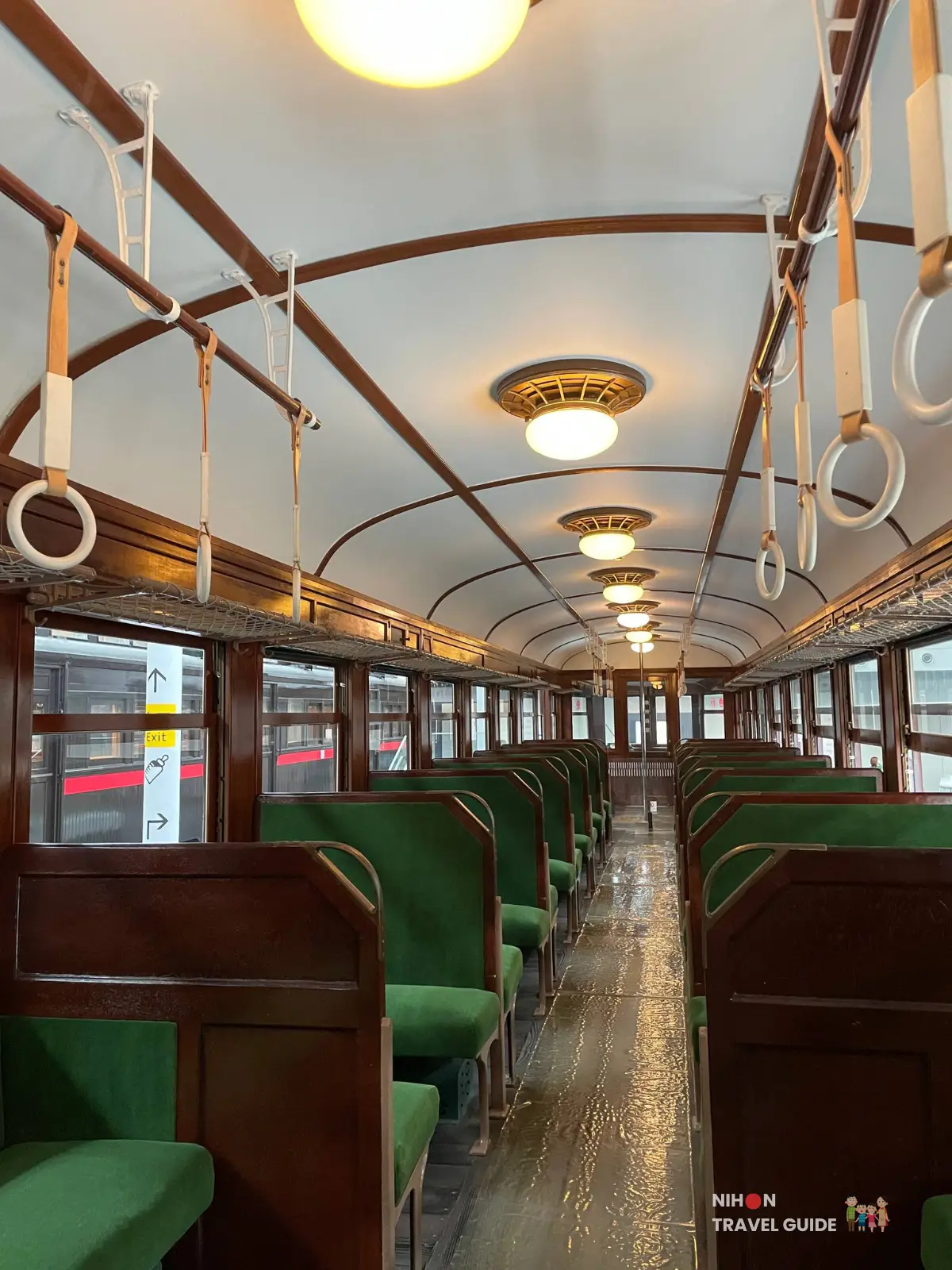
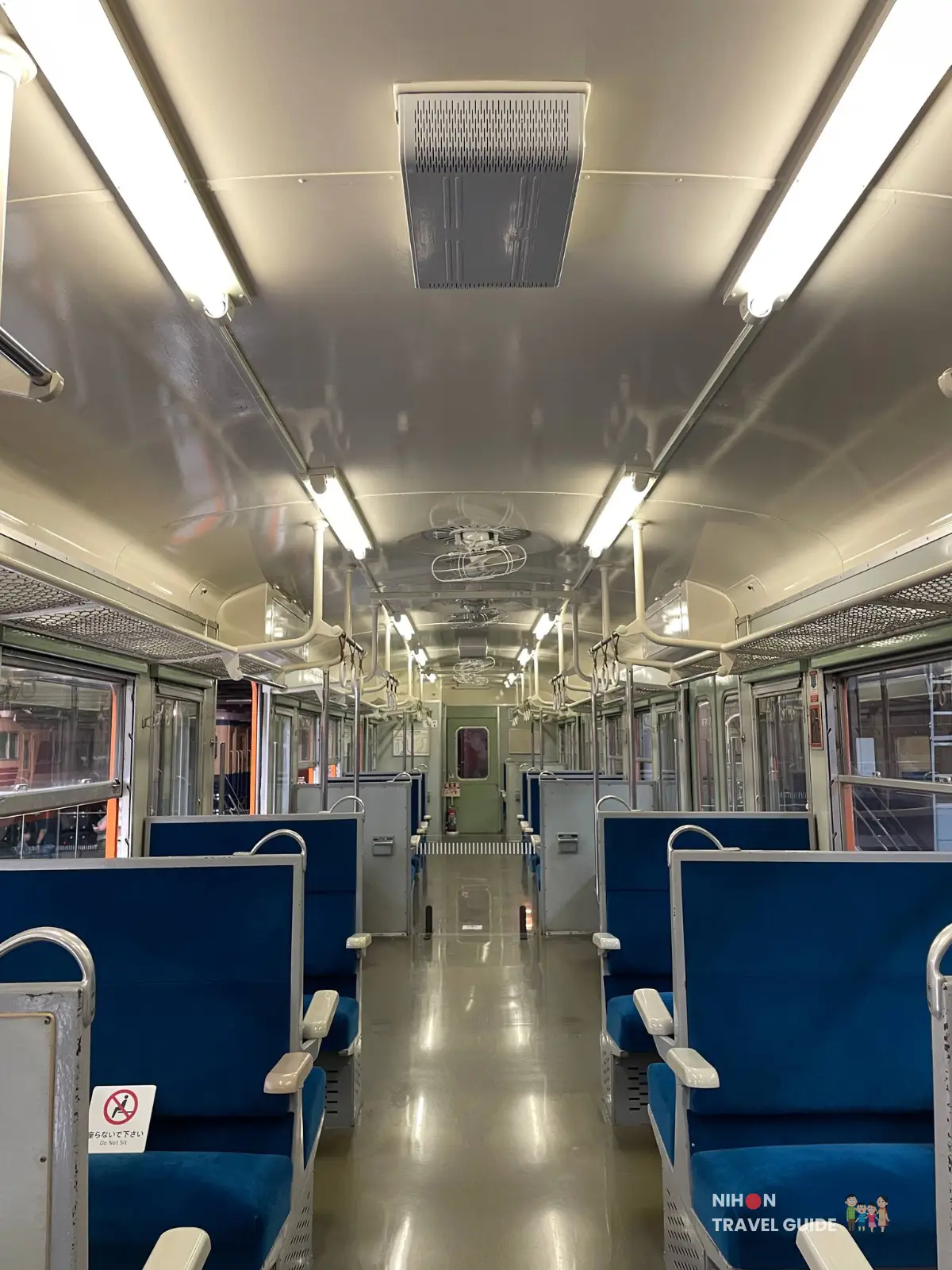
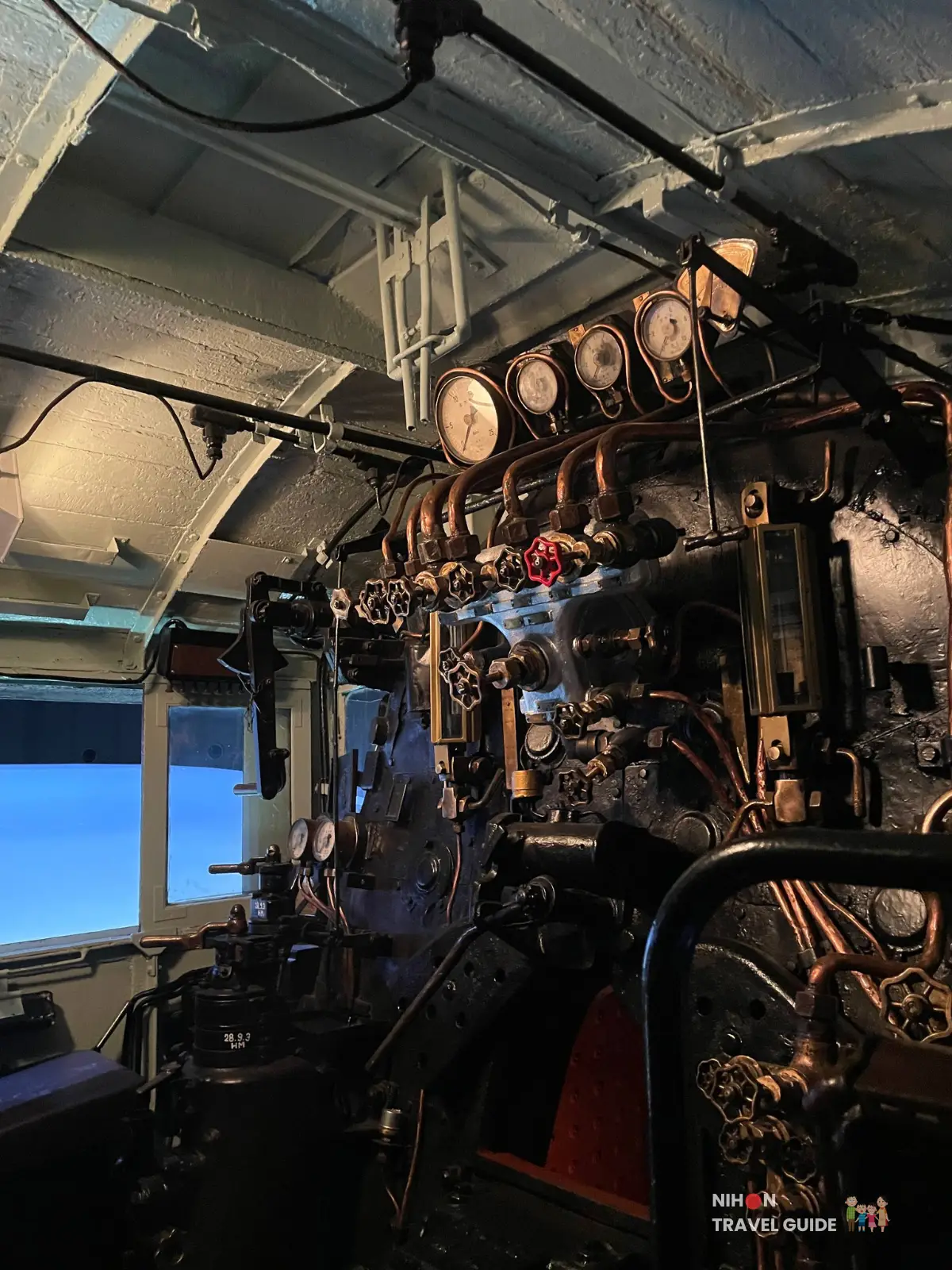
The next hall you enter is the Great Rolling Stock Hall. This is the main hall where all the train exhibits are. You have really old steam engines like the C57 Steam Locomotive, early electric trains like the ED 11 Electric Locomotive and modern electric trains like the Kiha 181 Diesel Railcar.
They also have the various Shinkansens, from the earliest ones like the Series 100 Shinkansen to the latest Series N700 Shinkansen that is being used currently. They don’t have the modern trains like the E235 train that is being used on the Yamanote Line. But I guess it’s still too soon for those trains.
You can enter almost every train and take photos, but no food or drinks allowed (just as if it was in service). When you enter each train, it feels like you have entered a time machine as you can get a feel of how rail travel was like at the time.
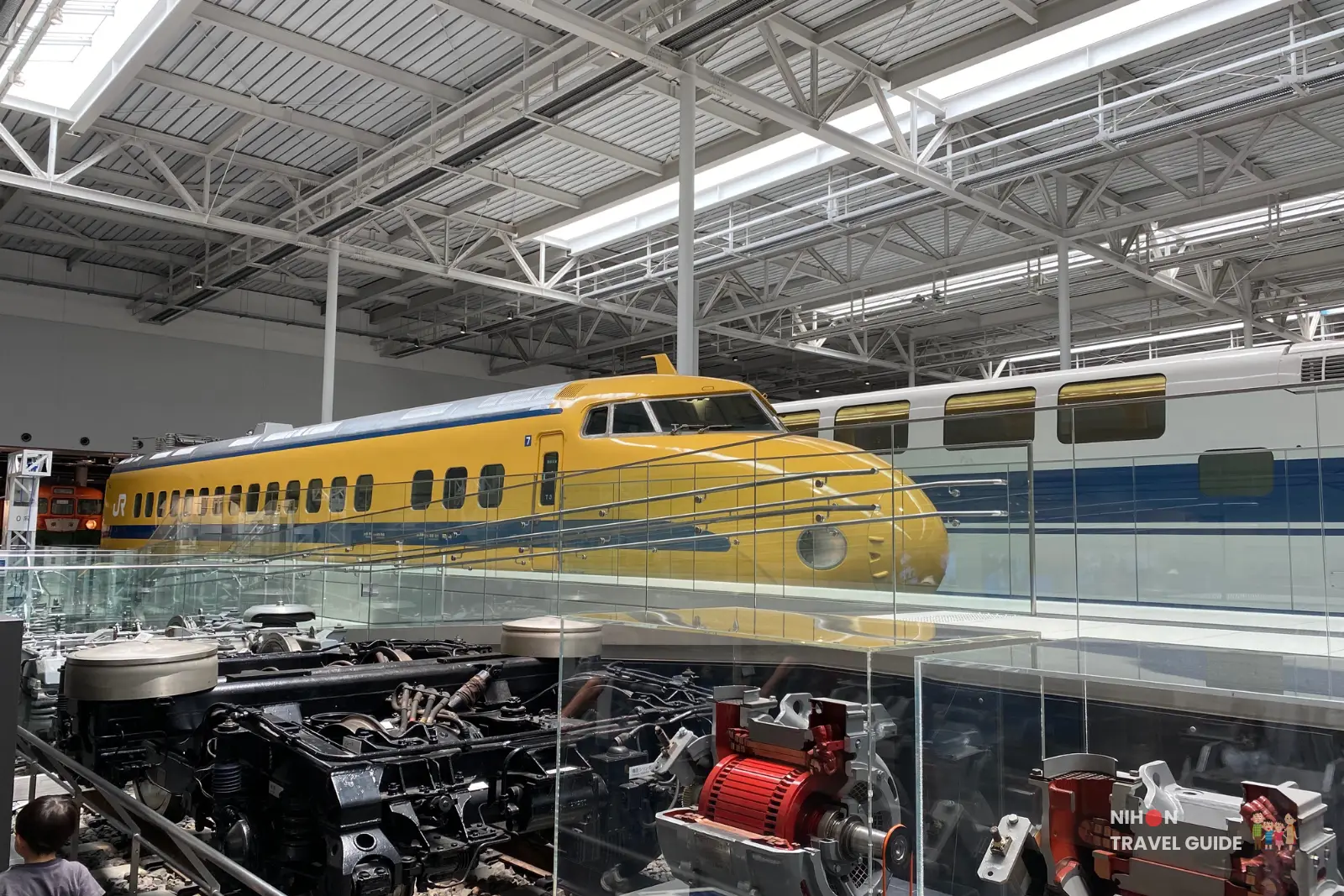
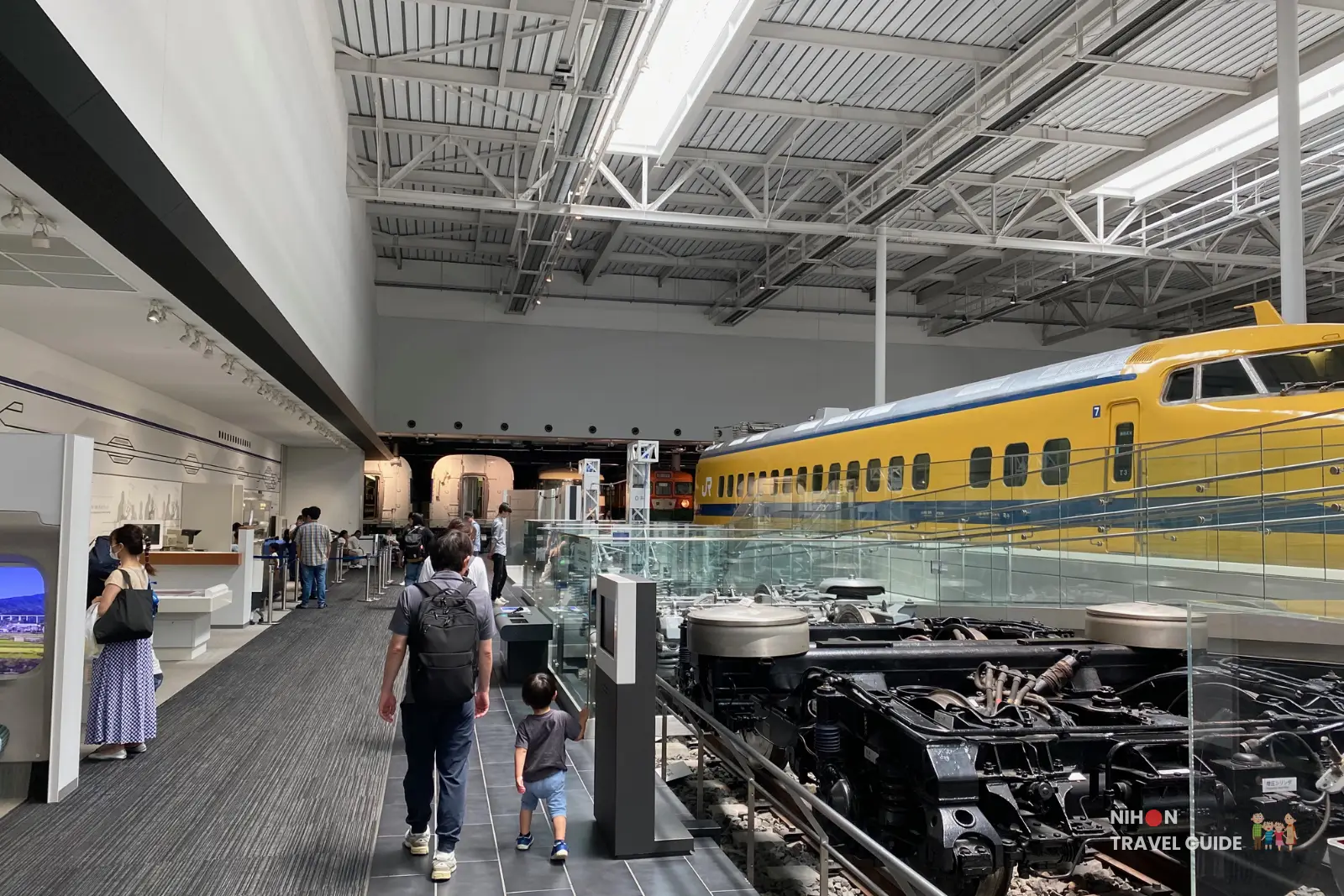
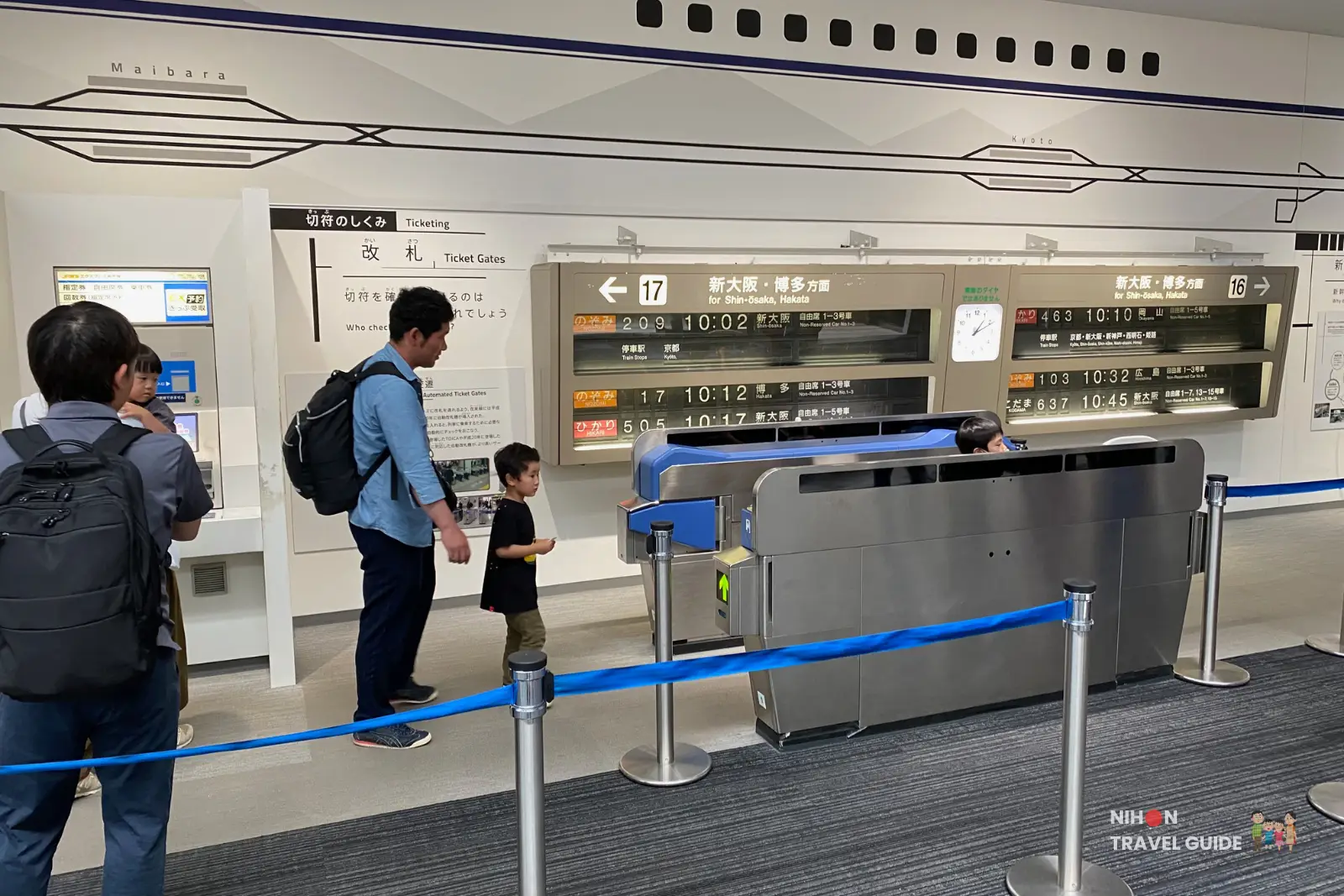
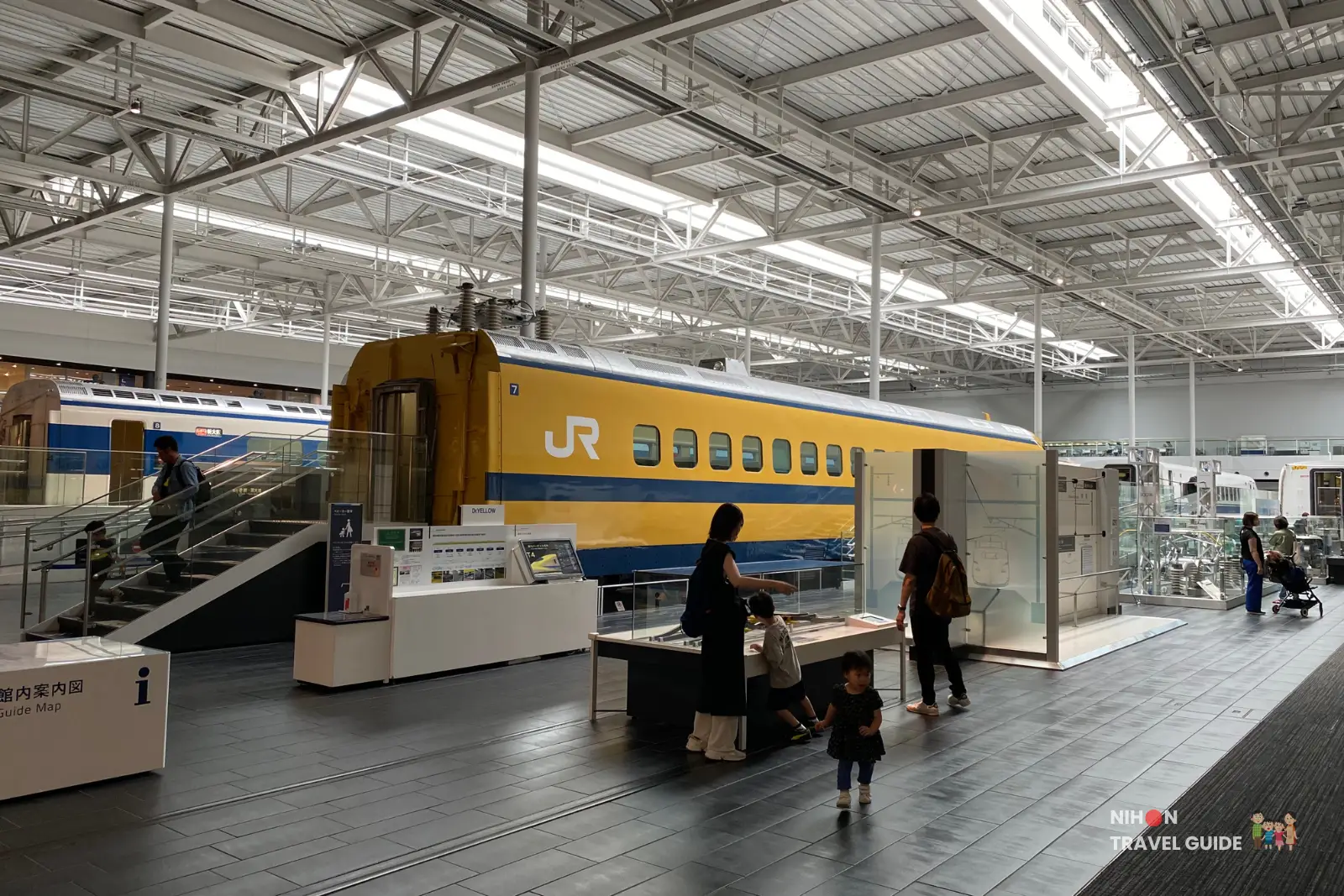
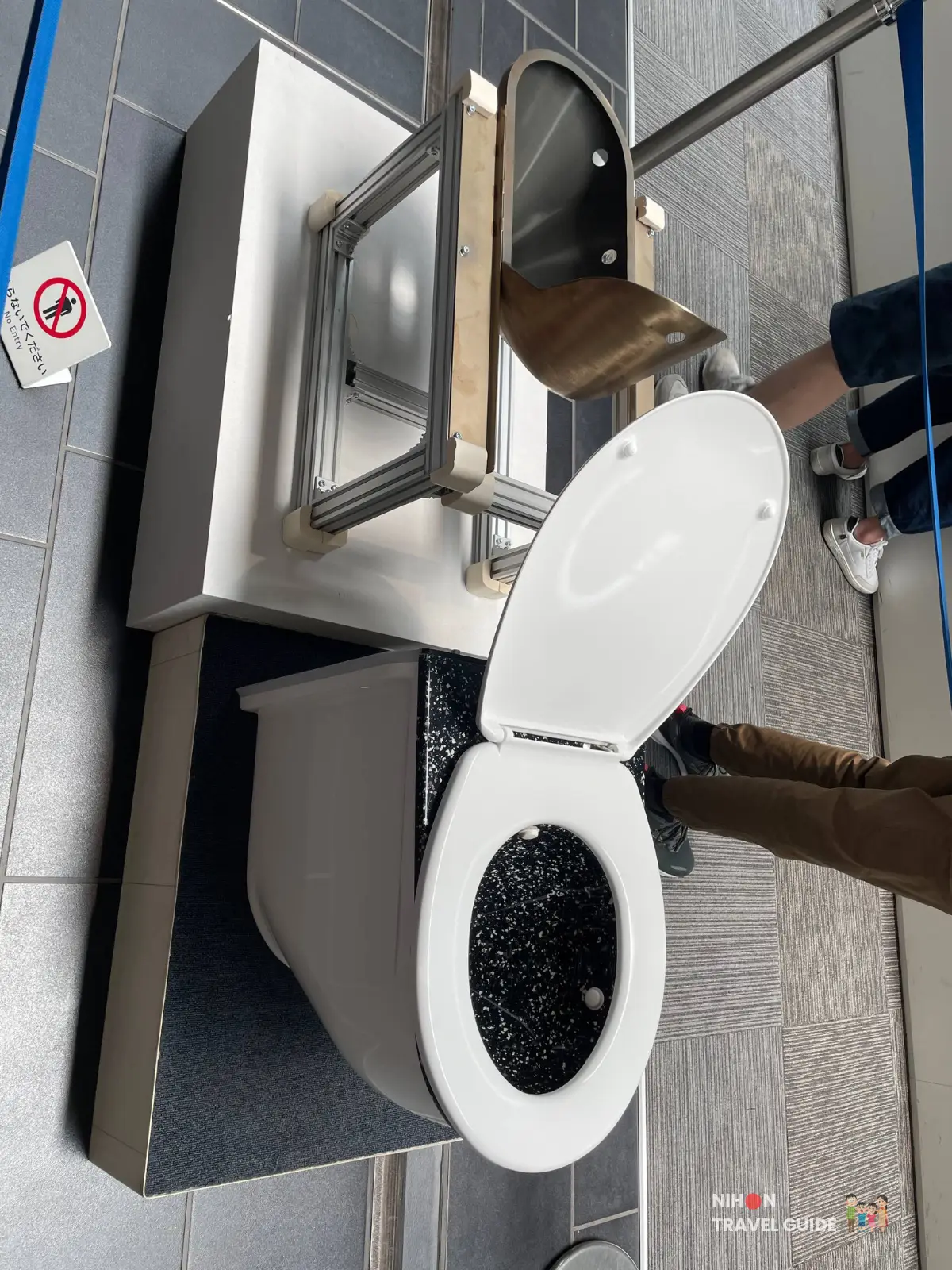
In between the train exhibits there are also various exhibits of the other ‘train stuff’. Such as the ticketing machines, train timing boards and even a toilet bowl of the Shinkansen. They are all interactive except the toilet bowl that was sealed off.
The one exhibit that caught my eye was the train signalling exhibit. If you’re not familiar, train signalling is like the control tower of an airport where they direct and change the different train tracks to prevent collisions and make sure that everything runs smoothly. In this exhibit, you got to see the full console that train signalers use and an explanation on how they conduct their operations.
Relic Train Area
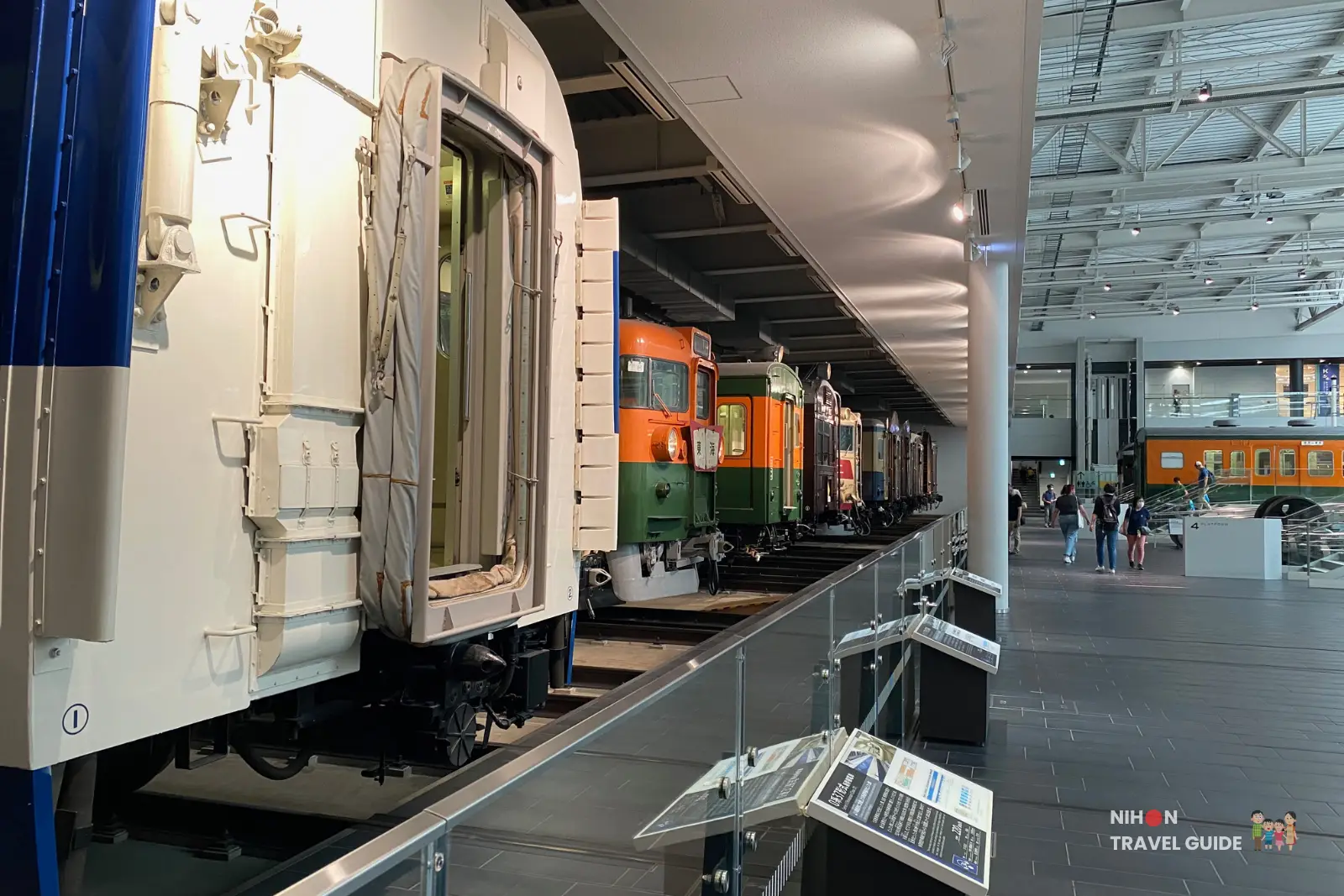
At the back of the Great Rolling Stock Hall is the Relic Train Area (Rare Train Zone). In this section there are some really old and rare trains such as the Series 0 Shinkansen (class 37), Class Kiha 82 Diesel Railcar and the Series 117 EMU. It also has quite a few really old train carriages such as the Class Suni 30 Baggage Car, Class Oha 35 Passenger Car and the Class Kiha 48000 Diesel Rail car.
These trains are some of the historically important trains with either significant technology (at the time) or heritage value. Together with the rest of the exhibits, it’s meant to showcase the evolution of Japanese railway from steam to superconducting Maglev.
Unfortunately in this section, you can’t enter the trains or carriages itself as they have been sealed off. But there are plaques in front of the trains so you can read more about the trains. You can still take photos from the front as well.
Superconducting Maglev Room
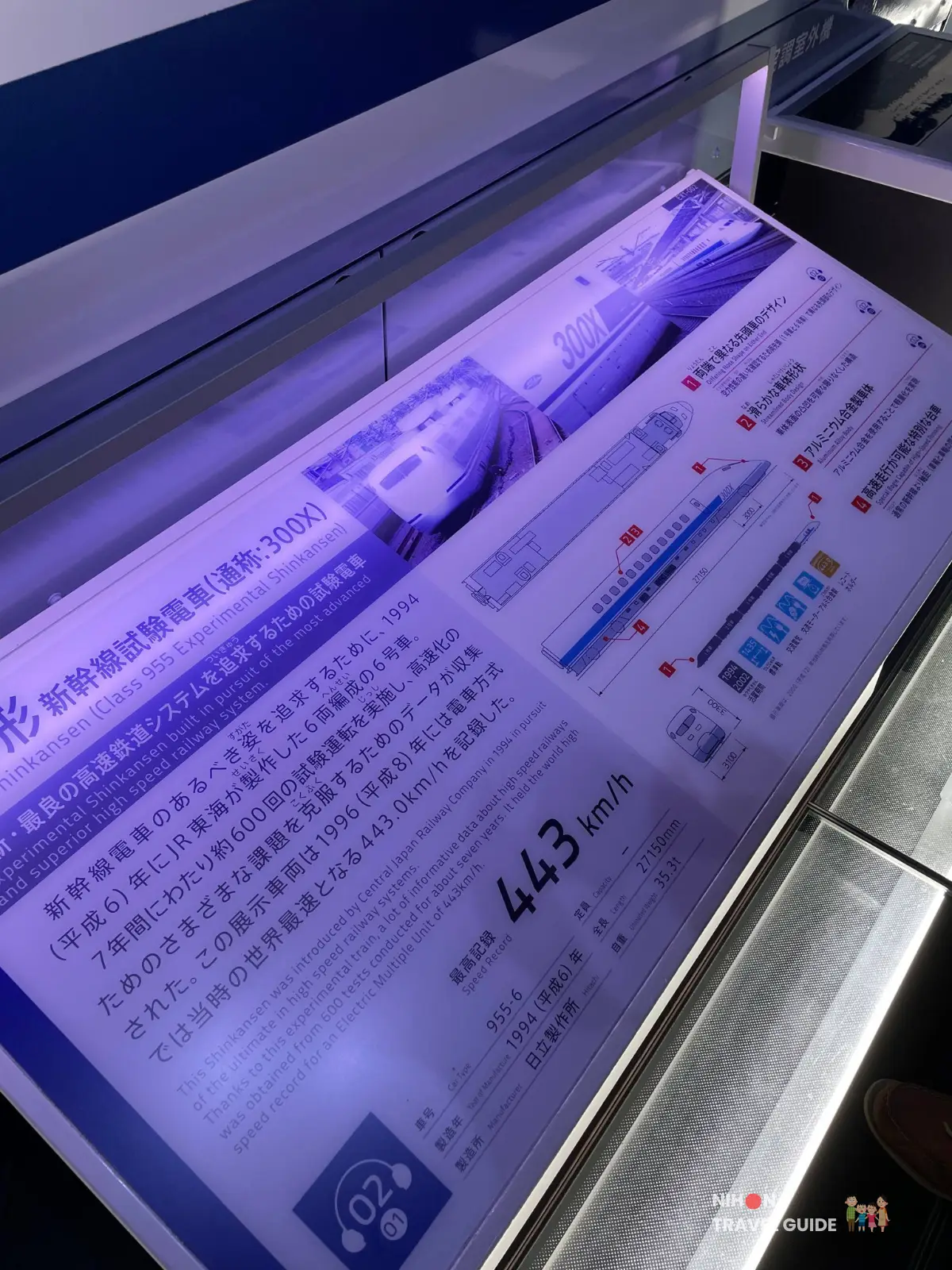
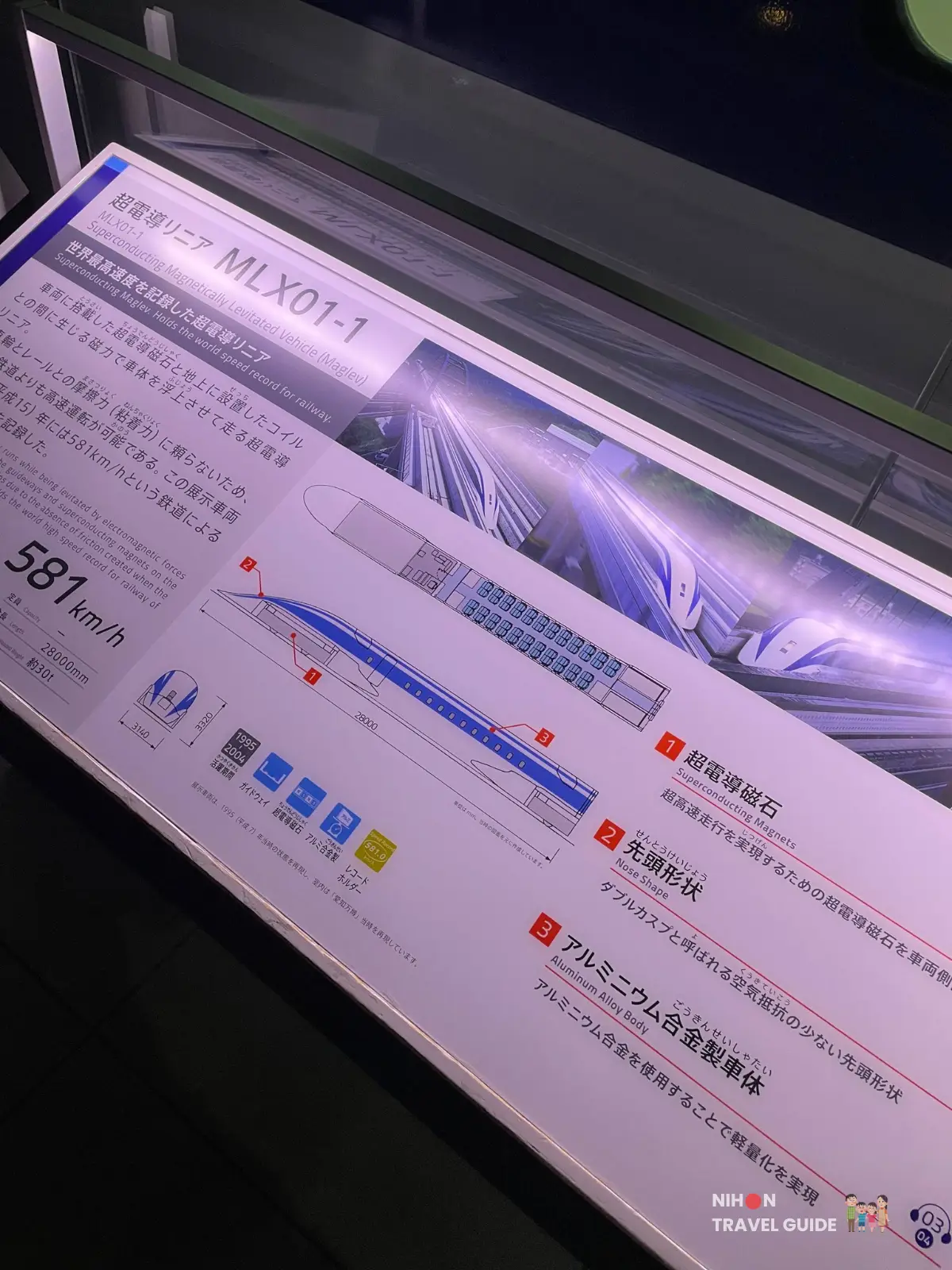

On the right side of the Great Rolling Stock Hall are some rooms and the first one is the Superconducting Maglev Room. Inside this room they have a diorama of the upcoming Maglev train (Chūō Shinkansen) that is in testing. They have videos and displays explaining the engineering, technology and history about when they first started developing this technology.
There is a also the certificate from Guinness World Records breaking the speed record for a Maglev Train at 581km/h way back in 2003. It’s still many years away but I can’t wait to ride the Chūō Shinkansen when it’s ready. Traveling Japan is already really convenient but with the Maglev Train it will get even better.
Train Driving Simulators
On the right side of the hall, there are two rooms for train simulators, the Conventional Train Driving Simulator and the Shinkansen Train Driving Simulator. I didn’t try the simulator that day as we didn’t have time (and there was quite a queue), but it looked quite interesting.
It’s quite similar to airline simulators (if you are familiar). You are seated in a mock cockpit of the train and instead of a glass you are looking at the screen. There is also a staff member who would be guiding you and they can communicate in basic English at least so language barrier is not a problem.
You need separate tickets to have a go at the train simulators. Here are the ticket prices again:
🚃 SCMaglev and Railway Park — Train Simulator Tickets
Experience hands-on train simulator sessions inside the museum. Tickets available on the day — no advance booking required.
| Simulator | Hours Available | Session | Where to Buy | Fee |
|---|---|---|---|---|
| Shinkansen Train Driving Simulator | 10:15 – 17:30 | 15 min | Information Booth | ¥500 |
| Conventional Train Crew Simulator | 10:15 – 17:30 | 15 min | Information Booth | ¥500 |
| Conventional Train Driving Simulator | 10:00 – 17:30 | 10 min | Ticket Vending Machine | ¥100 |
SCMaglev Railway park Driving Simulator Age Limit
The train simulators in the SCMaglev and Railway Park are available to children as there aren’t any stated age limits. However the train driving simulators do look quite complicated so children who are older and understand what is going on would get more out of the experience.
Great Railway Diorama Room
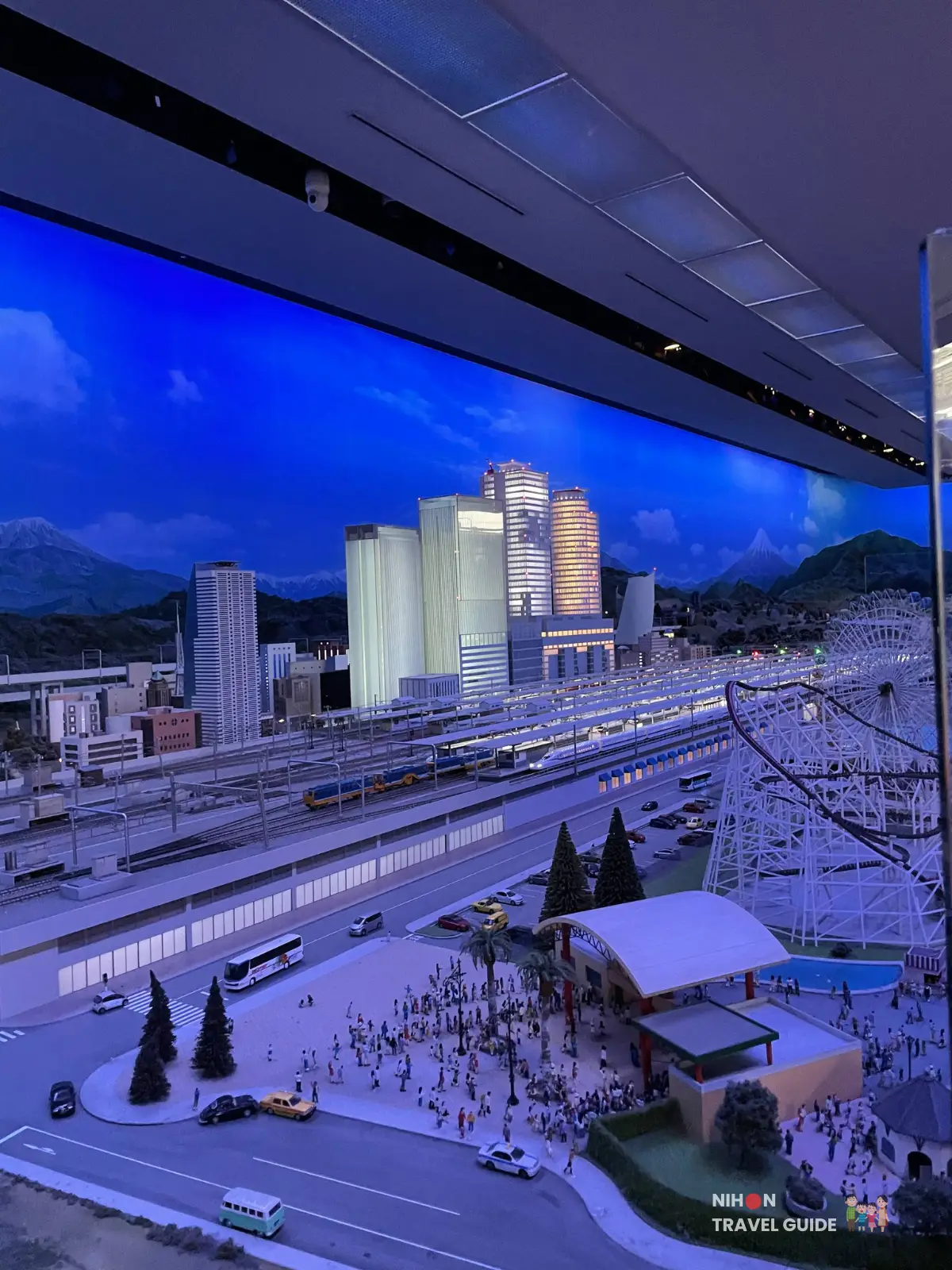
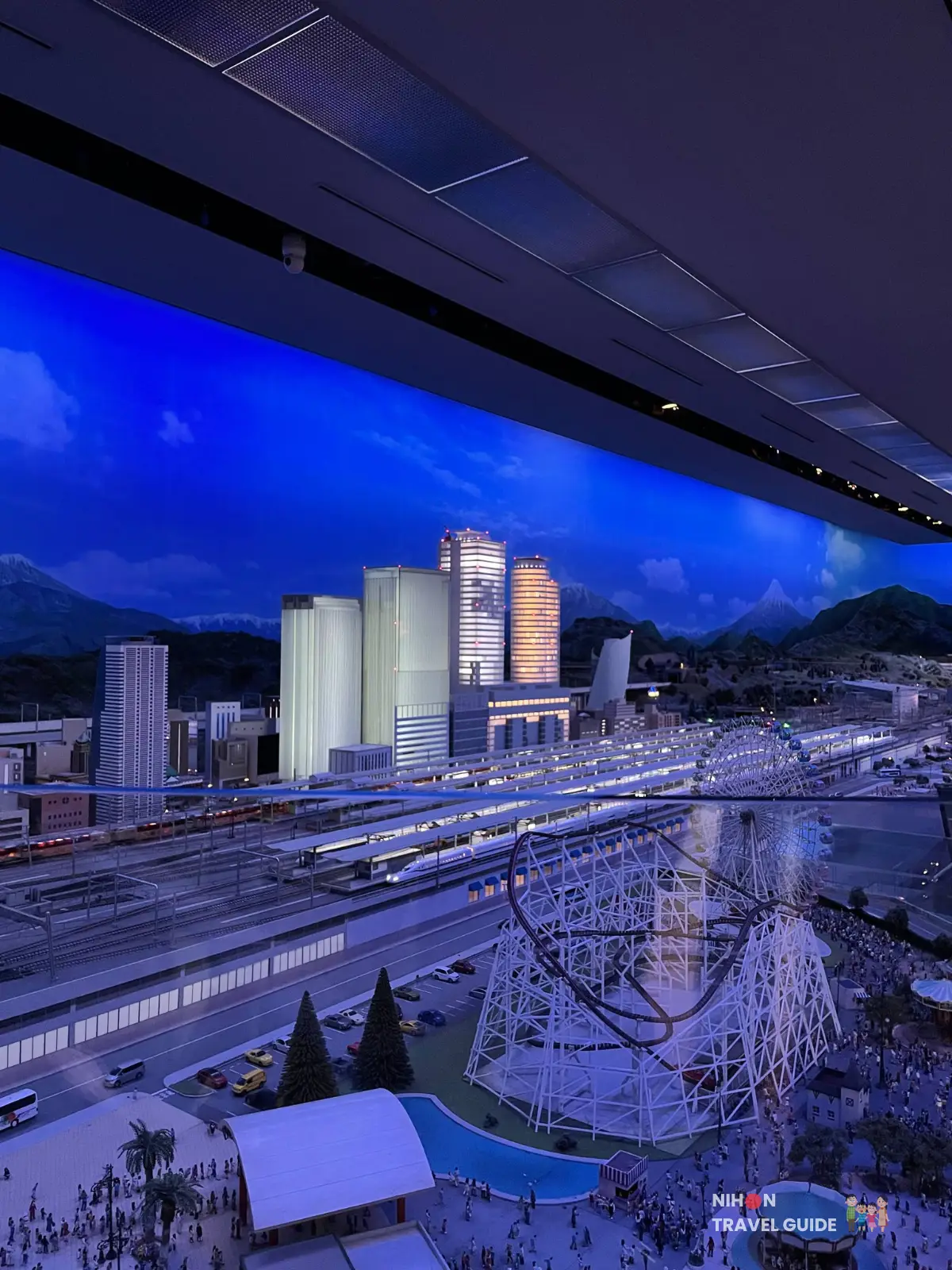
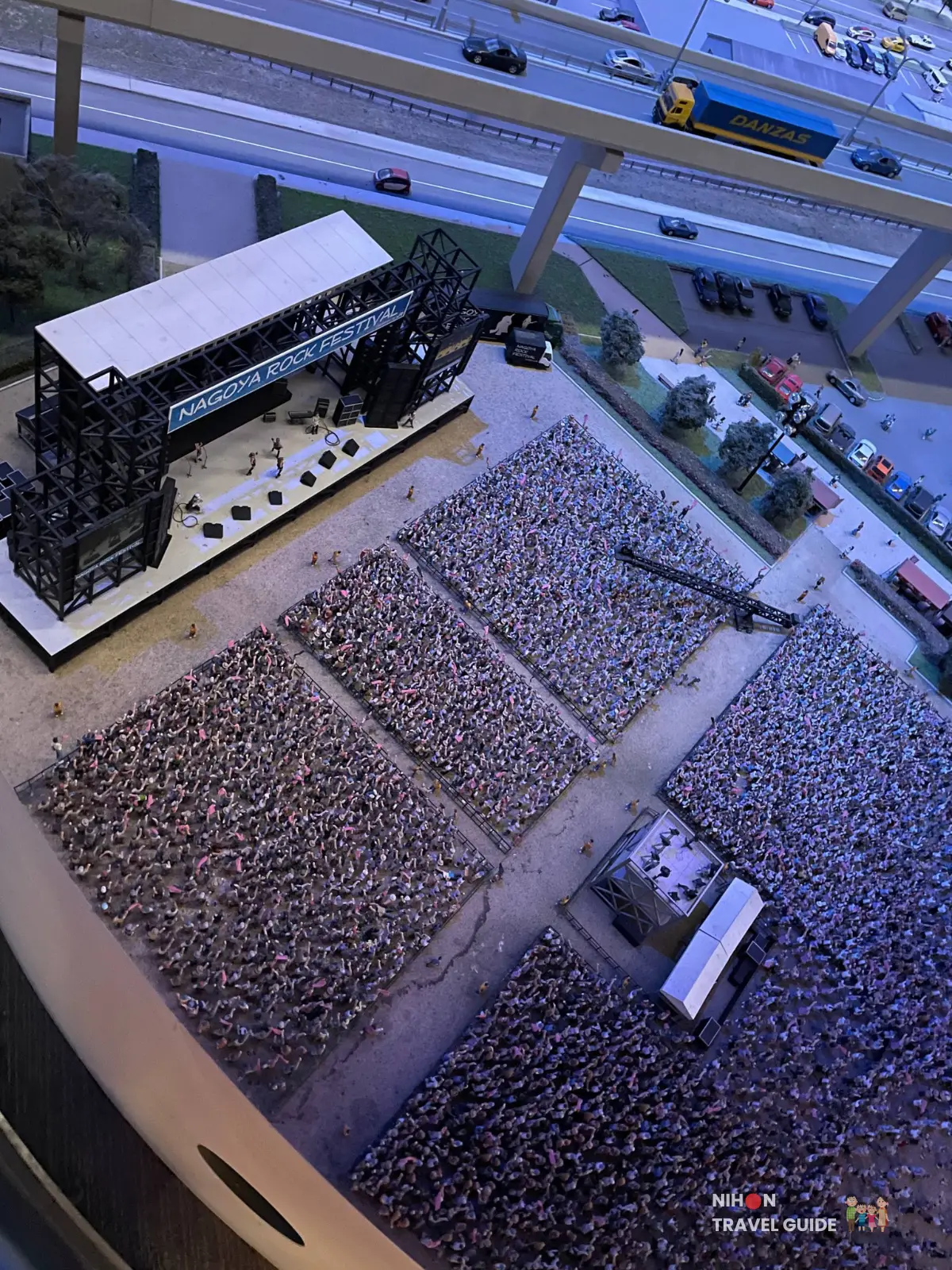
On the first floor there is also a large room called the Great Railway Diorama Room. Inside is basically a huge diorama of train stations from Tokyo, Nagoya, Kyoto and Osaka. Showcasing the Shinkansen routes between these stations. The lights in the room will also change based on whether it’s day or night to simulate the daytime and nighttime operations.
If you are build railroad dioramas, train model sets or travel with kids, I believe that the Great Railway Diorama Room would be a highlight for you. For me I still preferred to see the real life-sized train models up close.
Lounge & PLUSTA Bento
There is food in the SCMaglev and Railway Park as well. On the second floor (in the Symbolic Rolling Stock Exhibit hall), there is a food place called PLUSTA Bento. They serve limited train bentos that you can eat in an outdoor train exhibit (more on that below). Some examples include a Dr Yellow lunch box, N700 Shinkansen Themed Bentos and other sandwich sets.
We didn’t eat here this time as we had plans to eat lunch elsewhere. PLUSTA Bento was not crowded however so there shouldn’t be much of a queue if you would like to eat here.
Outdoor Train Exhibit
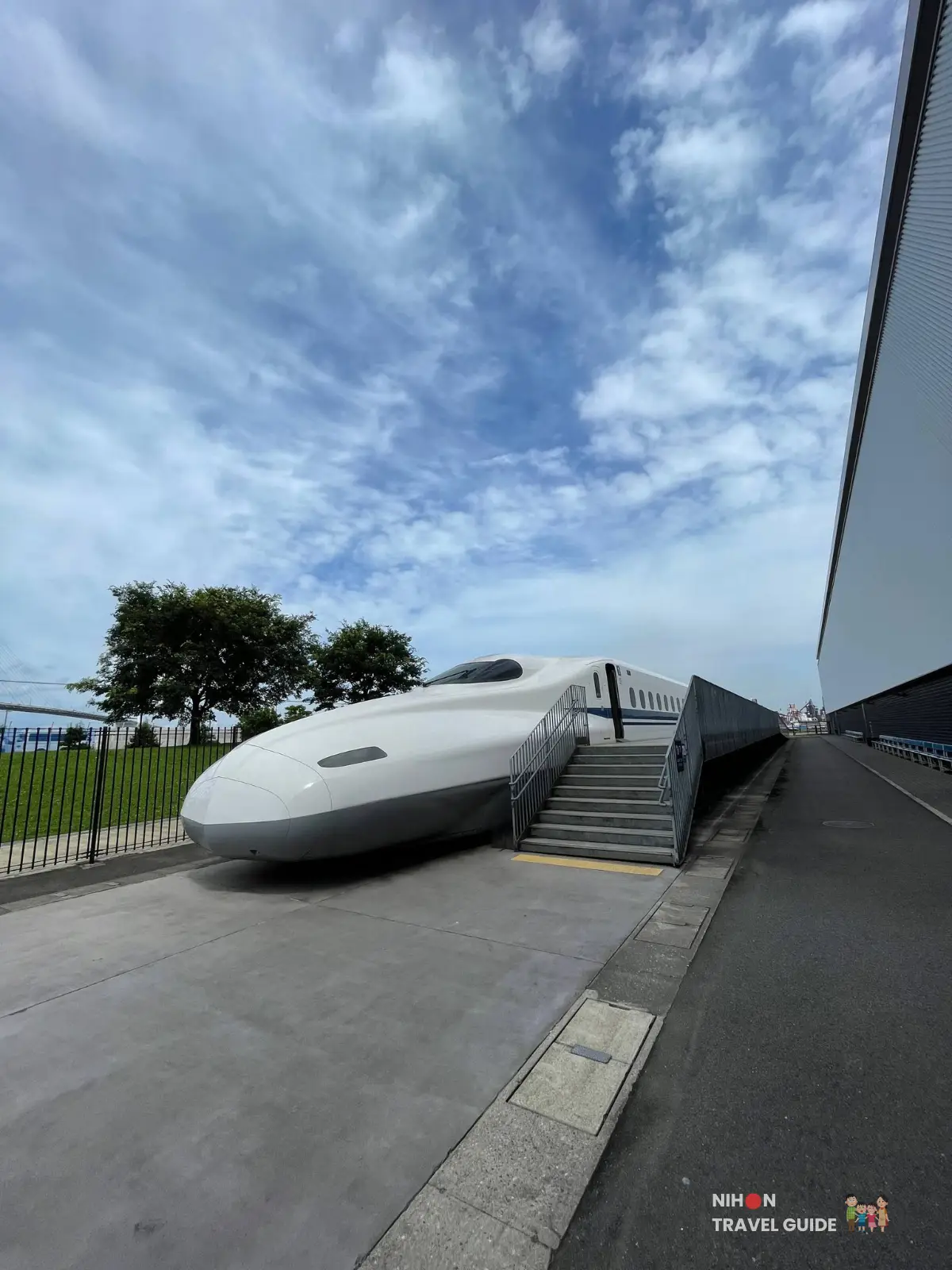
Before you leave, on the left side of the Great Rolling Stock Hall is an exit that would take you to the outdoor train exhibit. Once outside there is a an N700 Shinkansen (first three carriages) that you can visit. You can take pictures and freely enter the Shinkansen.
I believe you can actually eat and drink as well inside as if you are taking the Shinkansen. So if there is no space at the Lounge or PLUSTA Bento, you can bring your bento to the outdoor Shinkansen exhibit.
At the time, there was actually no one eating inside. I’m not sure if people just wanted to eat somewhere else or if they didn’t know you could actually do that. I would say that eating bento while taking the real Shinkansen would be more of an experience. But it is a nice idea though.
Some Tips
– Try to visit during non school holiday period to avoid school groups. (Roughly late July to late August in Nagoya).
– Plan at least 2 hours to have time to see every exhibit. More time if you want to take part in the simulators.
– Try to go in the morning as it is less crowded. This also gives time to eat lunch in the surrounding area and visit the Port of Nagoya Public Aquarium in the afternoon.
You may take photos in the Railway Park but selfie sticks or tripods are not permitted.
– Here is a PDF of the floor map of the SCMaglev and Railway Park if you need one.
Do I Recommend it?
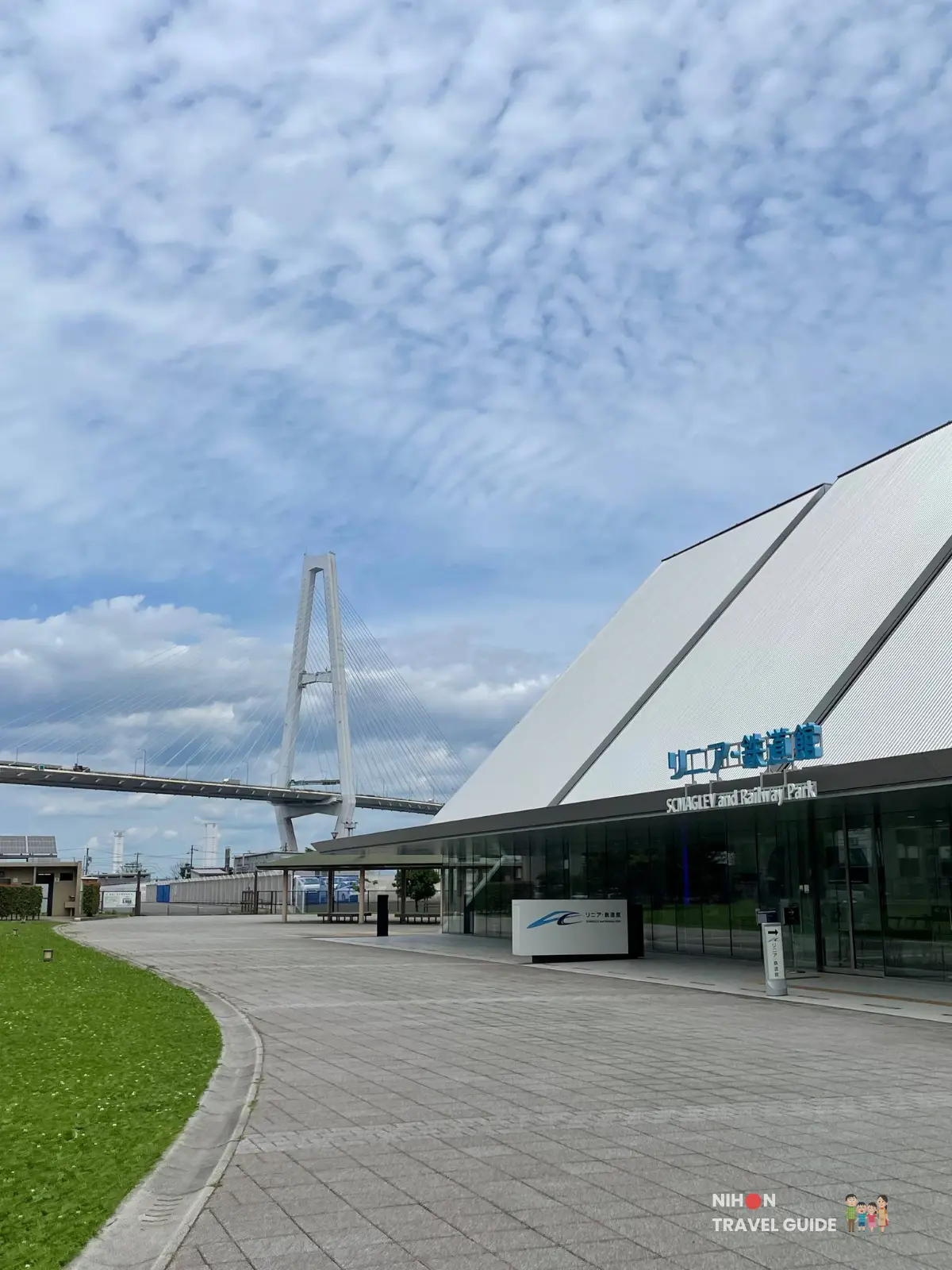
Yes I recommend visiting the SCMaglev and Railway Park. One of the things I love about Japan is it’s innovation and creative problem solving. Especially how they solve common everyday problems. In the Railway Park, you get to see their innovation and technology on full display and on a larger scale.
You start out thinking “I’m not even that into trains,” and end up emotionally attached to a beautifully engineered rectangle. It is a love letter to Japanese history and technology and I can’t wait to see more of what they come up with in the future.
My Rating: 4 / 5
“Full-scale trains, immersive Shinkansen and Train Simulators, go on non–school-holiday weekdays.”
FAQ – SCMaglev and Railway Park Nagoya
1) Is the SCMaglev and Railway Park open in 2026?
Yes – it’s open every day except New Year’s Day (Jan 1). Hours are 9:30 AM – 5:30 PM (last entry 5:00 PM).
2) How much is the SCMaglev and Railway Park ticket in 2026?
Adult: ¥1,000 Child (3–12): ¥500 Senior (65+): ¥700 Free for under 3.
3) How to get to SCMaglev and Railway Park from Nagoya Station?
Take the Aonami Line to Kinjō-futō Station (25 mins, 10 stops, ¥360). Exit and walk 1 min. The park is right next to the station.
4) Is there parking at the museum?
There is no parking at the museum itself; visitors can use the Nagoya Shiei Kinjofuto Parking Lot near Kinjofuto Station.
5) Is the SCMaglev Museum good for kids?
Very kid-friendly! The simulators and train models are a hit with children. Strollers are allowed. Plan 2-3 hours.
6) Can I take photos inside?
Yes – photography is allowed (no flash). Selfie sticks and tripods are prohibited.
7) What’s the best time to visit?
Go in the morning (9:30–11 AM) for fewer crowds and better light. Weekdays are quieter than weekends.
8) How much do the simulators cost and how long are sessions?
The Shinkansen and Conventional Train Crew simulators cost 500 yen for 15‑minute sessions, and the Conventional Train Driving Simulator costs 100 yen for 10‑minute sessions.
9) Is there an age limit for the SMCaglev Railway Park driving simulator?
No there aren’t any age limits stated for the train driving simulators. However they are quite complicated so an older child would enjoy the experience more.
10) Is there food inside the park?
Yes – the on-site bento shop offer light meals, bento, and drinks. Nearby Port of Nagoya Public Aquarium has more options.
11) Can you eat inside any trains?
Visitors can eat and drink inside the outdoor N700 Shinkansen exhibit, similar to being on a real Shinkansen.
12) Is there food inside the park?
Groups of more than 20 people can reserve from the first day of the month three months before the visit by faxing the official reservation form; there is no online group reservation system as of 2026.

Written by
Timothy Leong
Timothy is a Singapore-born, Japan-based digital marketer turned hidden-gem hunter. After ditching spreadsheets for Google Maps, he now lives full-time in Japan, chasing quiet towns, real ramen, and off-grid train routes. Every photo and tip on Nihon Travel Guide is 100% his — no AI, no fluff, no Tokyo Tower.
More about Timothy →