Impressive extensive collection of rocks, minerals, fossils and information that your brain probably can’t handle.
Disclaimer: I am not sponsored for this post. I decided to visit what is the Tsukuba Geological Museum because it looked interesting.
- A really detailed and extensive collection — can feel like information overload and dry at times, but genuinely fascinating even if you’re not a science person
- The sheer amount and variety of rocks and minerals is something your brain cannot fully process — in a good way
- Don’t visit on its own — pair it with JAXA Tsukuba Space Center for a complete science day
- 1.5 hours is enough to briefly see every exhibit without reading everything in detail
In Feb 2026 I visited the Tsukuba Geological Museum and it was literally a hidden gem as you probably can find every type of gem, rock and fossils that you can name. And so much more.
Tsukuba Geological Museum is a free public museum focused on Earth Science and has a collection of more than 170,000 registered specimens of rocks, mineral and fossils since 1882. About 2,000 specimens were on display, which is way more than my brain could handle.
Anyway, I will let you know what my experience was like visiting Tsukuba Geological Museum and why you should consider visiting it on your next trip to Japan.
- How to Get to Tsukuba Geological Museum
- Tsukuba Geological Museum Ticket Prices
- Tsukuba Geological Museum Opening Hours
- What is the Tsukuba Geological Museum?
- Exhibition Room 1 – History of the Earth
- Exhibition Room 2 – Natural Resources & Marine Geology
- Exhibition Room 3 – Geological Phenomena
- Exhibition Room 4 – Rocks, Minerals and Fossils
- How long to spend at Tsukuba Geological Museum?
- Some Tips
- Should you Visit, Shortlist or Avoid Tsukuba Geological Museum?
- Nearby Attractions in Tsukuba
- Where to Stay Nearby in Tsukuba
Photos on this page are mine, shot on an iPhone 11 pro.
How to Get to Tsukuba Geological Museum
By Highway Bus
Tsukuba Geological Museum Parking
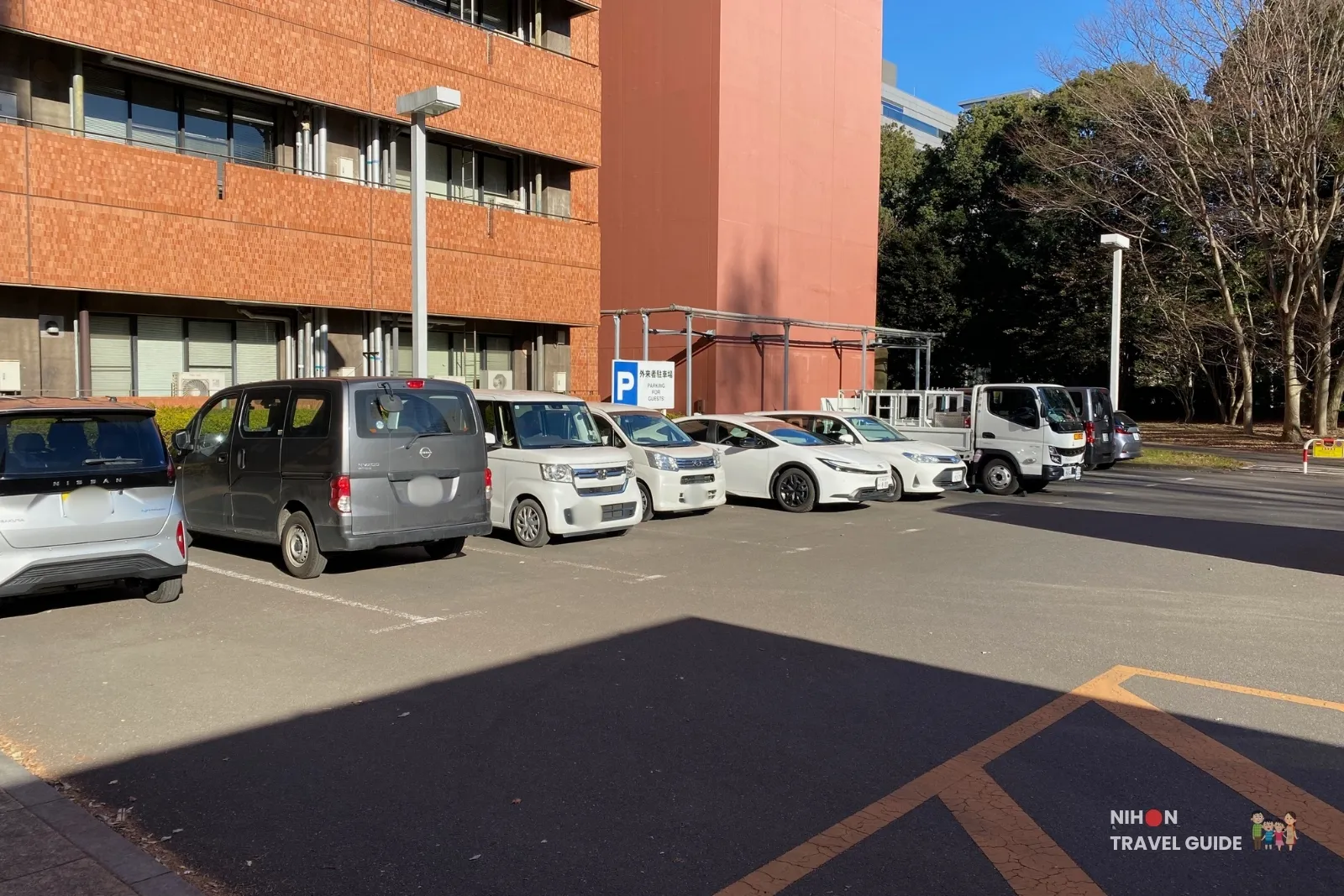
Parking is limited at the museum and free of charge. You need to first head to the security guard post at the Tsukuba Campus of AIST. From there the security guard will show you a map of where to park and a parking pass to display on your dashboard.
They did know some basic English as well so it should not be too difficult.
Tsukuba Geological Museum Ticket Prices
Tsukuba Geological Museum is free of charge.
Tsukuba Geological Museum Opening Hours
🕘 Tsukuba Geological Museum — Opening Hours
Free admission · Parking available
| Item | Details |
|---|---|
| Hours of Operation | 9:30am – 4:30pm |
| Closed | Every Monday (following weekday if Monday is a national holiday) · Dec 28 – Jan 4 |
| Admission | Free |
| Parking | Free · Limited spaces |
⚠️ Hours subject to change — always check the official Tsukuba Geological Museum website before visiting.
What is the Tsukuba Geological Museum?
Opened in 1980 on the AIST Tsukuba Campus, the museum has 4 main exhibits (on two floors) that talks about the history of the Earth, different geological phenomena, natural resources, marine geology and showcases of various rocks, minerals and fossils.
Most of the information are in Japanese but there is an online guide in English where you can scan via QR code at the entrances of each exhibit. I do find it a bit cumbersome to keep reading your phone and looking at the exhibit, and it sort of takes away the “experience” of being in a museum. If you have a Japanese friend who can translate for you that would be great.
Most of this stuff is too much for me to understand, but here is a look at what you can find inside the museum:
Exhibition Room 1 – History of the Earth
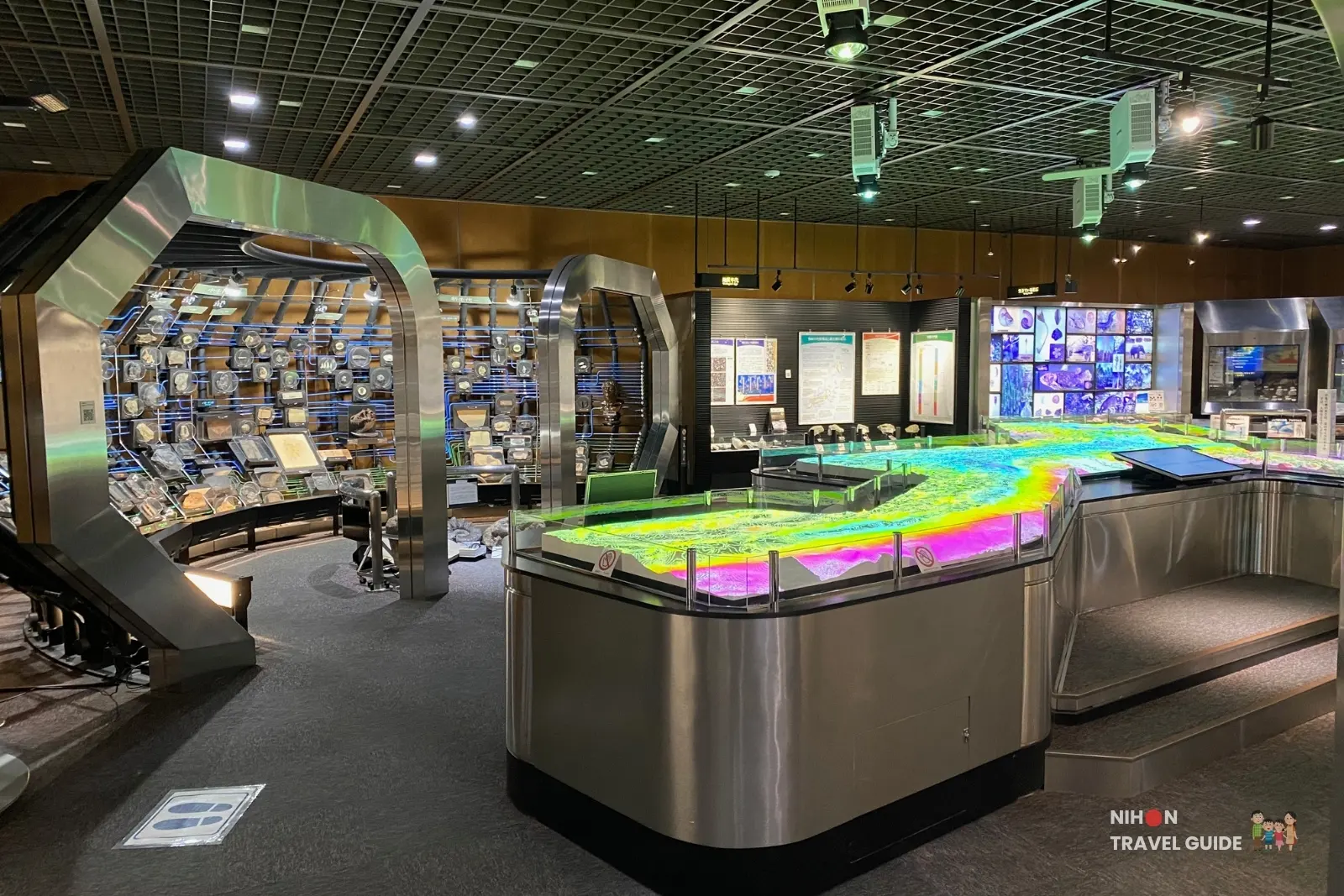
This section focuses on the History of the planet, evolution of life and the geological story of the Japanese islands. There are a ton of rocks and fossils together with displays with explanations. You are even allowed to touch some of them.
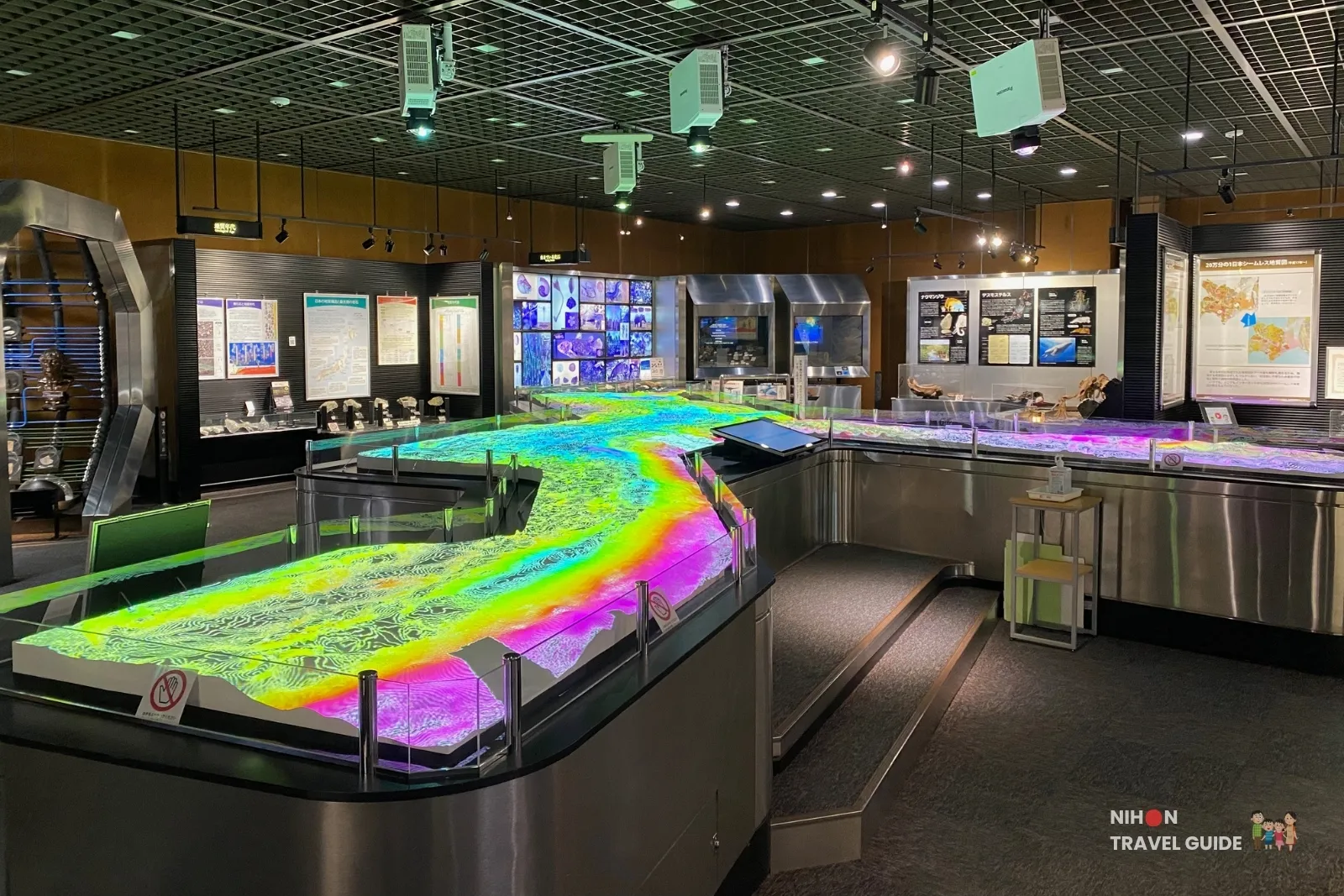
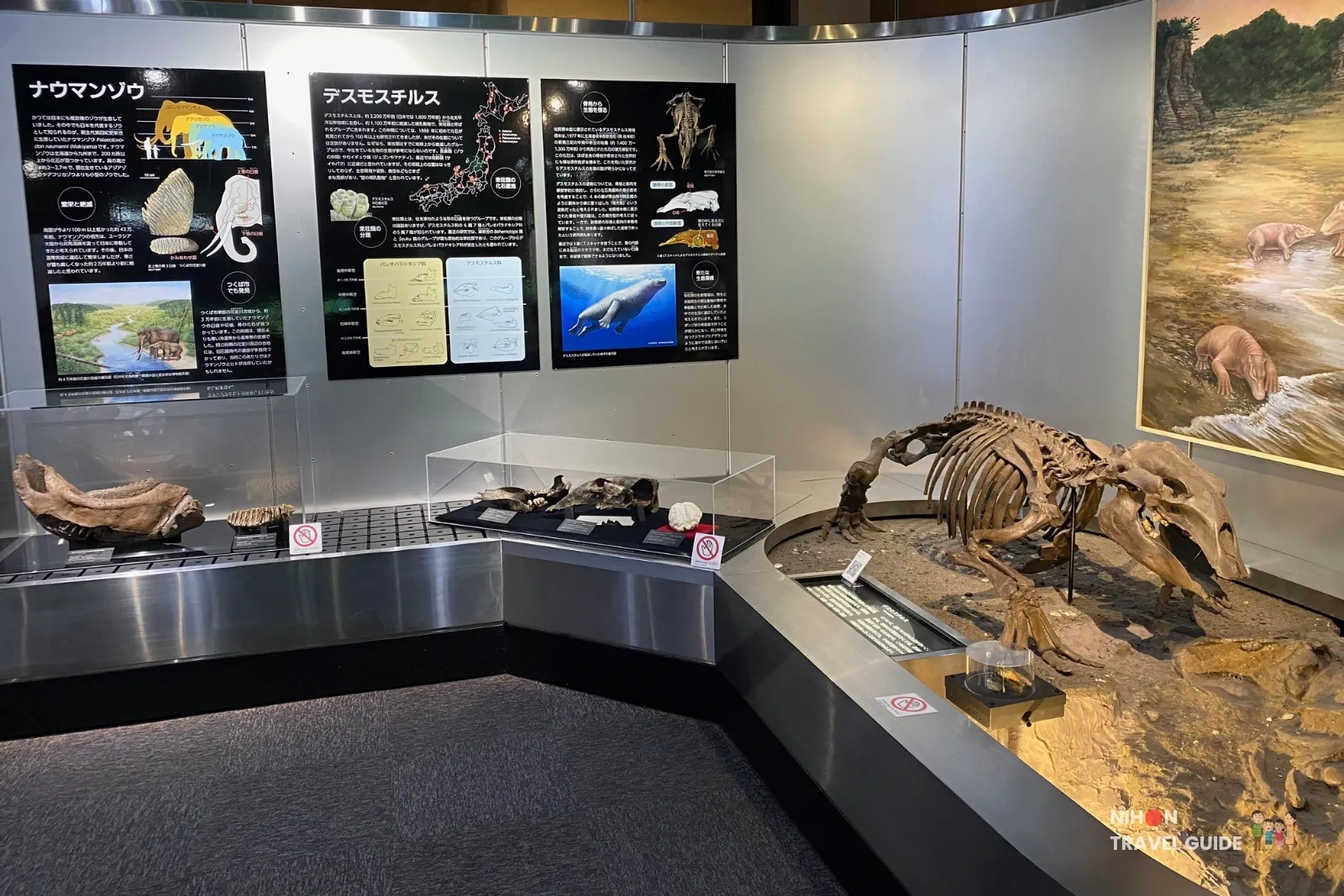
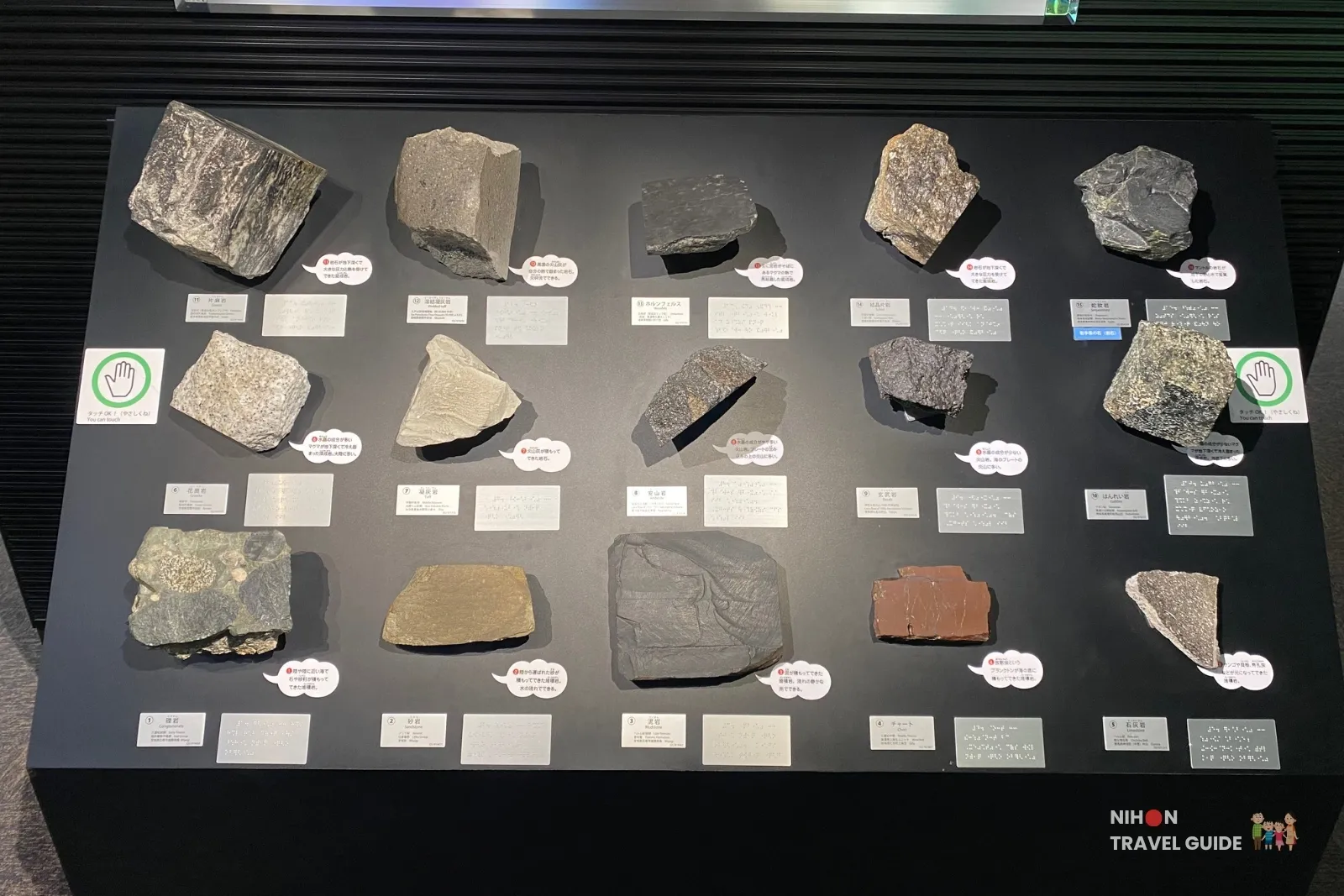
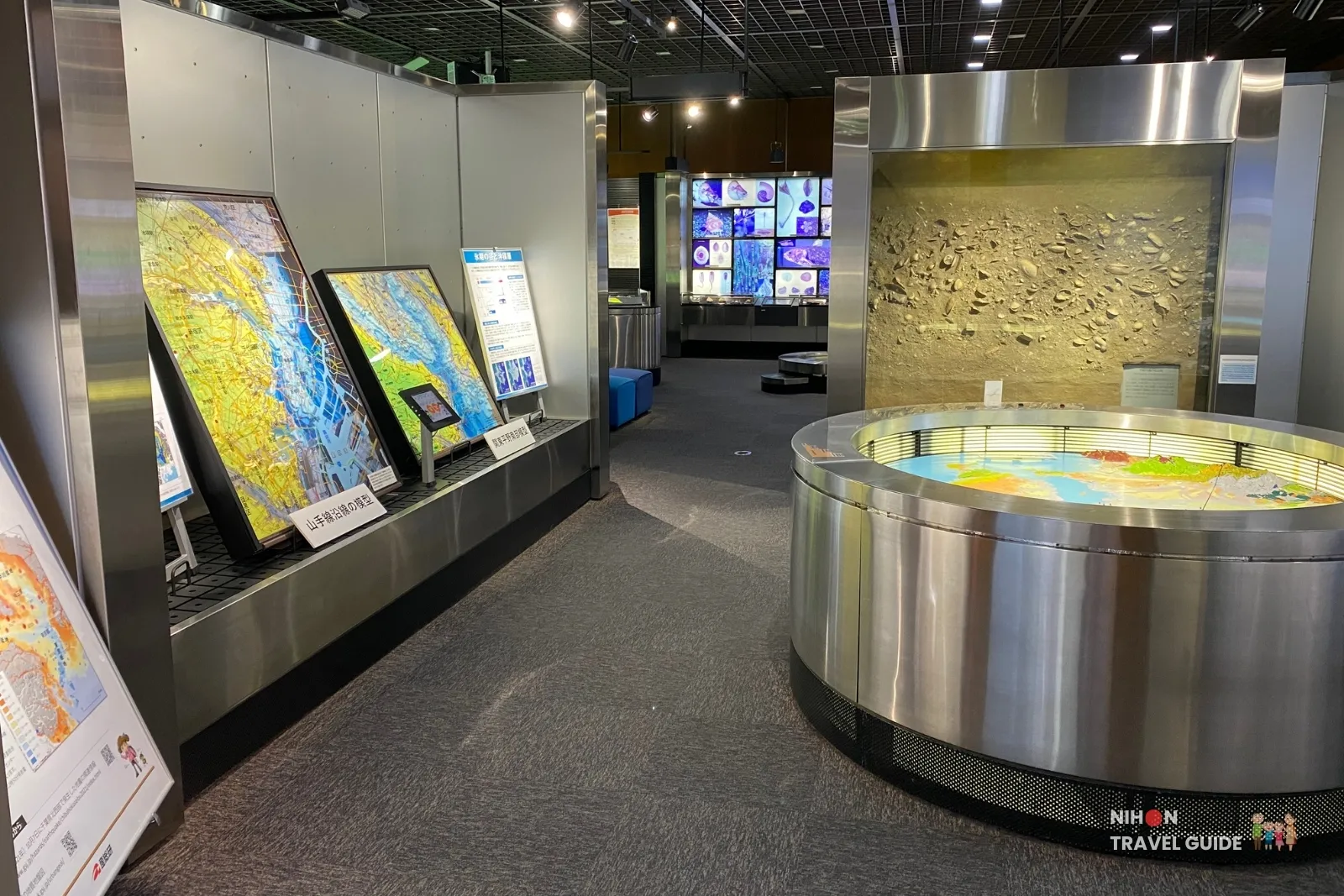
There is even a fully reconstructed skeleton of a Desmostylus, an extinct mammal that went extinct a long time ago. It’s really crazy when you look at a piece of history like that.
There are lots of geological maps, 3D models and even more rocks, some of which are some of the oldest on Earth. Some of the maps and models are showing how Japan’s basement rocks were formed which lead to the formation of Japan’s islands.
Exhibition Room 2 – Natural Resources & Marine Geology
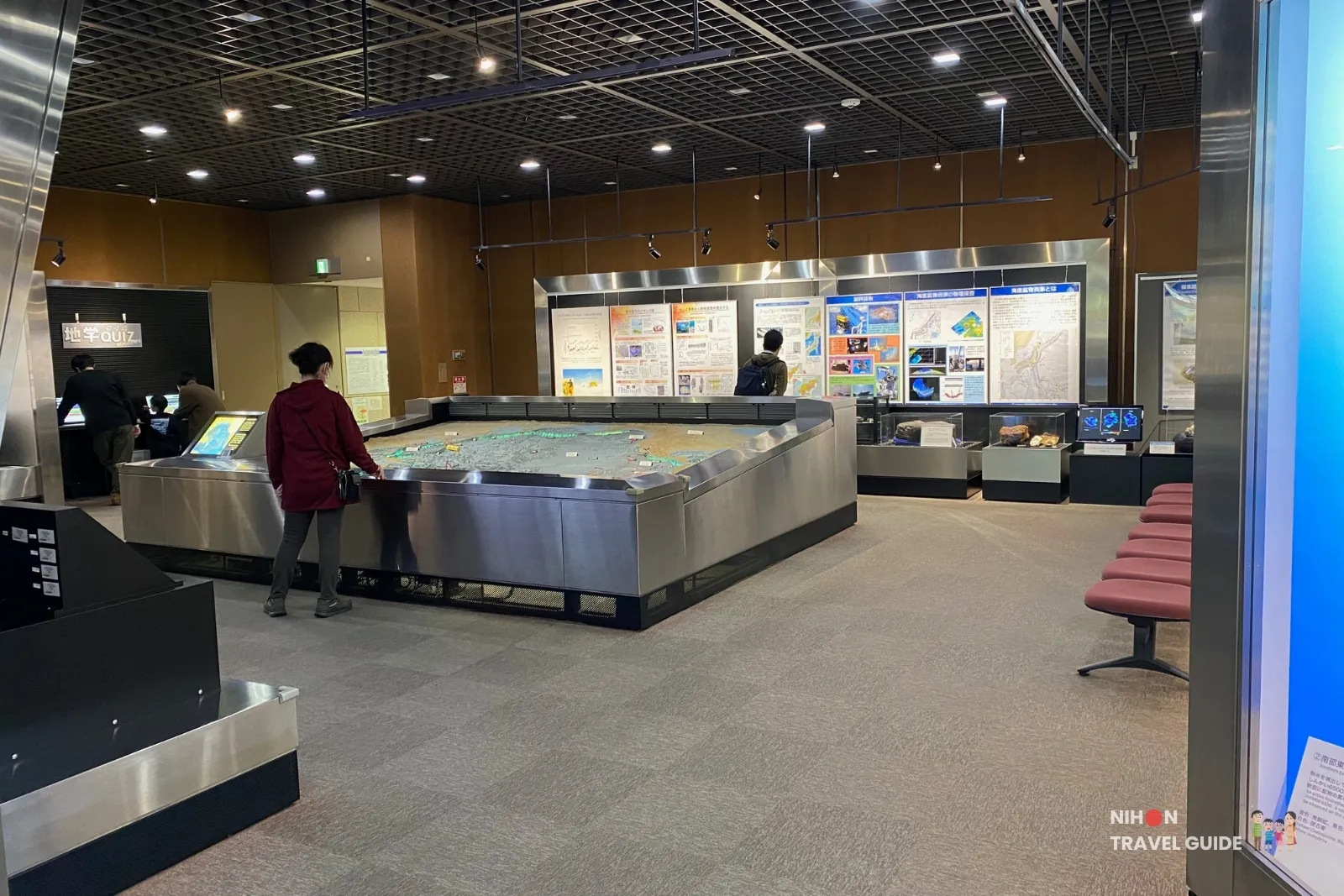
This room is mainly focusing on mineral resources (on land and under the sea), fuel resources and the geology of the ocean floor. There is a 3D model of the ocean floor around Japan that was quite detailed and interesting.
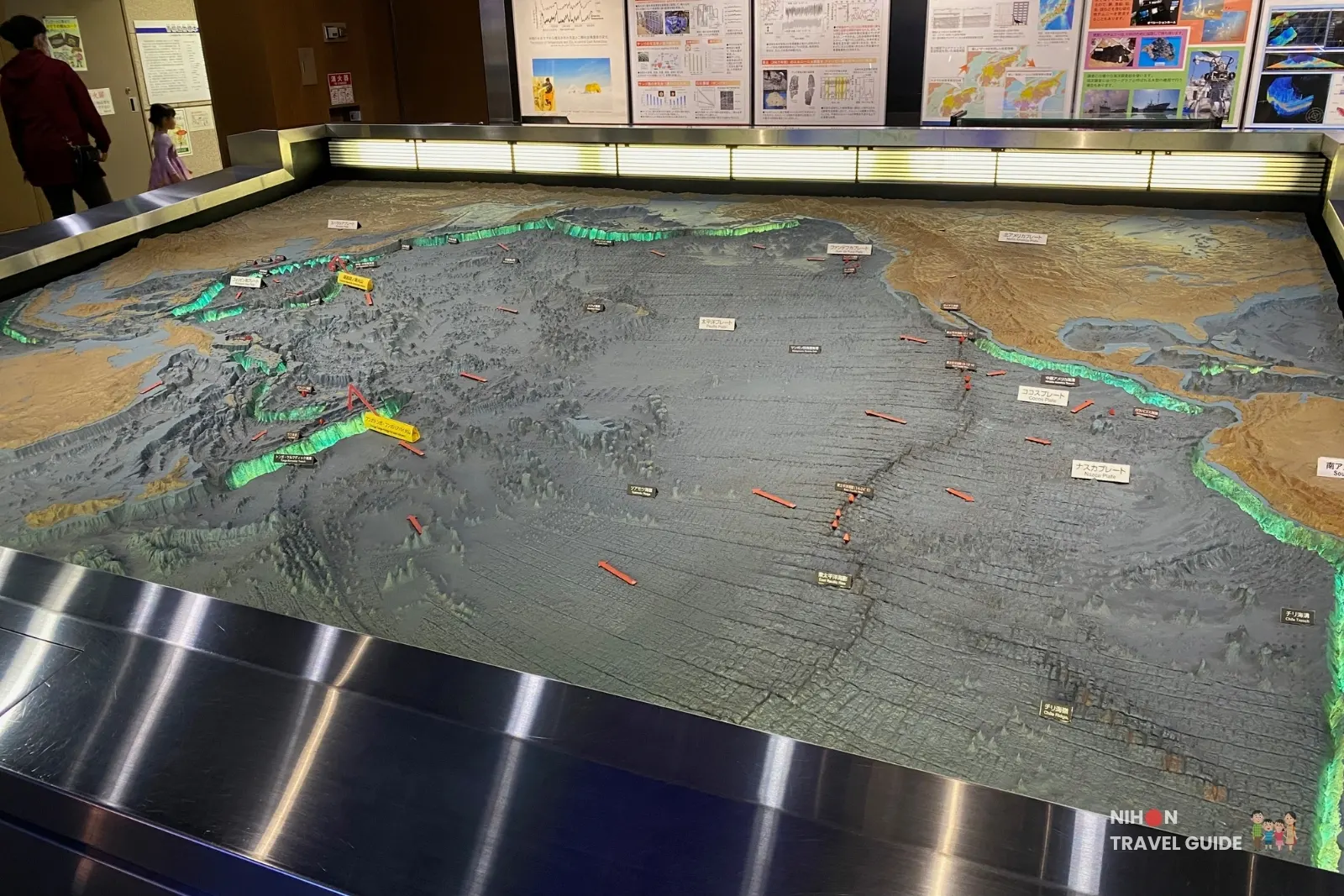
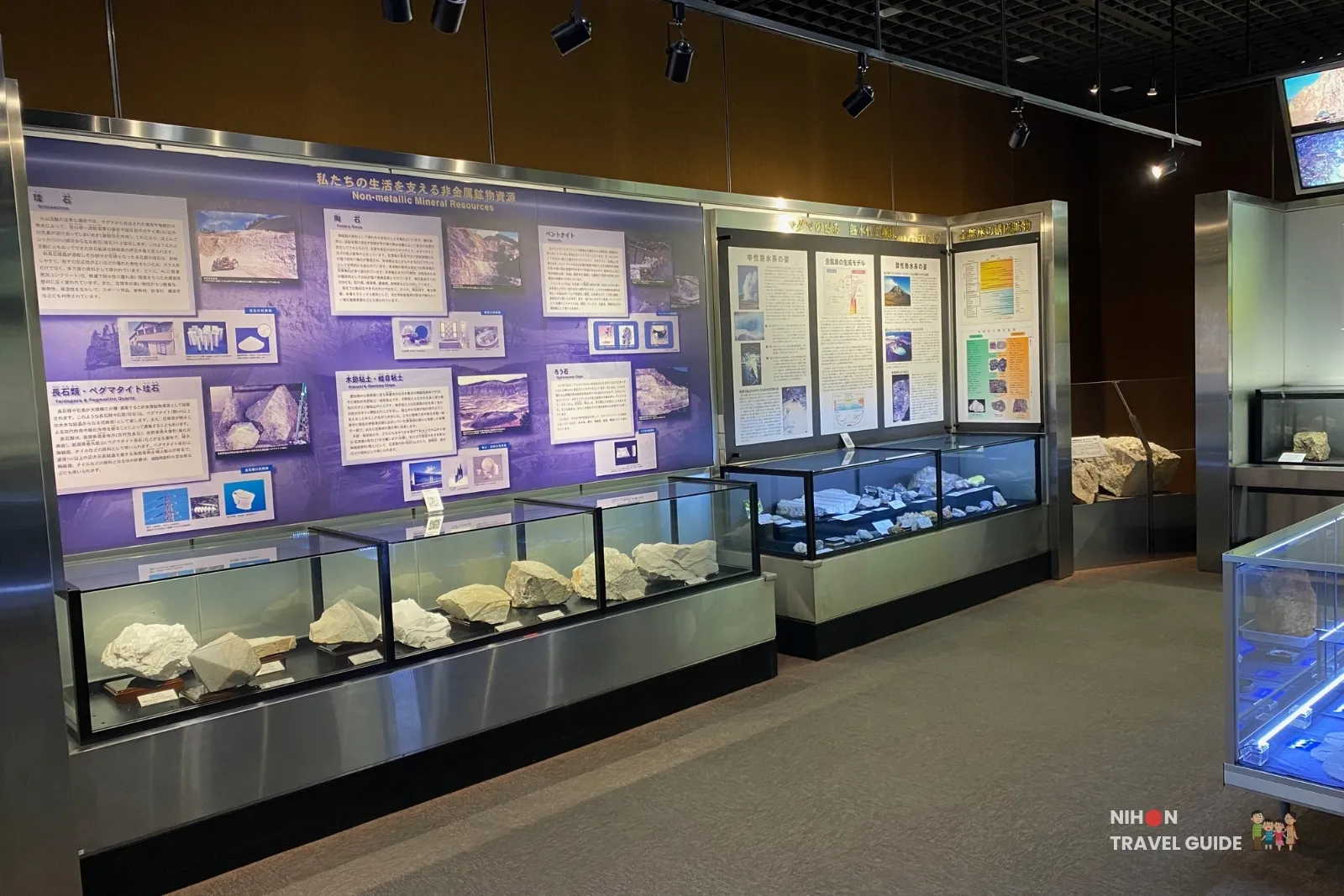
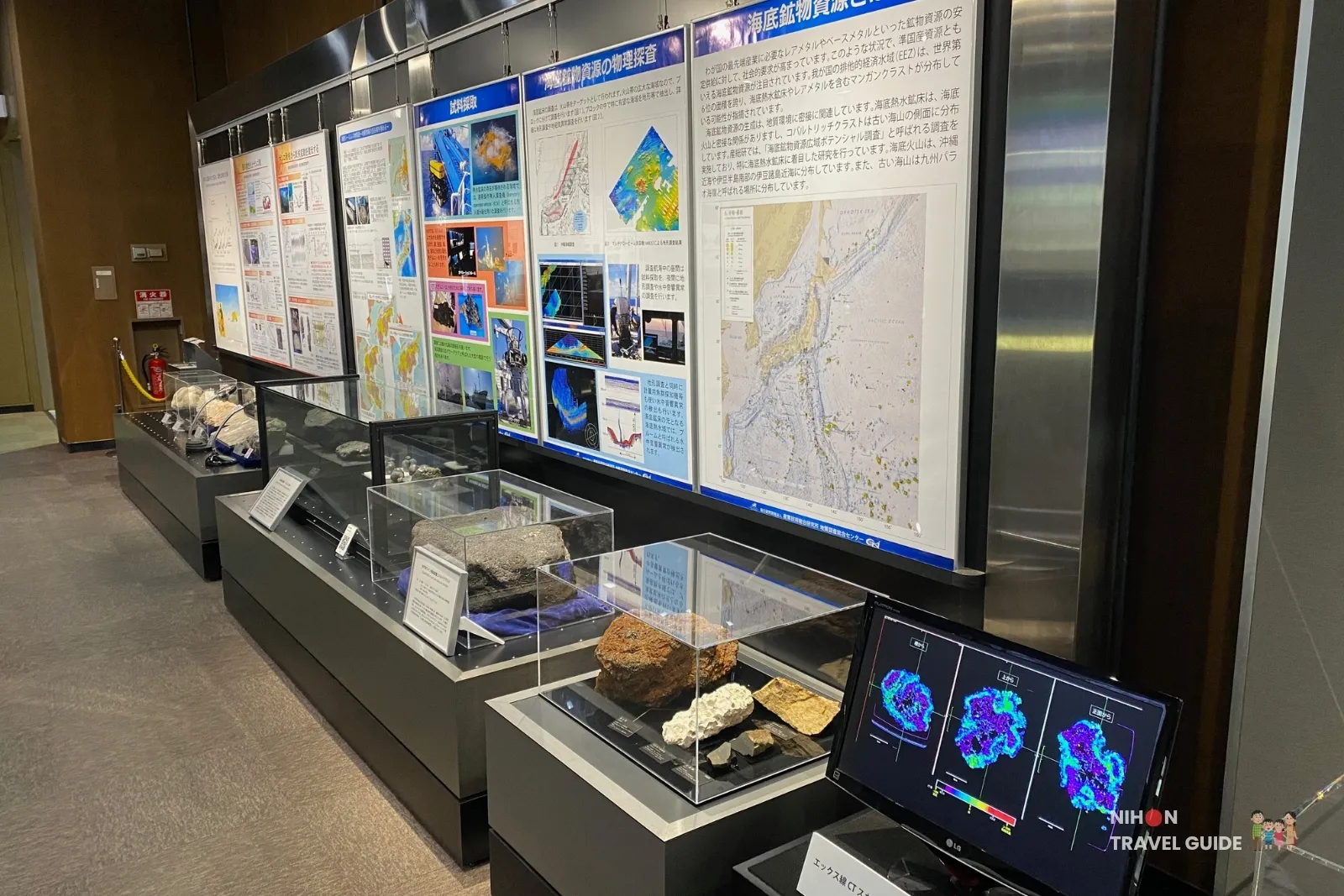
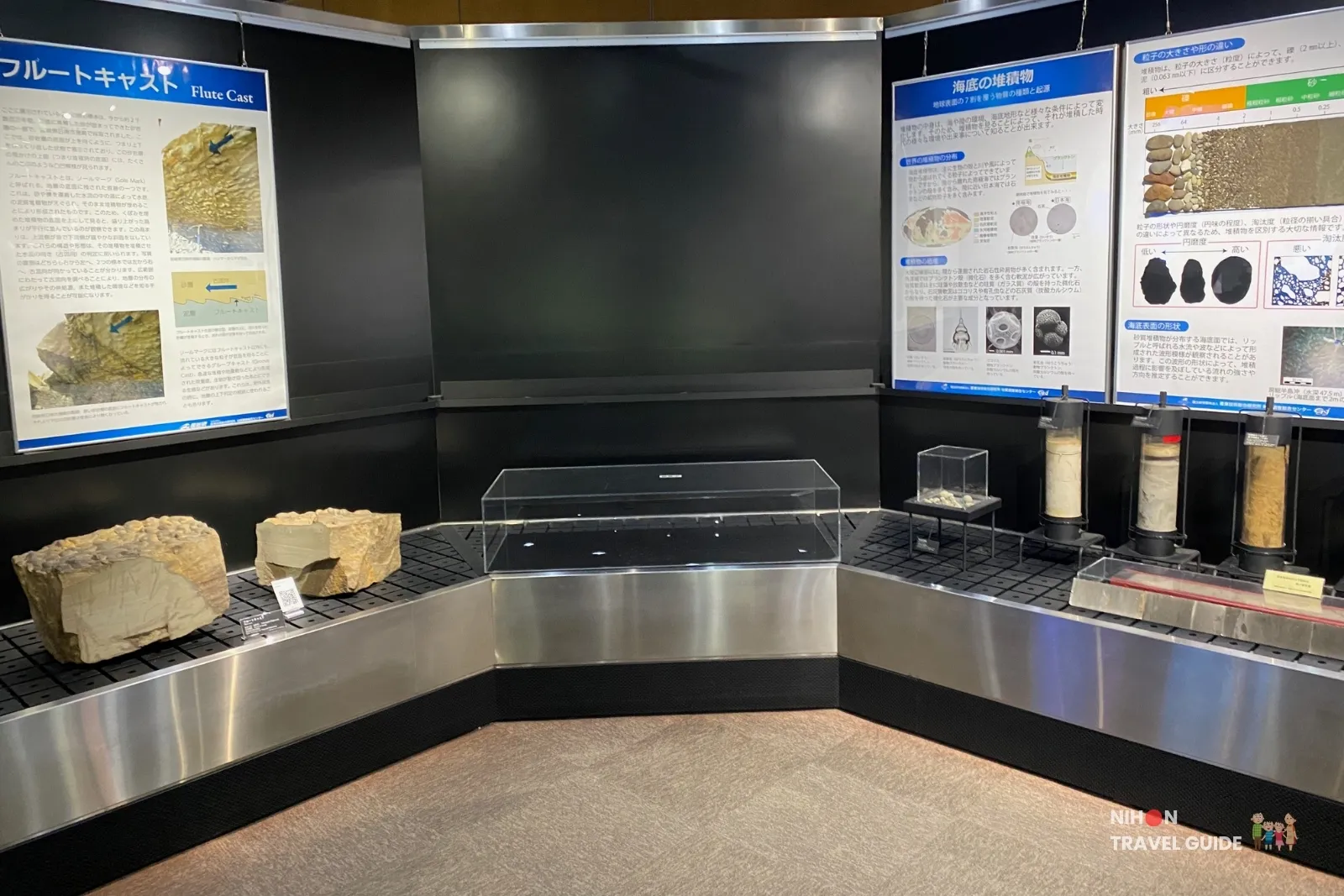
There are a lot of interesting rocks again and minerals that were taken from the ocean seabed. There are even canisters with different types of crude oil and sand inside. They showed some equipment as well that were used for collecting these rocks and minerals.
Exhibition Room 3 – Geological Phenomena
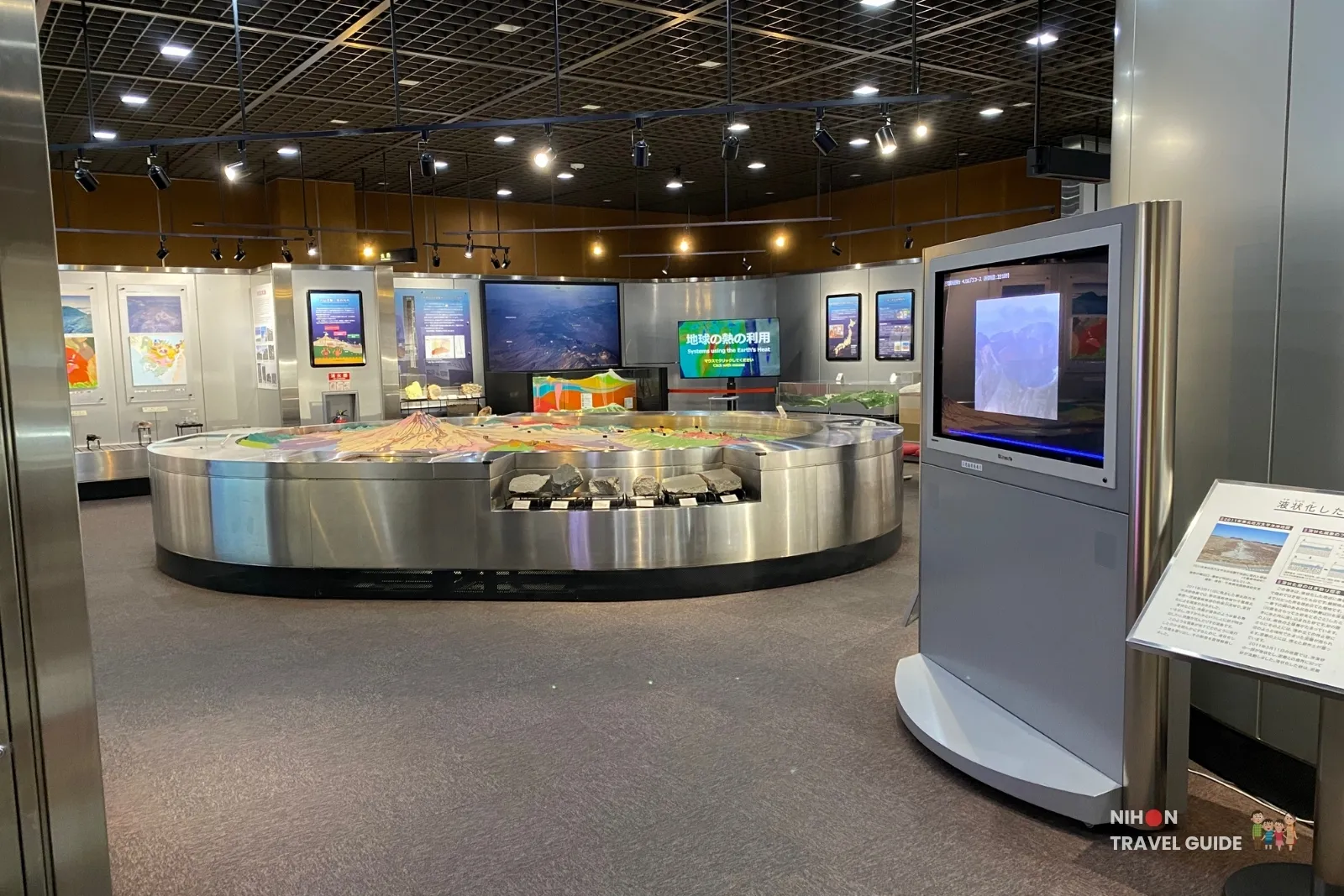
In this room, the exhibits are mainly about volcanoes, earthquakes, hot springs and geothermal energy. In the middle of this room there is a large 3D model of Mount Fuji and Mount Hakone, showcasing the volcanoes geology. You can see rocks from those volcanoes and the 3D models also show the cross section of the volcanoes.
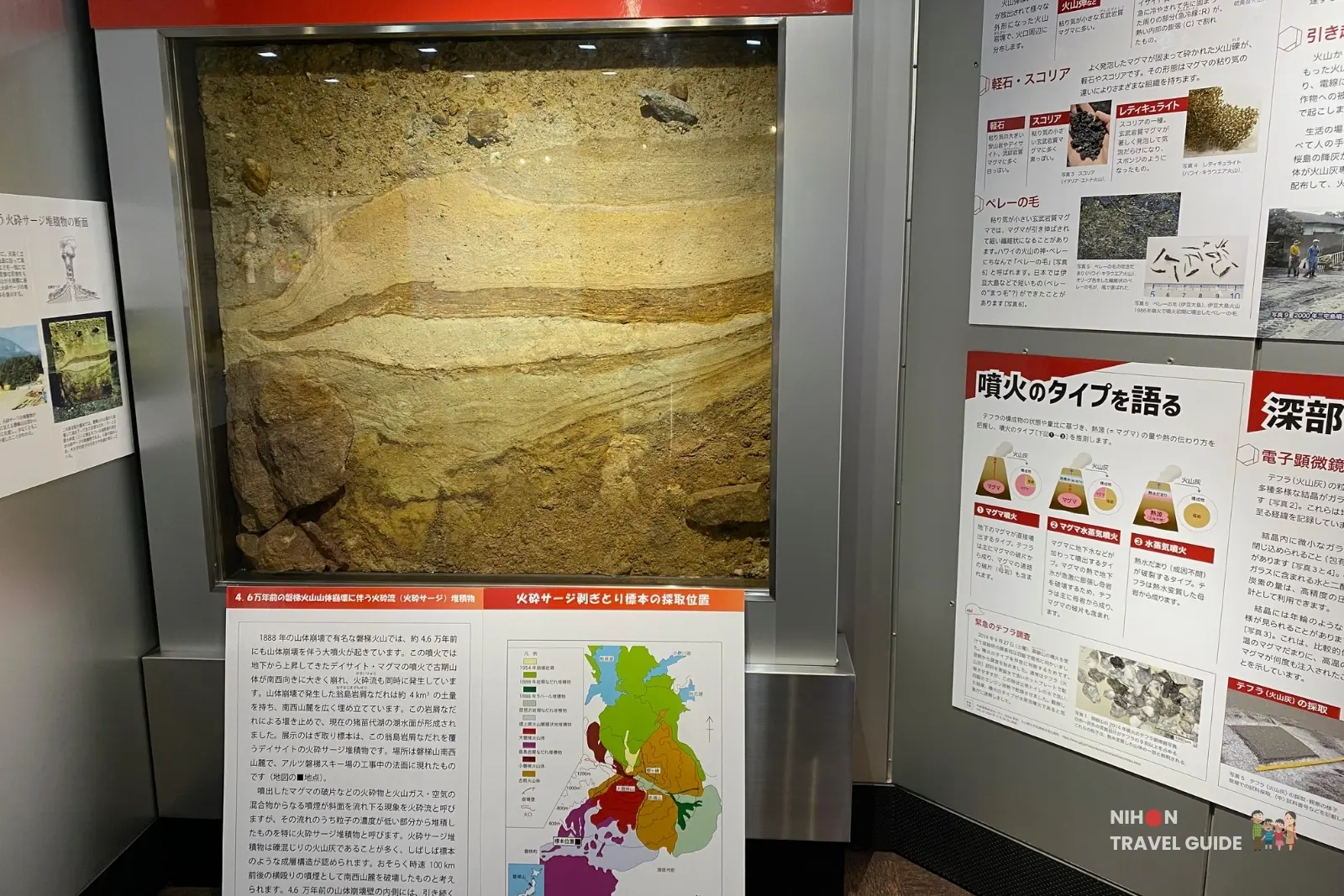
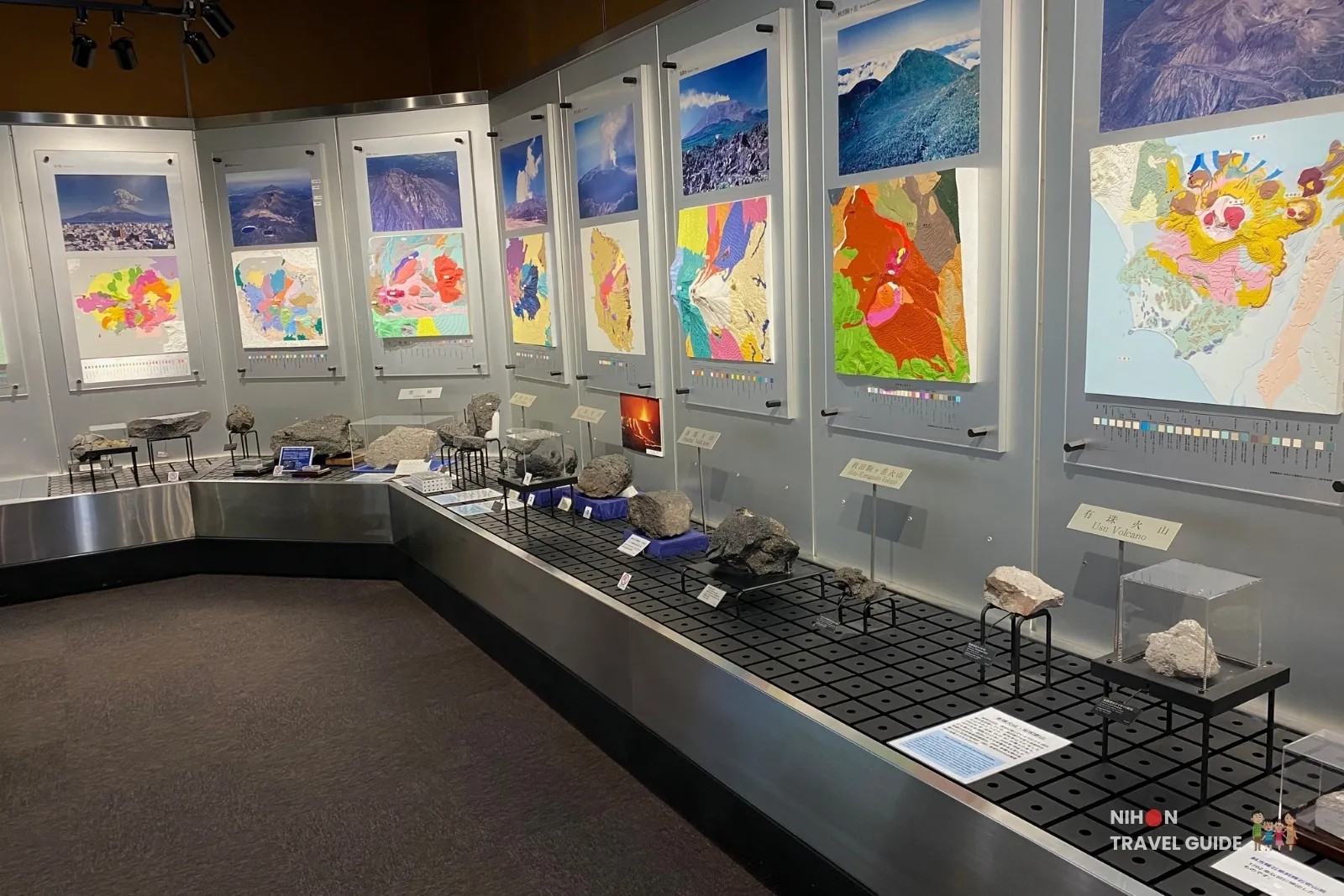
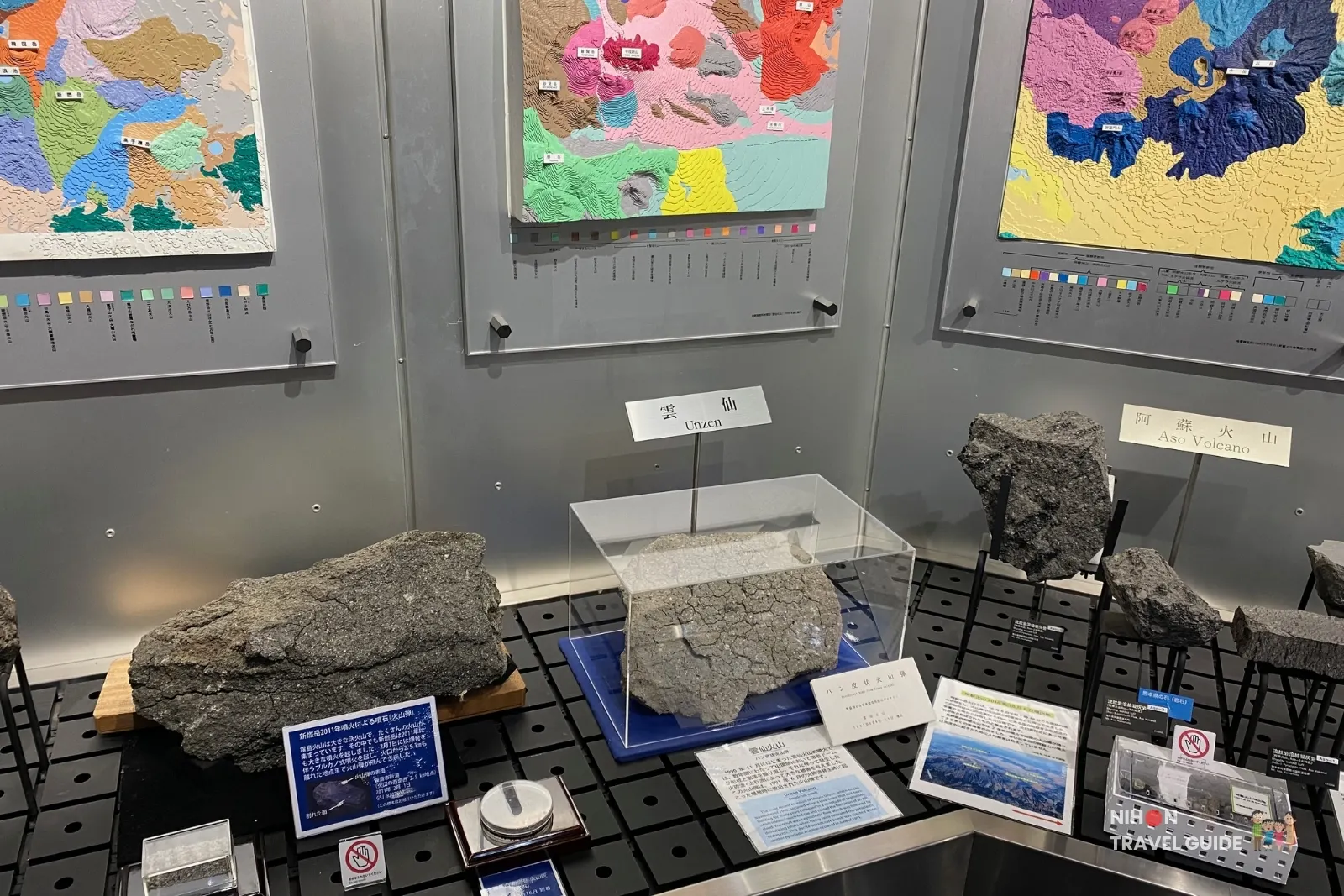
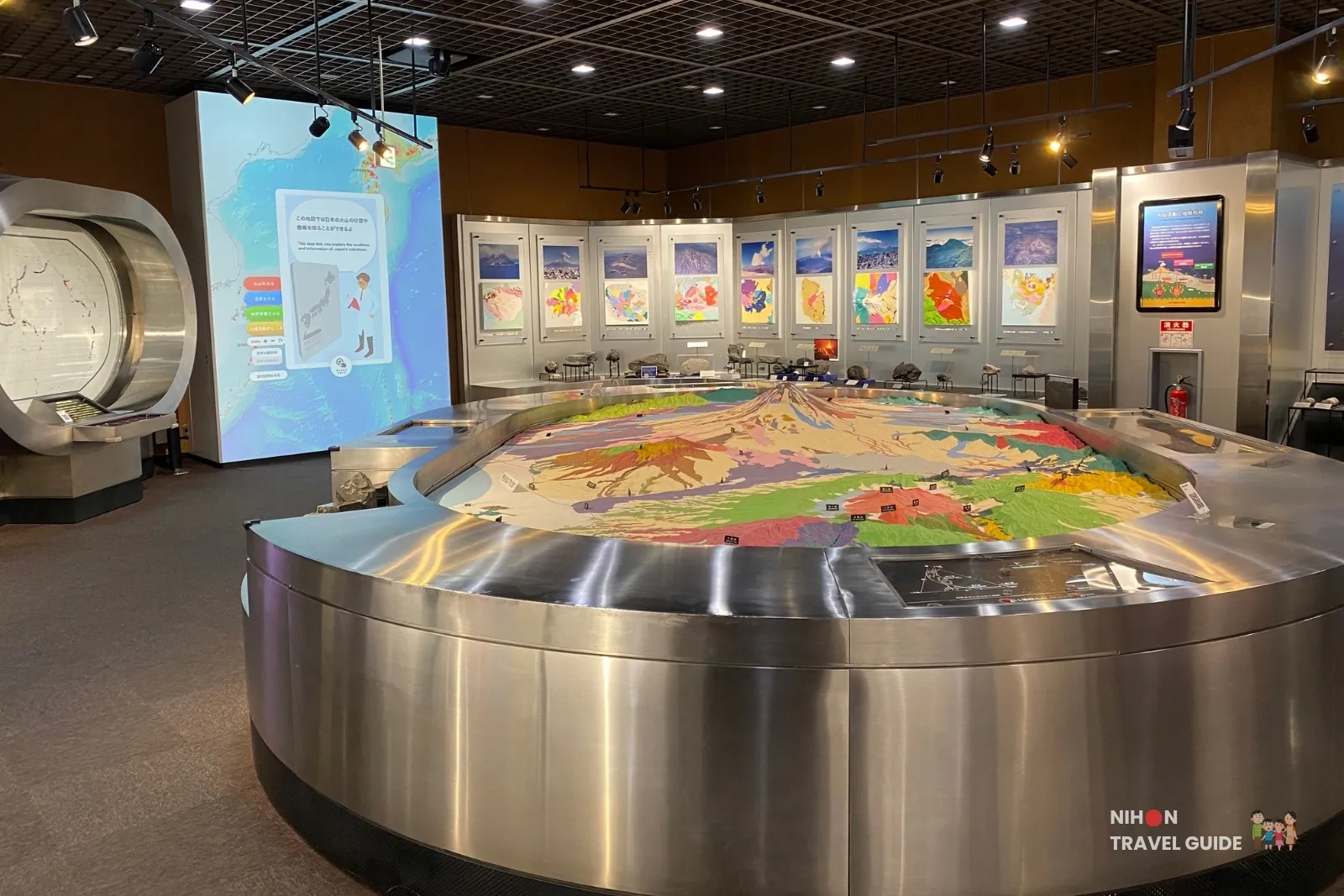
The exhibits also show how scientists study volcanoes, earthquakes and geothermal power generation, and how it affects the daily lives of the Japanese. There’s also an interesting section where they had a few rocks taken from each volcano in Japan.
Exhibition Room 4 – Rocks, Minerals and Fossils
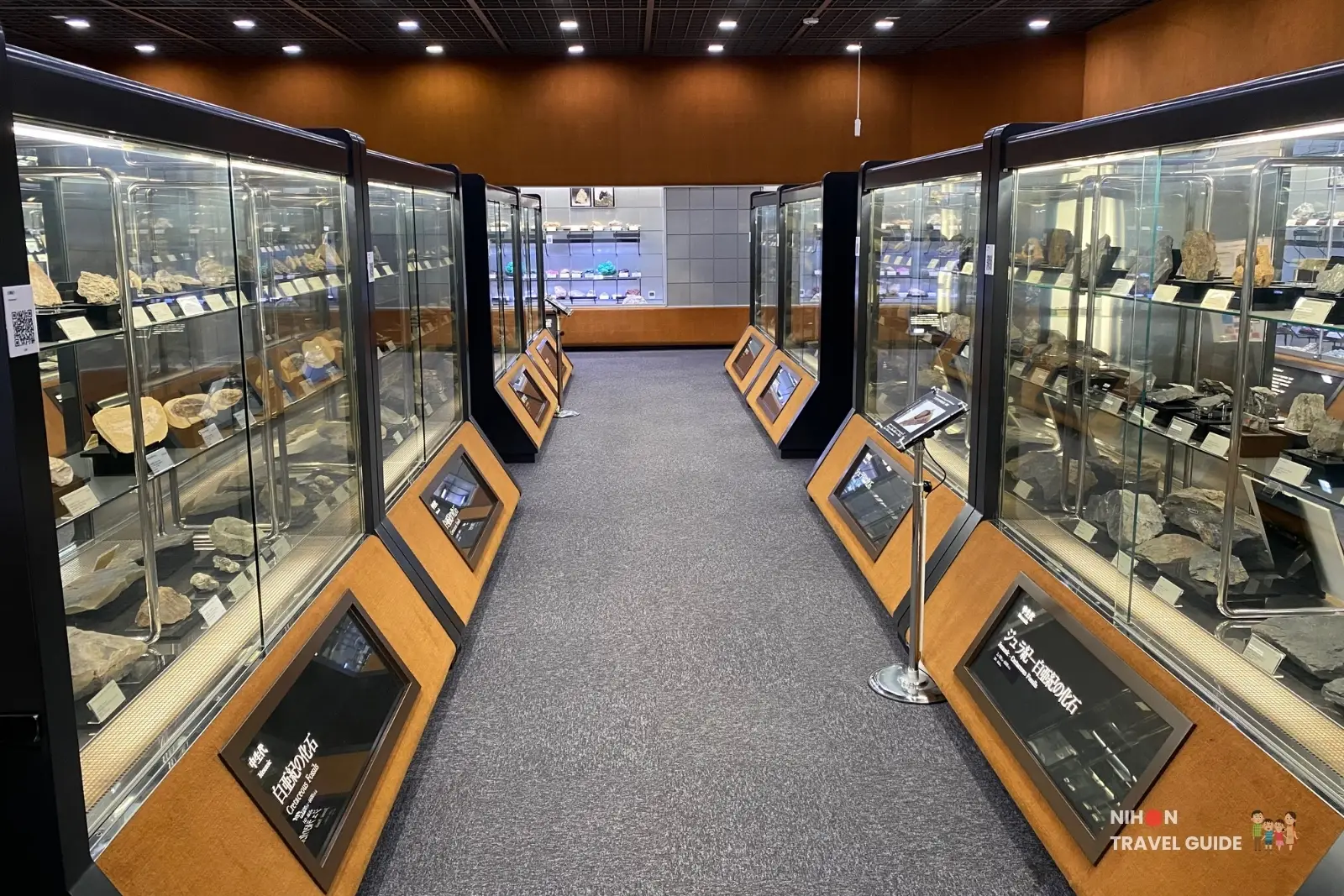
This was actually the first room I visited due to the layout, and it already blew me away with the number of rocks, minerals and fossils on display. Probably every type of rock and mineral you can ever imagine can be found here.
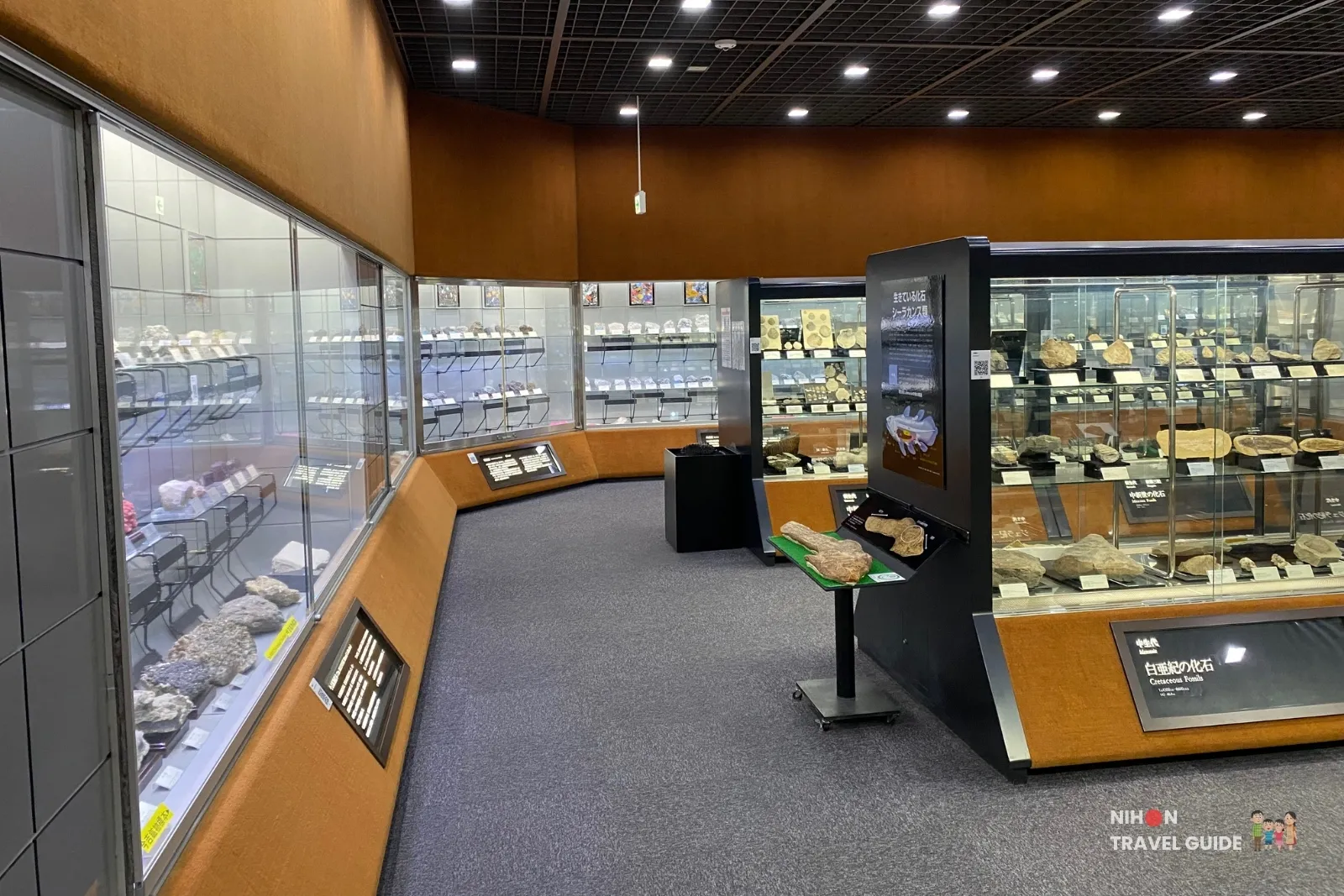
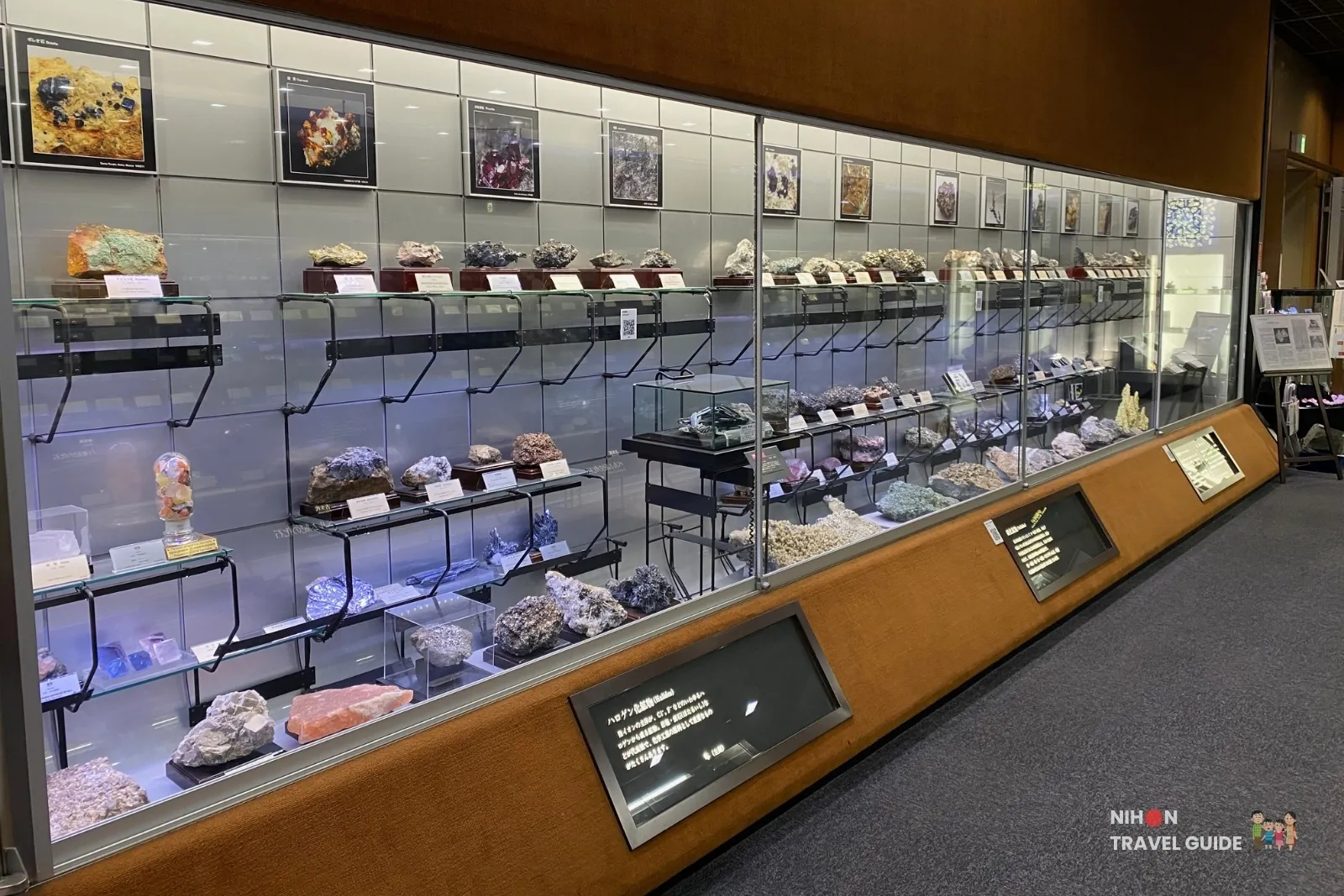
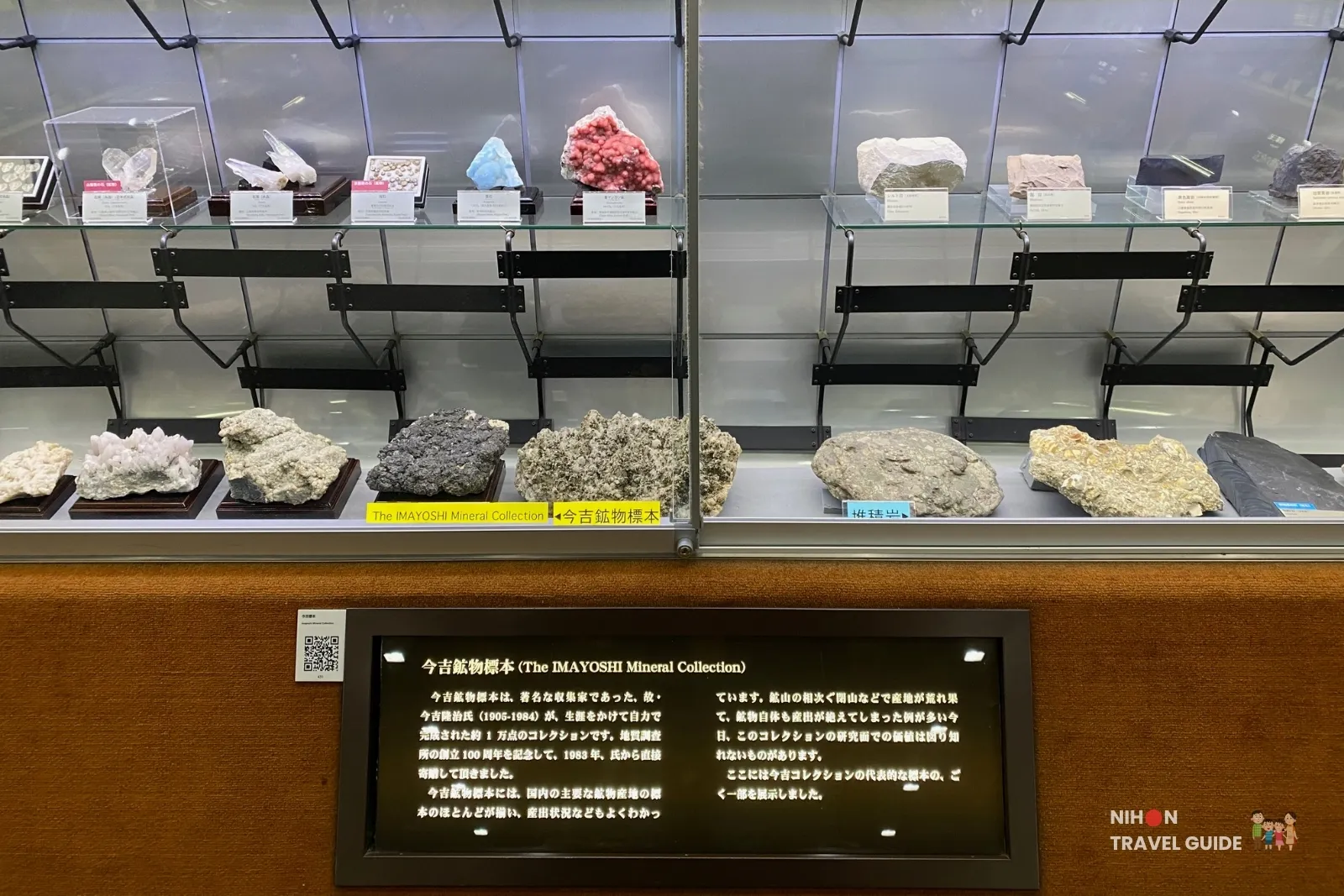
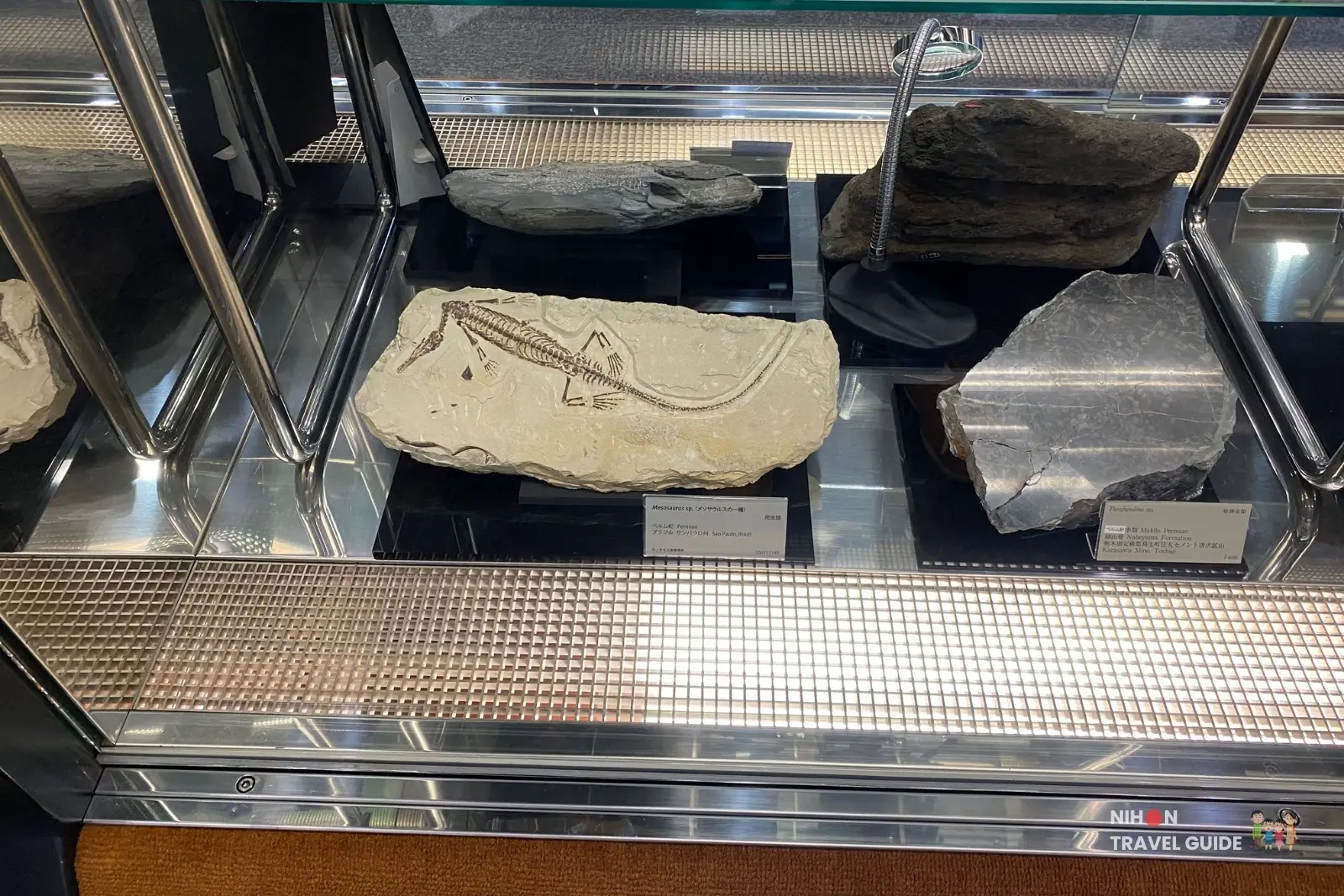
Some of these include the biggest gold nugget in Japan from Shishiori Mine, giant stibnite crystals from Ichinokawa mine, large gypsum crystal from Udo mine and a deep red pyroxmangite crystal from Taguchi Mine.
The minerals were the ones that really caught my eye the most as they came in all sorts of colours. I’m unsure of their names but there were turquoise coloured ones and bright purple ones. It’s really crazy to think that these things even exist.
How long to spend at Tsukuba Geological Museum?
This is a tough one as you can either visit it briefly or spend hours trying to read and understand everything. I briefly looked through every exhibit without reading every single thing and spent about 1.5 hours there. It should be good enough time to see everything.
Some Tips
- As most of the information is in Japanese, there is an online English read along guide that you can access via QR code in the exhibits.
- You might want to consider visiting with a Japanese friend who can translate it faster to make it more enjoyable.
- Taking photos are allowed except for the ones with the “no photography” sign.
Should you Visit, Shortlist or Avoid Tsukuba Geological Museum?
The Tsukuba Geological Museum is a really detailed and extensive collection of rocks, minerals, fossils and much much more. While the exhibits can feel like it’s information overload and very dry at times, I still found it really fascinating despite not being a science person myself. The sheer amount and variety of rocks and minerals is something my brain cannot understand.
I won’t recommend visiting the museum alone however. I would suggest pairing it with the JAXA Space Museum for more complete science day visit. I would suggest putting Tsukuba Geological Museum and JAXA Space Museum on your shortlist for your next Japan trip.
Check out our guide to find out more about what it’s like to visit JAXA Tsukuba Space Center.
Nearby Attractions in Tsukuba
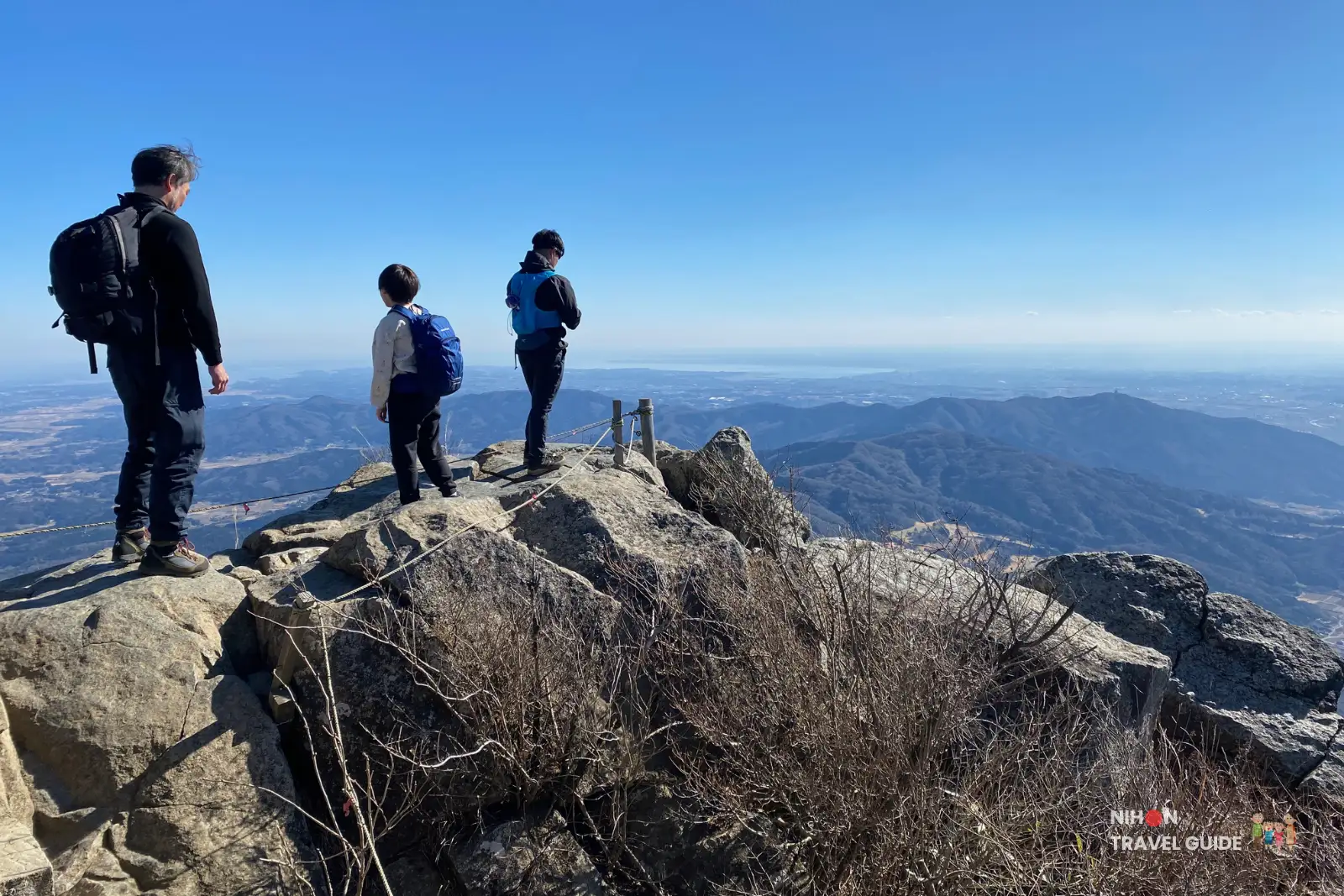
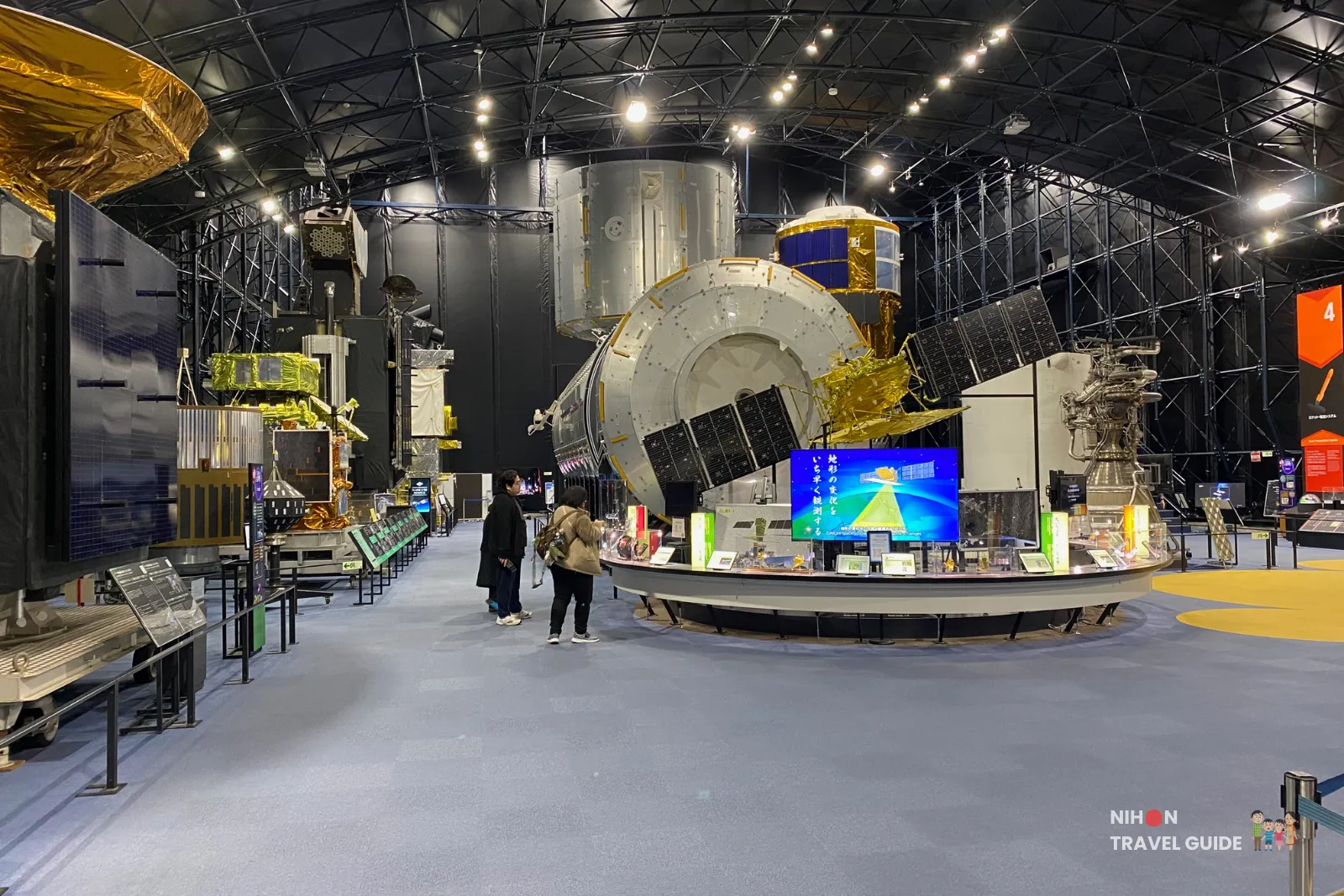
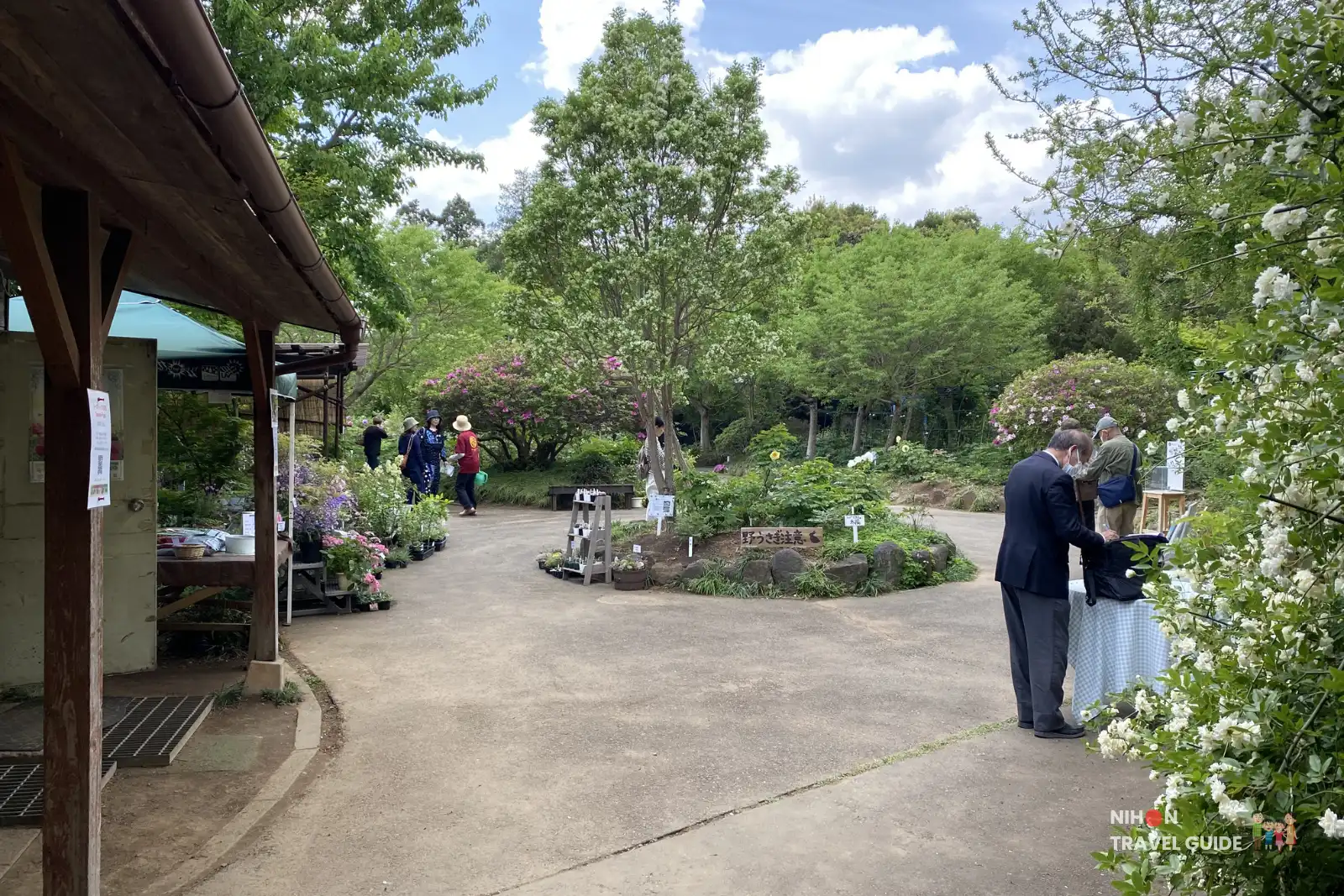
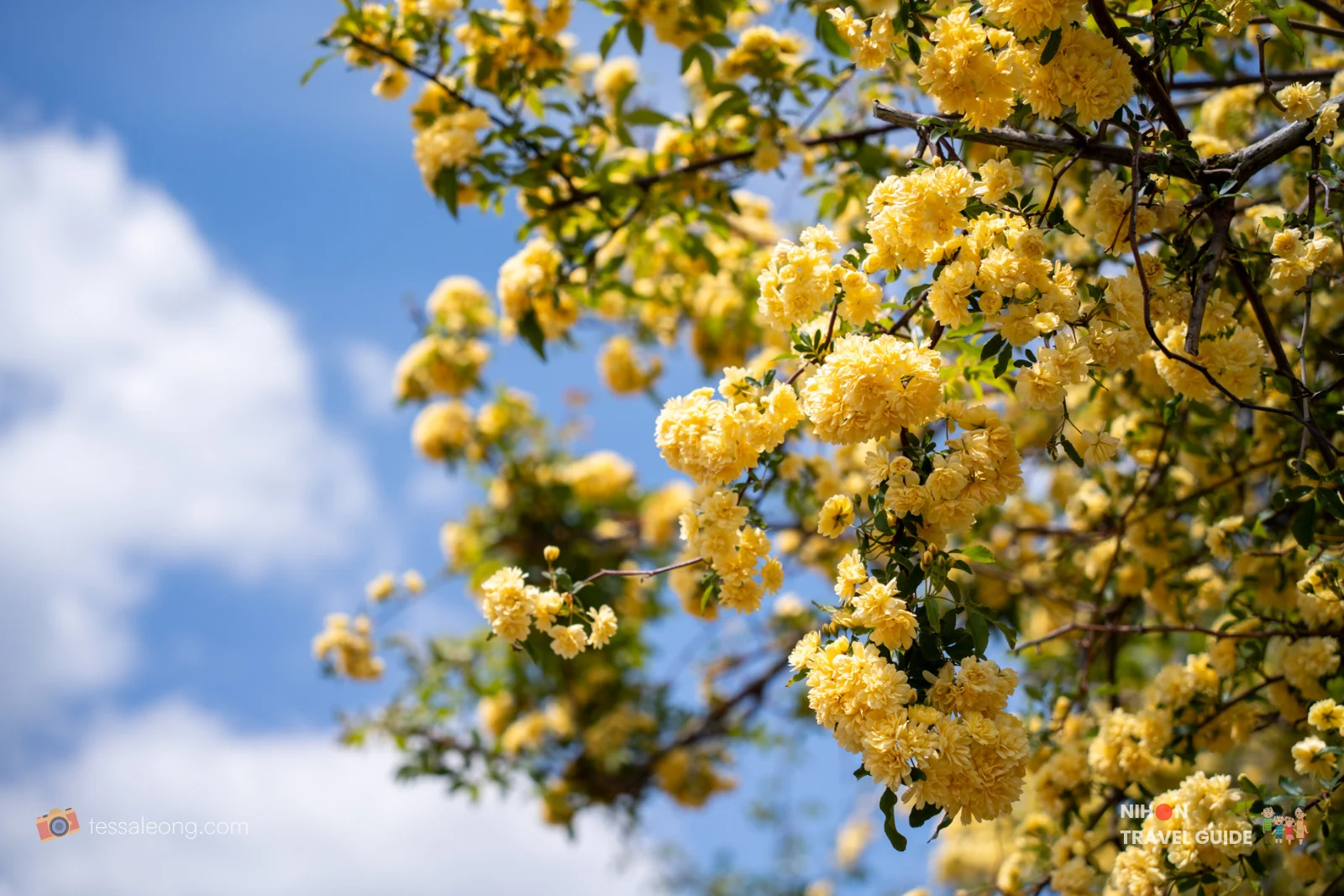
If you are looking for other places to visit in Tsukuba, here are some other things that you can do in Tsukuba to make the most of your trip. JAXA Space Museum and Mount Tsukuba are some of the bigger attractions in Tsukuba that are not to be missed.
But Tsukuba is not all science and museums though, check out other flower parks, gardens, an ostrich farm and many more.
For the full list of things to do in Tsukuba and the surrounding area, check out our complete Tsukuba visitor guide.
Where to Stay Nearby in Tsukuba
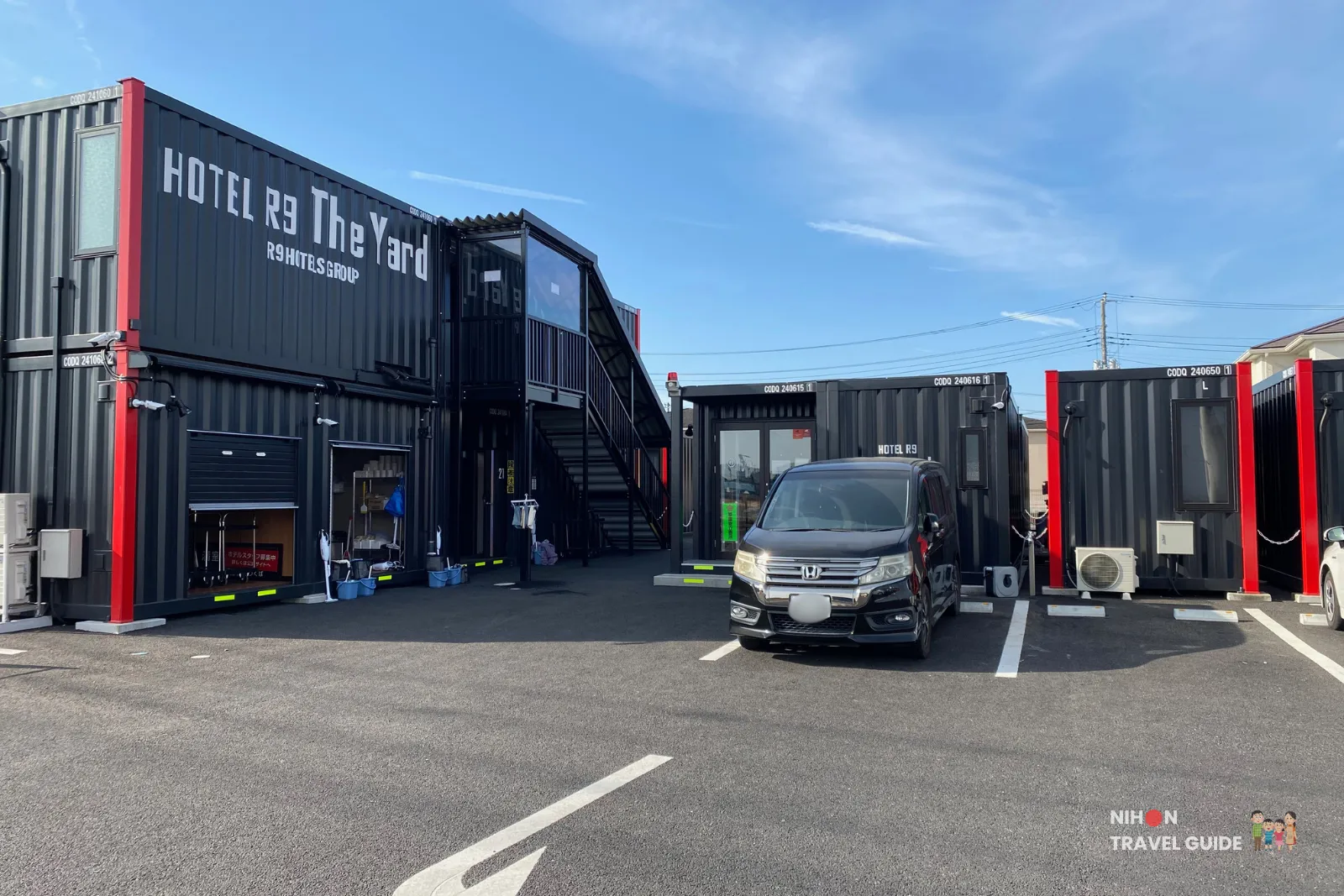
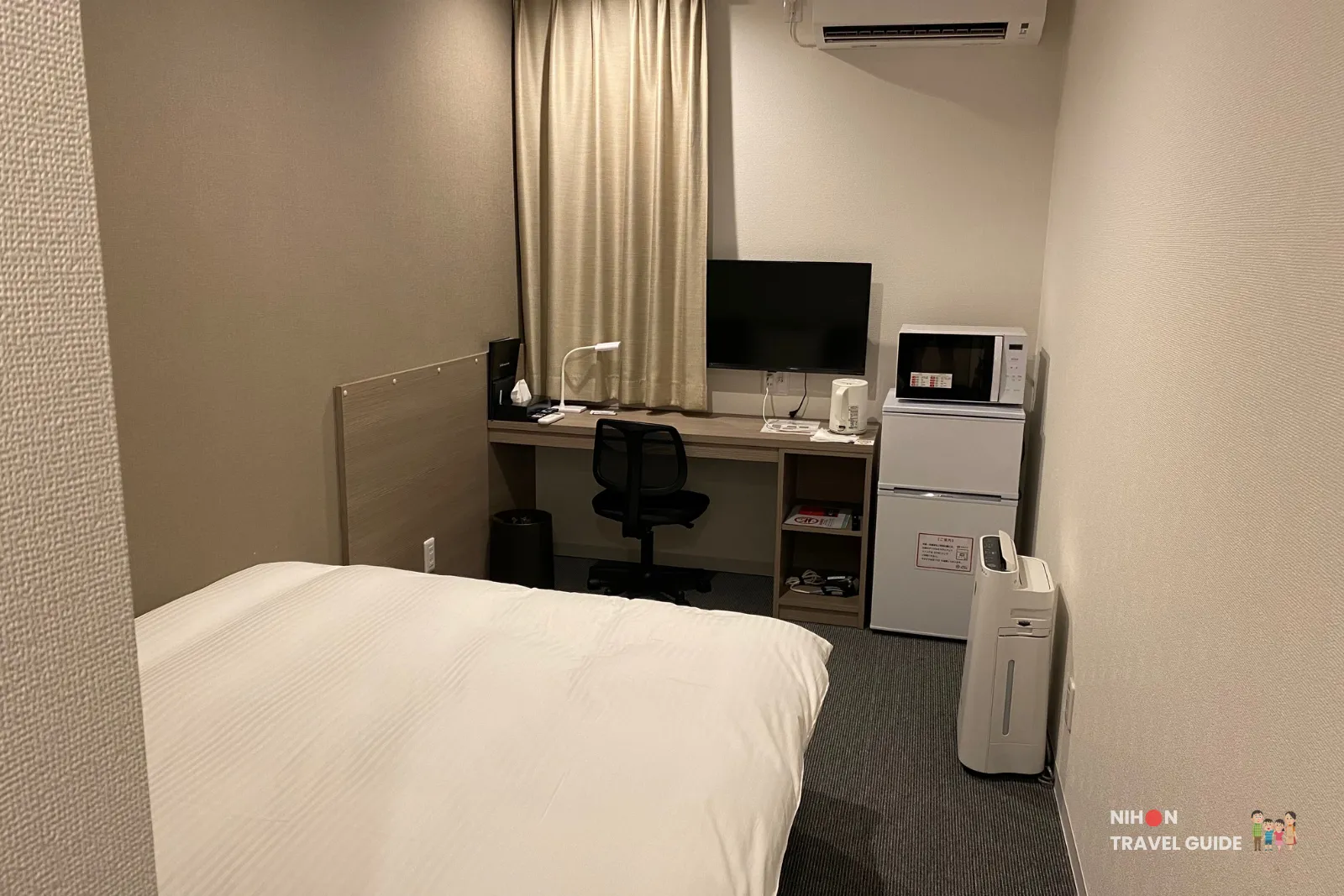
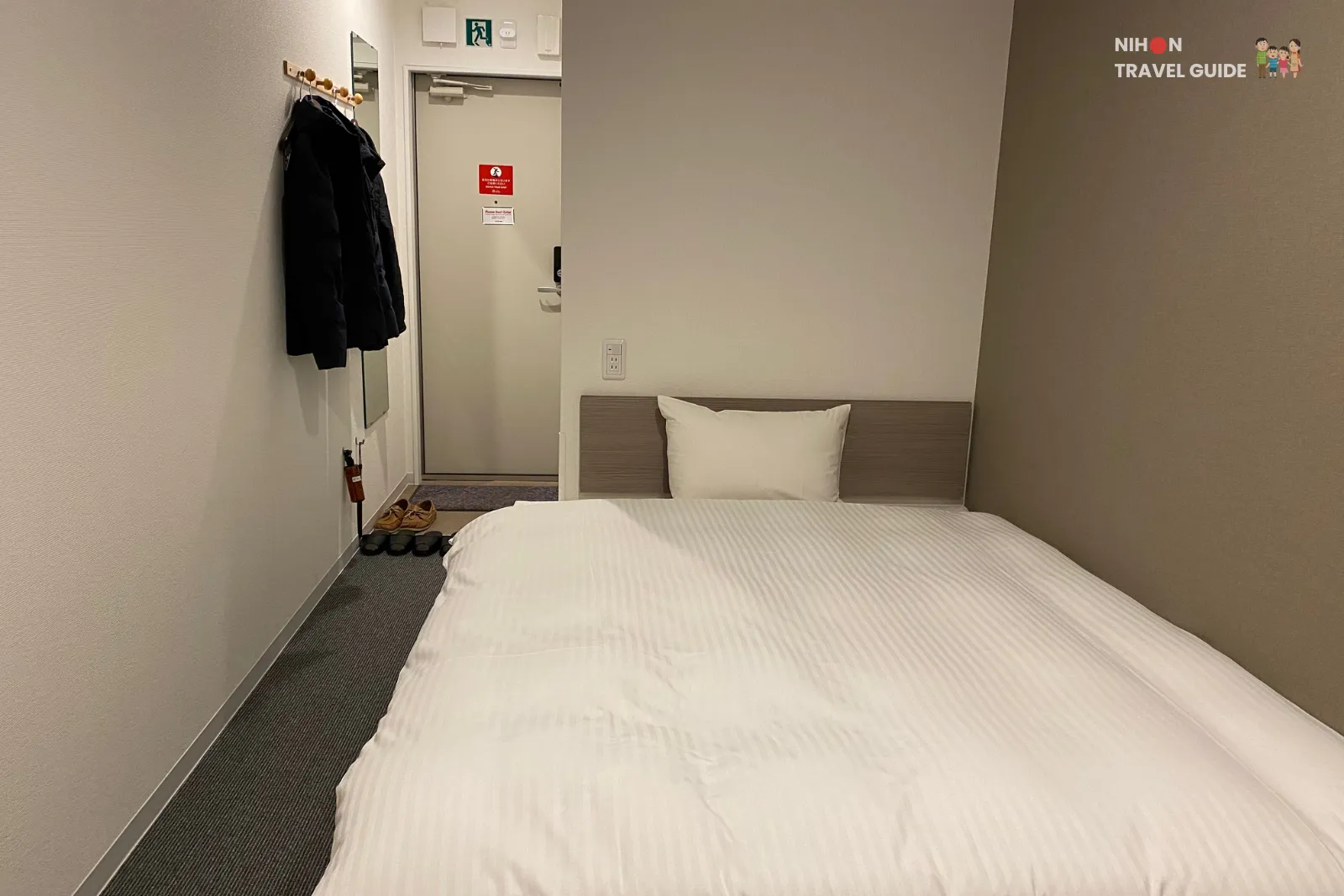
If you would like to stay in Tsukuba City Center, you can consider staying at hotels such as the Daiwa Roynet Hotel Tsukuba. It is also about 20 plus minutes away from Tsukuba Geological Museum and is fairly accessible by public transport. It is right next to Tsukuba Station and it’s a short walk to most of the other attractions like the Tsukuba Expo Center and JAXA Space Museum.
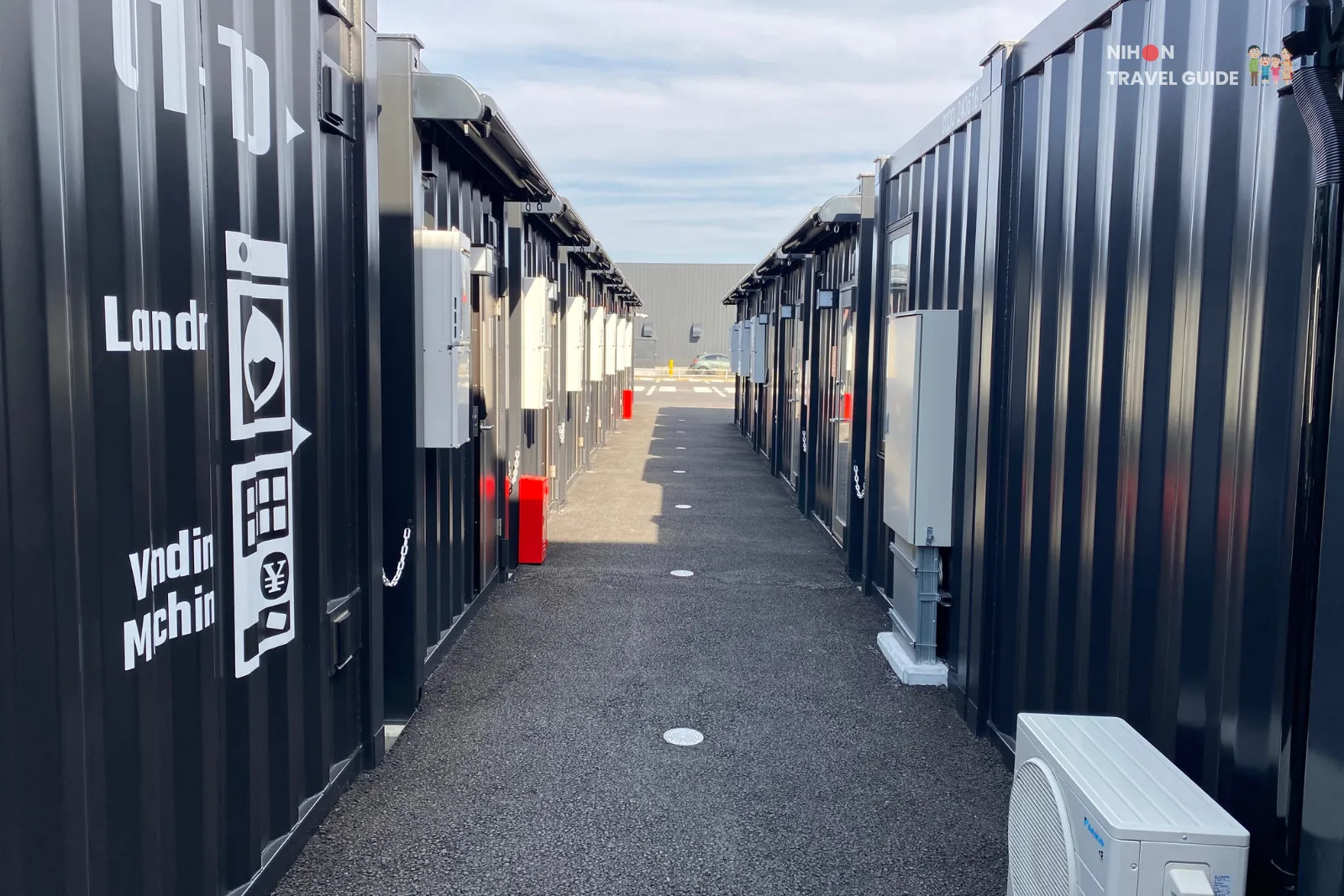
If you happen to be on a driving holiday, you can consider staying at the R9 The Yard Hotels. There is one in Tsukuba and they are really functional, no-frills container like hotel rooms that are really affordable.
They are usually further out from the city center, however it is only 15 minutes drive to Tsukuba Geological Museum from the hotel.
Read about our experience staying at R9 The Yard Hotel Tsukuba. Including room details, pricing and tips for a 7 night stay.
FAQ – Tsukuba Geological Museum
1) Is the Tsukuba Geological Museum free?
Yes — entry + parking completely free (spaces limited).
2) What is the Tsukuba Geological Museum known for?
Over 170,000 specimens of rocks, minerals & fossils (since 1882). Highlights: Japan’s largest gold nugget (Shishiori Mine) + fully reconstructed Desmostylus skeleton.
3) How do I get to the Tsukuba Geological Museum from Tokyo?
Highway bus: Tokyo Station Yaesu South Exit → Tsukuba City Centre (~1 hr) + 6-min walk · ≈¥1,260.
Train: Tsukuba Express → Tsukuba Station + 20+ min walk. Free AIST shuttle on weekdays only.
4) How long does the Tsukuba Geological Museum take?
1–1.5 hours for all four rooms. Extra time if reading the English QR guides in detail.
5) Is there parking at the Tsukuba Geological Museum?
Yes — free but limited. Go to the AIST security guard post first for a parking map + dashboard pass.
6) Is the Tsukuba Geological Museum good for kids?
OK for curious kids (Desmostylus skeleton + 3D volcano models), but mostly Japanese signage and academic content. Best for those already interested in science/geology.
7) Is the English guide good at the Tsukuba Geological Museum?
QR code English guides at each exhibit entrance — useful but phone-switching can feel disruptive. A Japanese-speaking friend is better if possible.
8) Can I combine the Tsukuba Geological Museum with JAXA in one day?
Yes — recommended. Museum alone isn’t substantial enough; pairs well with JAXA Tsukuba Space Center for a full science day.

Written by
Timothy Leong
Timothy is a Singapore-born, Japan-based digital marketer turned hidden-gem hunter. After ditching spreadsheets for Google Maps, he now lives full-time in Japan, chasing quiet towns, real ramen, and off-grid train routes. Every photo and tip on Nihon Travel Guide is 100% his — no AI, no fluff, no Tokyo Tower.
More about Timothy →